IN Brief:
- Bray & Slaughter has secured the £9.89 million second-stage main contract following its earlier pre-construction appointment.
- Works include roofing, glazing and curtain-wall upgrades, asbestos removal, MEP coordination, and occupied-building phasing.
- Cardiff University intends the fabric improvements to support lower heat loss and future conversion to heat-pump heating.
Bray & Slaughter has secured Cardiff University’s main construction contract for the Digarbon retrofit of its Law and Tower buildings, with the second-stage package valued at £9.89 million excluding VAT.
The contract was awarded on 25 August 2026 and is scheduled to start on 20 September, with completion planned for 20 January 2028. It follows the contractor’s earlier pre-construction services appointment, allowing the project to move from planning and sequencing into the principal works phase.
The programme centres on improving the thermal performance of two existing university buildings while preparing them for a future change in heat source. Cardiff University identifies the Law and Tower project as part of its wider carbon and energy programme, with fabric improvements intended to reduce heat loss, improve internal conditions, and support eventual heat-pump conversion.
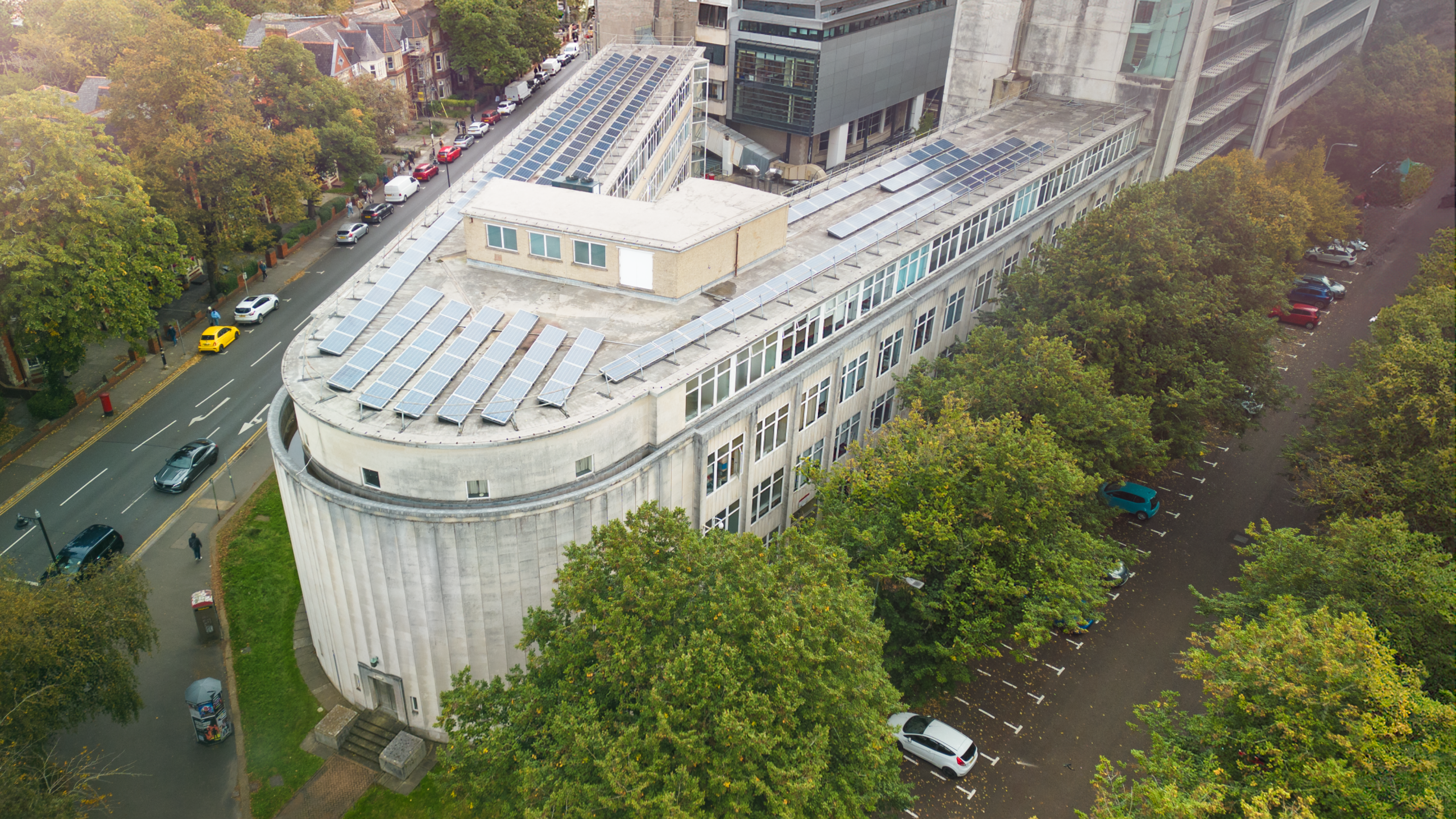
At the Law Building, the construction scope includes asbestos removal and replacement of existing flat-roof systems across the main building and a lower-level extension dating from the 1990s. Roof-mounted photovoltaic and mechanical and electrical equipment has to be removed or protected as necessary so that the coverings can be replaced before systems are reinstated and recommissioned.
Existing windows and curtain walling also form part of the retrofit, with new double-glazed units specified across the relevant façades apart from identified retained elements. The Tower Building carries a comparable programme, including roof replacement, asbestos work, temporary removal and reinstatement of building services, and replacement glazing, although windows within a 2008 extension are excluded.
Those activities have to be delivered around an operational university estate. Phasing, sequencing, and user decanting form explicit parts of the project rather than secondary logistical considerations, because roofing, glazing, asbestos removal, MEP shutdowns, temporary protection, and making good all affect spaces that would otherwise support teaching, research, or administration.
The two-stage procurement route gives the contractor an opportunity to resolve more of that complexity before major expenditure is committed on site. Retrofit projects frequently expose conditions that differ from record drawings, particularly around façade junctions, roof build-ups, hidden services, asbestos, and areas altered through previous refurbishments. The pre-construction period can reduce, although never eliminate, the amount of that uncertainty carried into the main contract.
Roof replacement illustrates the interdependence between work packages. Photovoltaic arrays and rooftop mechanical systems cannot simply be moved aside without considering electrical isolation, lifting, temporary weather protection, controls, warranties, access, and commissioning. Delays in one element can hold up the new roof covering and leave temporary arrangements in place longer than planned.
The glazing programme has a different set of interfaces. Replacing windows and curtain walling can improve thermal performance, but the result depends on airtightness, weather seals, junction detailing, thermal bridging, and making good around existing structure and finishes. Performance is therefore determined by installation and interfaces as much as by the nominal U-value of the new units.
Cardiff University’s decision to improve the envelope before converting the buildings to a future heat pump follows a straightforward engineering sequence. Reducing heat loss lowers the peak heating demand that a replacement system has to satisfy, potentially improving operating conditions and reducing the risk of specifying plant around avoidable fabric losses.
The university has previously accepted a £12.2 million Digarbon loan offer from the Welsh Government to support fabric improvements and carbon reduction activity across its estate. The Law and Tower works therefore sit within a broader decarbonisation programme rather than a stand-alone maintenance exercise.
Occupied refurbishment brings commercial pressure alongside the technical work. Restricted access, noise limits, room closures, temporary circulation routes, asbestos controls, and academic timetables can affect productivity, while opening-up works may expose additional conditions that were not visible during design. Maintaining the planned programme requires those risks to be dealt with without allowing temporary measures to become permanent delays.
The £9.89 million award is also substantial enough for design changes to have a material effect on cost. Roof build-ups, glazing details, temporary works, mechanical alterations, access equipment, and decanting all contain quantities that can move if existing conditions differ from assumptions, making the quality of information developed during the PCSA commercially important.
Bray & Slaughter has established experience in refurbishment and occupied-building construction, including education projects where work has to proceed around continuing client operations. Cardiff’s Digarbon package will test that capability across two buildings whose energy performance, weather protection, services, and day-to-day use are tightly connected.
The main contract now gives the project a defined delivery period of around 16 months. By January 2028, the buildings are expected to have upgraded envelopes and recommissioned systems capable of supporting the university’s next decarbonisation step without leaving the construction programme to solve operational problems after handover.