IN Brief:
- Accelerating sand and gravel washout forced closure of the Hardenbergerbrug on 7 September.
- Repairs are filling bridge-pier foundations before gravel, sand, and protective stone are installed.
- Rijkswaterstaat is targeting reopening by 20:00 on Thursday 10 September.
Emergency repairs are continuing at the Hardenbergerbrug on the A28 near Nijkerk after accelerated washout of sand and gravel around the bridge foundations forced the motorway to close in both directions. Rijkswaterstaat is now targeting reopening by 20:00 on Thursday 10 September, with crews working continuously to stabilise the structure.
Rijkswaterstaat closed the bridge on the afternoon of 7 September after a regular inspection found that the loss of material around the structure had progressed more quickly than previously recorded. Repair work had originally been planned for November, but the latest condition data meant engineers could no longer guarantee structural safety until the foundations had been stabilised.
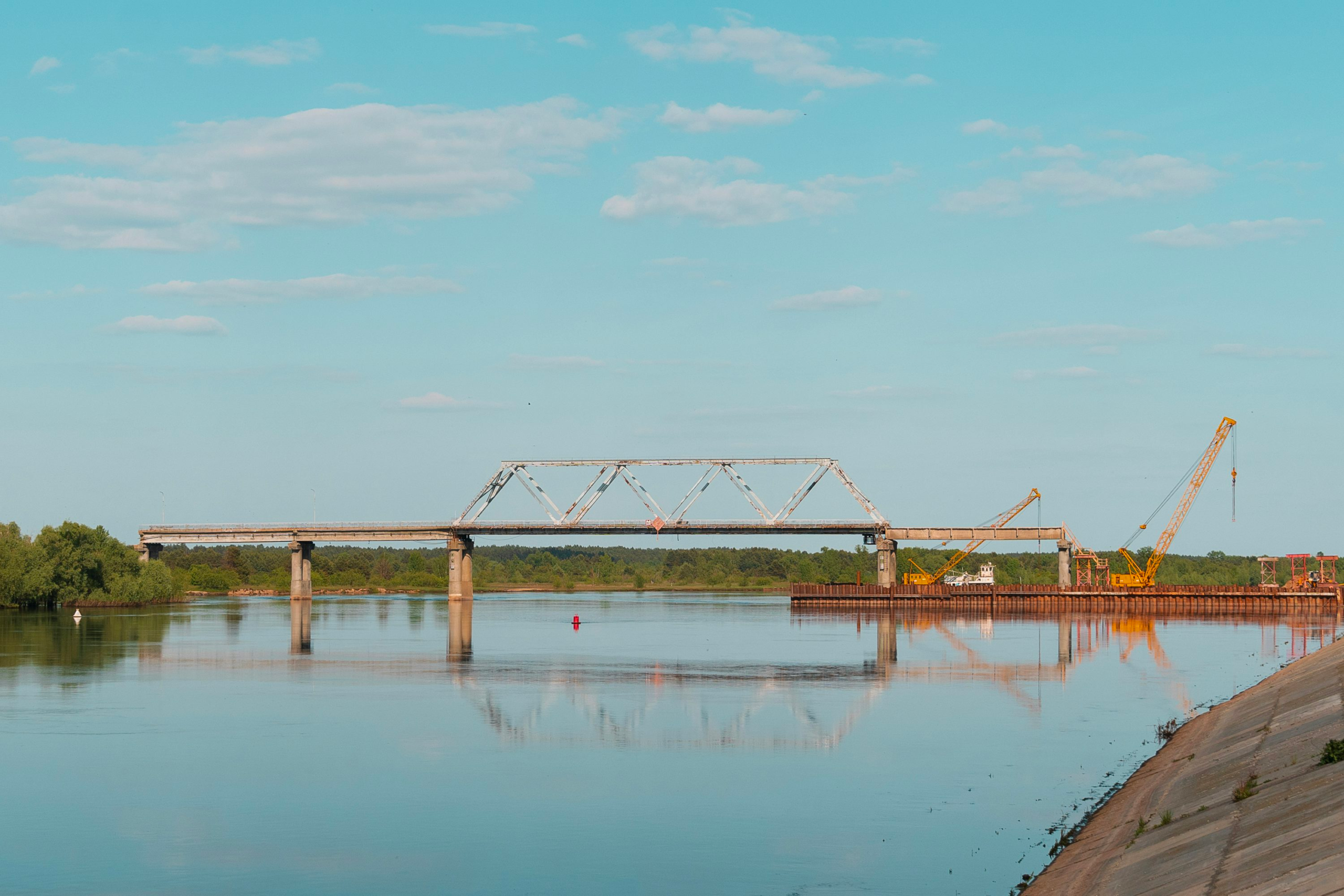
The emergency works are using several vessels, a crane ship, trucks carrying fill, and specialist vehicles capable of blowing sand into voids around the bridge-pier foundations. The operation combines highway, marine, earthworks, and structural activity on a route whose closure is producing significant traffic disruption around Nijkerk.
Rijkswaterstaat’s latest update provides more detail on the repair sequence. Sand is being injected into the foundations around the piers while crews measure the progress of the filling operation. Once those areas are filled, the void beneath the foundation in the canal is to be packed with gravel and sand before the repaired area is covered with rock armour intended to reduce the risk of the material washing away again.
The sequence illustrates why loss of material around bridge foundations can become a structural issue rather than a routine maintenance defect. A bridge pier transfers load into its foundation and the surrounding ground; if flowing water removes supporting material, the condition below water can deteriorate without producing an obvious warning on the carriageway above.
That makes inspection particularly important for structures crossing waterways. Engineers are not simply looking for visible deterioration in concrete or steel but for changes in the bed and foundation conditions around the supports. The rate at which those conditions change is as important as the absolute size of a void recorded during any one survey.
The Hardenbergerbrug had already been identified for repair, with work scheduled for November on the basis of the earlier assessment. The subsequent inspection changed that programme because deterioration had accelerated beyond what had been expected. Closing the road therefore represents a change in engineering risk rather than the discovery of a previously unknown defect.
Emergency mobilisation brings its own construction constraints. Plant has to be assembled at short notice, marine access coordinated, fill materials delivered continuously, and measurements taken while repair work is still progressing. The pressure to restore a major motorway route is considerable, but reopening ultimately depends on the evidence that engineers obtain from the stabilisation work.
Rijkswaterstaat says work is continuing around the clock. The latest target is to reopen the A28 no later than 20:00 on Thursday, with an earlier opening possible if conditions allow. That is a target rather than a guaranteed completion time, leaving the final traffic decision dependent on repair progress and confirmation that the structure can safely carry normal loading again.
The unexpected closure has also allowed routine maintenance on the bridge deck to be brought forward. Carrying out work that would otherwise have required a later traffic restriction reduces the likelihood of another closure soon after the emergency repair, although it adds another activity that has to be coordinated within the limited period while the road is unavailable.
Traffic is being diverted through the surrounding network, and Rijkswaterstaat has warned motorists to expect delays. The operational effect demonstrates how a comparatively localised foundation problem can have consequences far beyond the physical size of the defect when it affects a strategic motorway link.
The permanent engineering question extends beyond filling the immediate voids. Crews need to leave the bridge with sufficient protection against renewed erosion, while future inspection will have to establish whether the repaired material remains stable and whether the hydraulic conditions responsible for the accelerated washout require further intervention.
Rock armour over the reinstated gravel and sand provides one layer of protection, but the performance of the repair will still depend on the local flow environment and the condition of the foundations beneath the water. Monitoring after reopening will therefore remain part of the asset-management response even if the motorway returns to service on Thursday.
The incident is a compact example of condition-led infrastructure maintenance. A repair originally judged suitable for November became an emergency September programme because new inspection evidence changed the risk assessment. The construction task is now being carried out at motorway-network speed, but the decision to reopen will remain an engineering one rather than a traffic-management deadline.