IN Brief:
- GelreGroen is moving from largely preparatory activity into permanent widening work between Oud-Dijk and Westervoort.
- Concrete separation, a new northern lane, piling, sheet piling, and Zevenaar-Oost construction are now under way.
- Interim additional capacity is planned for autumn 2027, with definitive A12 widening expected in summer 2029.
GelreGroen is moving the ViA15 programme into a more visible construction phase on the A12 in Gelderland, with permanent widening, barriers, piling, sheet piling, and junction works following months dominated by preparatory activity.
From September, the construction combination is extending concrete separation along the route between the Oud-Dijk interchange and the Westervoort junction, creating protected working areas beside live motorway traffic. The immediate programme includes construction of an additional lane on the northern side of the A12.
A further lane will be added on the southern side during a later phase. Emergency refuge areas will be provided at intervals, while the maximum speed is being reduced to 90km/h as works move closer to the operating carriageway.
Concrete barriers had already been placed from August between Zevenaar and the Aalburgen service area. Extending them across the wider section marks the shift from isolated enabling operations towards a continuous work zone in which permanent carriageway construction can advance.
The programme forms part of ViA15, which will extend the A15 to create a direct motorway connection with the A12 while widening parts of both routes. Preparatory work began after Rijkswaterstaat and GelreGroen re-established the delivery programme in 2025 following the completion of the project’s planning and legal process.
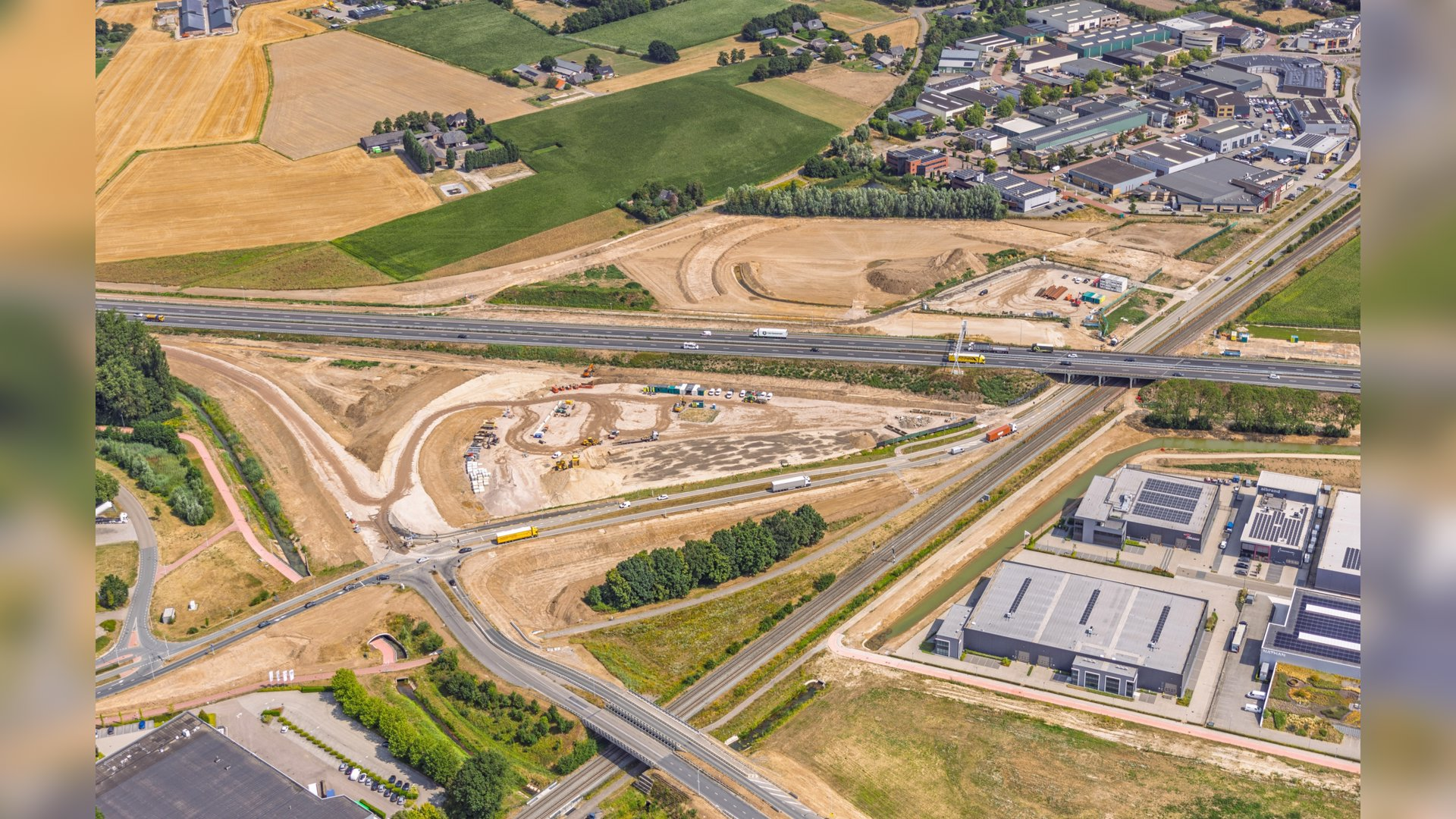
At the future De Liemers interchange, crews are installing sheet piling for the underpass that will carry the extended A15 towards the A12 in the direction of Arnhem. That structure will ultimately form part of the physical connection between the two motorway corridors.
Work is also progressing at Hengelderweg between Zevenaar and Didam, where the existing A12 viaduct is being widened for the future Zevenaar-Oost junction. Rijkswaterstaat says the form of the new connection is already becoming visible as construction progresses around the existing road.
The latest phase changes the character of the programme for road users. Utility diversions, temporary access, worksite preparation, and other enabling operations can occupy substantial project resources without materially altering the motorway itself; additional carriageway and new structures are much harder to miss.
Keeping the A12 operational while that work proceeds requires the motorway to function simultaneously as a transport corridor and the boundary of a linear construction site. Concrete containment, reduced speed, temporary access, and emergency refuge arrangements consequently become elements of the construction method rather than incidental traffic management.
The programme is designed to introduce some additional capacity before the entire ViA15 scheme is complete. Rijkswaterstaat expects road users to gain an extra provisional lane in each direction between Westervoort and Oud-Dijk from autumn 2027.
The Zevenaar-Oost connection is also expected to open around the end of 2027. New additional lanes towards Arnhem and Germany are due to become available during 2028, although the 90km/h restriction is expected to remain while work continues on the De Liemers interchange.
The definitive widening of the A12 between Westervoort and Oud-Dijk is scheduled for summer 2029. Rijkswaterstaat’s wider ViA15 programme then runs towards the end of 2031, when the extended A15 and the new crossing of the Pannerdensch Kanaal are expected to open.
Those milestones create a long period in which temporary and permanent highway configurations have to coexist. A road user may see additional lanes become operational while nearby structures, junctions, and connections remain under construction, extending the period during which traffic controls form part of everyday motorway operation.
The sequence also means that completed elements cannot be considered in isolation. The new northern lane has to work with later southern widening, the Zevenaar-Oost junction, De Liemers interchange, drainage, structures, barriers, signs, and ultimately the extended A15.
That is particularly important around the new interchange, where piling and sheet-piled structures have to establish the geometry needed for a motorway connection that does not yet exist. Construction can proceed in sections, but the permanent works eventually have to meet a single network configuration.
For GelreGroen, the visible phase brings project performance closer to measurable physical output. Progress will increasingly be judged in completed pavement, structures, foundations, and junctions rather than diverted services and temporary compounds.
It also exposes the programme more directly to motorists. Road widening beside live traffic leaves little separation between construction progress and public experience, making safe work zones and predictable traffic arrangements as important as production rates.
The A12 will therefore spend several years in an intermediate state: wider than it was, but not yet connected to the completed A15 extension. September’s work begins that transition in concrete, piles, and new carriageway rather than on programme drawings — after a long planning history, ViA15 is becoming a physical motorway project.