IN Brief:
- Construction teams renewed railway infrastructure at Matlock Bath, Cromford, and near Whatstandwell station.
- Eight engineering trains supported the programme, including specialist track construction machinery capable of laying rails and sleepers continuously.
- Concentrating construction within a nine-day possession avoided the requirement for eight separate weekend closures.
Network Rail has completed a £3m infrastructure renewal programme on Derbyshire’s Derwent Valley Line, installing replacement track at three locations during a nine-day engineering possession between Derby and Matlock.
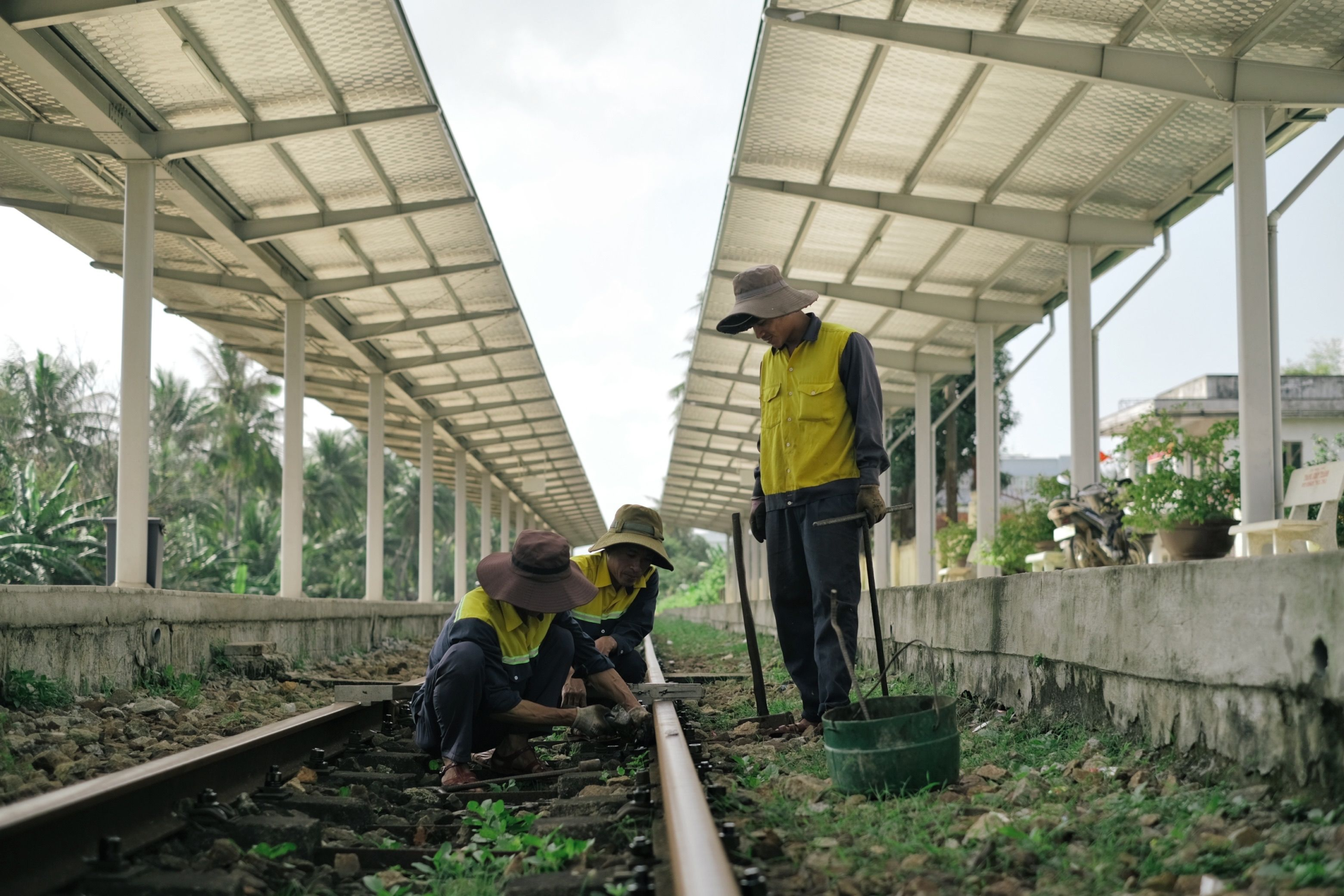
Passenger services resumed on 23 November following the completion of construction at Matlock Bath, Cromford, and near Whatstandwell station. Engineering teams installed 4.6km of new rail, 3,509 replacement sleepers, and 6,400 tonnes of ballast, renewing components that had reached the end of their operational lives.
Eight engineering trains supported the construction programme, including a specialist New Track Construction train that installs rails and sleepers as it progresses along the railway formation. Network Rail says concentrating the works within a continuous possession avoided the requirement for eight separate weekend closures.
The use of integrated track construction machinery allows several installation activities to take place within a coordinated mechanical operation. Rather than distributing and positioning every sleeper through separate lifting activities, the machinery feeds components into the installation sequence as it moves along the prepared trackbed.
Maintaining that sequence requires coordination between the preparation of the underlying formation, the availability of replacement components, and the rate at which the construction equipment progresses. Interruptions to material supply or delays in preparing individual sections can restrict the productivity of subsequent operations.
The engineering trains also provide a means of transporting substantial quantities of construction materials directly to the working areas. Delivering 6,400 tonnes of ballast using conventional road transport alone would create considerable additional requirements for vehicle movements, temporary storage, and transferring material from highway access points onto the railway.
Ballast performs several functions within conventional railway construction. The angular aggregate distributes loading from sleepers into the supporting formation, provides resistance against lateral movement, and allows water to drain away from the track structure.
Its condition influences the stability of the railway under repeated loading. Aggregate degradation and the accumulation of finer material can reduce drainage performance and affect the ability of the ballast to maintain the required track geometry.
Renewing the ballast alongside other track components allows engineers to address the condition of the supporting structure rather than concentrating exclusively on the running rails.
The sleepers maintain the position of the rails while distributing forces across the ballast. Their spacing, alignment, and connection to the rails must remain consistent with the technical requirements of the railway, particularly where new sections connect with infrastructure that is being retained.
Track construction machinery can establish the initial positioning of those components, but subsequent engineering activities remain necessary to achieve the required finished geometry. Tamping equipment, for example, consolidates ballast beneath sleepers while adjusting the position of the track.
Achieving the specified alignment involves controlling the distance between the rails, their longitudinal position, and their relative height. Variations in those parameters can affect vehicle behaviour and the dynamic forces transmitted into the underlying infrastructure.
Concentrating construction across three locations within a single possession also requires the engineering equipment to be deployed in a sequence compatible with the condition of the railway. Removing sections of track can restrict access for rail-mounted equipment, making the direction and timing of construction activities important elements of the delivery programme.
An extended possession provides more flexibility to coordinate those activities than a succession of shorter closures. Engineering teams can retain working areas between shifts rather than repeatedly restoring infrastructure to an operational condition before the next period of construction.
The approach also reduces repeated mobilisation requirements for specialist machinery. Its suitability depends on the volume of construction planned, the available resources, and the ability of the railway operator to accommodate the resulting interruption to normal services.
East Midlands Railway provided replacement passenger transport throughout the closure, which began on 14 November. The railway returned to operation after the construction programme and associated engineering checks were completed.
The Derbyshire investment forms part of Network Rail’s wider programme of infrastructure renewal across regional railway routes. Recent projects have included the replacement of slab track within Grove Hill Tunnel, where different supporting infrastructure required a separate construction methodology.
On the Derwent Valley Line, the completed works have replaced ageing infrastructure while retaining the conventional ballasted track arrangement. Renewing the rails, sleepers, and supporting aggregate through the same possession addresses several connected sources of deterioration and should reduce the requirement for corrective maintenance across the renewed sections.
With normal passenger operations restored, routine inspection and maintenance will continue to monitor the condition of the replacement infrastructure under operational loading.