IN Brief:
- Caerphilly Castle will close from Monday 30 November 2026 while Cadw replaces the wooden bridge providing its only access from the visitor centre.
- Two other castle bridges are scheduled for replacement in late 2027 and early 2028, with alternative visitor access available during those later works.
- Cadw plans to reopen the castle by Easter 2027 after installation and the necessary safety inspections.
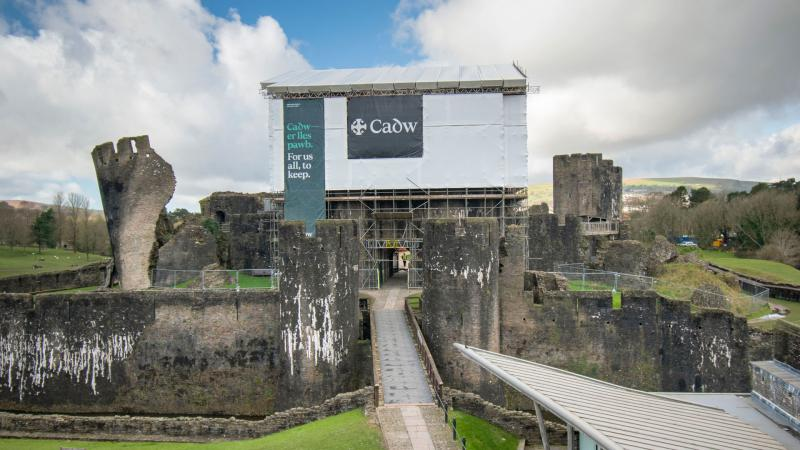
Cadw will close Caerphilly Castle to visitors from Monday 30 November while the wooden bridge connecting the visitor centre to the historic site is removed and replaced. The structure has reached the end of its service life, and there is no alternative visitor route into the castle from that entrance. The Welsh Government’s historic environment service expects the castle to reopen by the Easter weekend in 2027, following installation and the required safety inspections.
The entrance is one of three bridges in Cadw’s replacement programme at the medieval fortress. The other two are due for works in late 2027 and early 2028. Cadw says alternative routes will remain available during those later operations, allowing the attraction to stay open, whereas the visitor centre bridge has no equivalent route around it. The first phase is consequently being carried out during a dedicated winter closure instead of an ordinary sequence of shorter visitor restrictions.
The existing entrance crossing has been in place since 1997, according to local reporting, and deterioration has prompted its replacement. Preparatory plans were submitted to Caerphilly County Borough Council earlier this year under application reference 26/0557/FULL. Those plans described the need to maintain safe public and operational access. The November programme now establishes when that work will interrupt visits, rather than announcing the bridge’s condition for the first time.
Removing an entrance bridge creates an access problem before replacement work can begin. The route normally carrying visitors into the castle cannot remain in use while the existing deck and supporting components are dismantled and a new crossing installed. Materials and equipment also have to pass through a historic environment whose existing walls, approaches and landscape limit the options for construction movements. Cadw has not published a final lifting sequence, temporary access design or bridge dimensions in its November statement.
The structure serves more than a circulation function. It links the visitor facilities with the monument and provides a route for the safe movement of people into and out of the site. A replacement must therefore be available for use before normal opening can resume, and Cadw says safety inspections will follow installation. Neither the replacement’s structural specification nor its foundation treatment has been confirmed publicly in the announcement, so no particular construction material or engineering technique can yet be attributed to the contract.
Other essential maintenance and improvement work will take place while the monument is closed, reducing the need for further interruptions immediately after the entrance is restored. Cadw is planning changes to visitor welcome facilities and new areas for sitting, exploring and using the castle grounds. The bridge works remain the controlling activity for public access, but bringing these tasks together allows contractors and conservation teams to operate while the attraction is not receiving its usual visitor traffic.
The castle has already undergone a substantial phase of conservation work. Its Great Hall reopened in July 2025 following an £8m programme of preservation and refurbishment, and Cadw marked a year of wider improvements in July 2026. Those works addressed historic building fabric and visitor facilities within the fortress. The bridge programme addresses a separate part of the estate: dependable physical access to the conserved structures, with three crossings receiving attention at different times.
The later bridge replacements are scheduled across two further seasons. Their exact construction windows, contractors and budgets have not been set out in the latest announcement, but Cadw has confirmed that the available alternative routes should avoid another complete site closure. Keeping those projects separate also leaves the authority able to reopen the attraction after the principal entrance crossing is installed rather than waiting for all three structures to be renewed.
Reopening is targeted for the Easter weekend in 2027, conditional on completion of the bridge installation and the necessary safety inspections. That places the public handover at the end of the winter works rather than at an unspecified date after the final bridge is renewed in 2028. Cadw has not identified a named bridge contractor or released a detailed construction sequence, and a confirmed day of reopening has not yet been issued.
The closure will also affect businesses that rely on visitors to the castle. Cadw has said it will work with local partners to reduce disruption and keep them informed during the winter. The conservation programme will continue behind the closed entrance, but the effect on the surrounding area will depend on how promptly the replacement bridge can be brought into service and public access restored.
The first closure begins on Monday 30 November 2026. After the entrance bridge has been replaced and inspected, Cadw intends to welcome visitors back at Easter 2027; the two remaining crossings are scheduled for late 2027 and early 2028. The published timetable provides the sequence for the works, while final bridge specifications and individual contract details remain unannounced.