IN Brief:
- The Department for Transport has approved more than £26m for the A38 Major Road Network project across North Somerset and Somerset.
- Nine improvement locations include junction capacity, pedestrian and cycle connections, bus priority, and drainage works.
- Somerset works are scheduled to start in January 2027, while North Somerset construction is expected from summer 2027 subject to further local approvals.
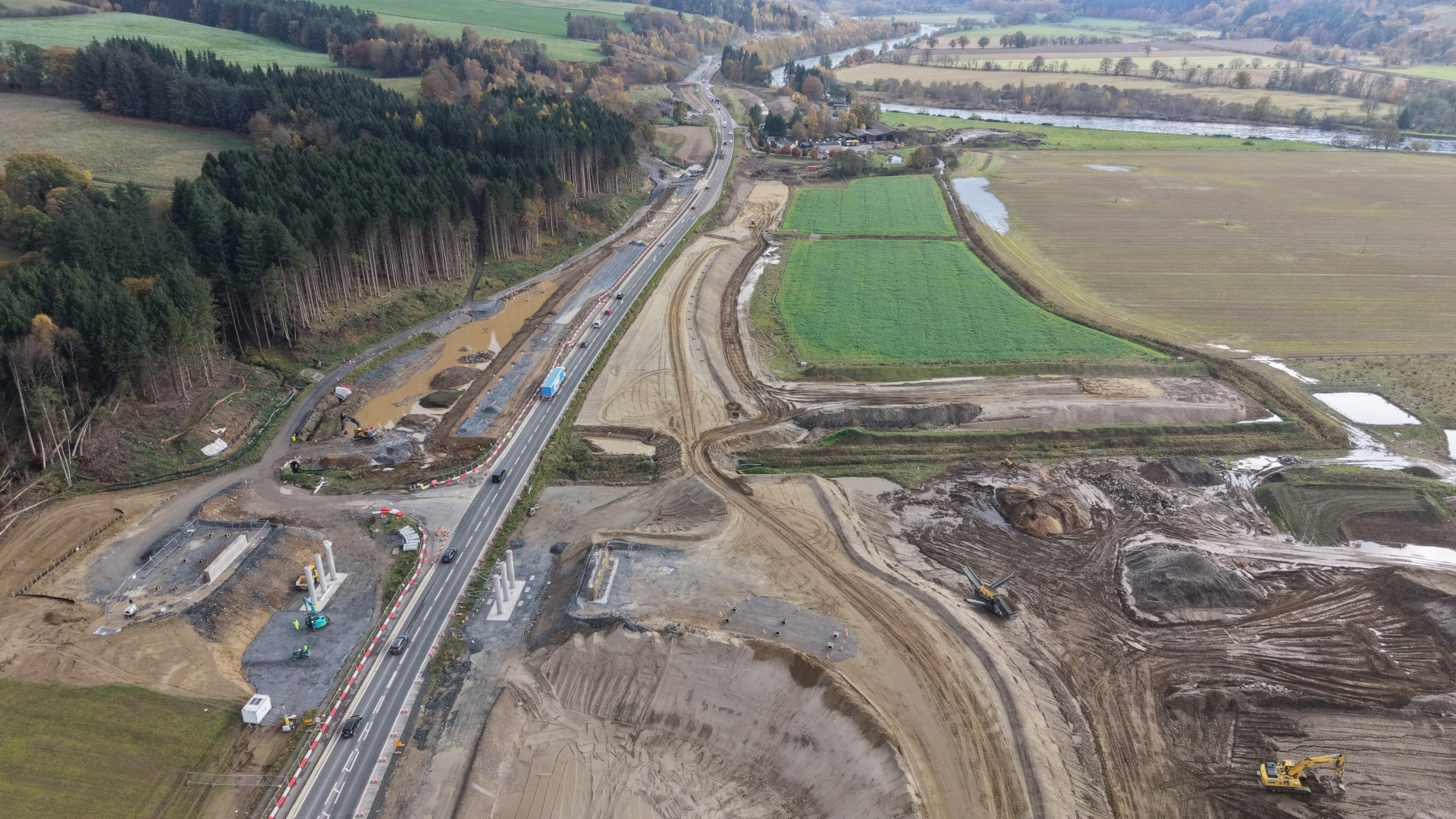
A highway improvement programme led by North Somerset Council and Somerset Council has secured government approval for more than £26m of funding, moving nine proposed interventions towards delivery. The Department for Transport has signed off the project’s full business case, covering locations between the Barrow Street junction at Barrow Tanks and Edithmead Roundabout near junction 22 of the M5.
Five of the nine schemes are in North Somerset, including several around Bristol Airport, and four are in Somerset. They combine additional capacity at selected road junctions with bus priority, revised pedestrian and cycle crossings, and drainage improvements. The joint government approval covers the full business case; it does not merge the councils’ separate procurement arrangements or mean that work will start simultaneously at all nine sites.
The most substantial Somerset intervention is at Edithmead Roundabout, where a signalised throughabout arrangement is intended to take a heavily used traffic movement through the centre of the existing junction. The council also proposes a signalised cycle crossing on the B3140, using an enlarged splitter island. The changes are designed to address peak-time queuing close to the M5 while retaining a controlled route for people crossing the junction.
A throughabout changes the operation of a conventional roundabout by taking selected through movements across a central, signal-controlled route. At Edithmead, this is intended to increase junction capacity and reduce the risk of queues extending towards the M5 at busy times. The new cycle crossing is a separate, signal-controlled element of the design, rather than a general widening of every roundabout approach.
At Rooksbridge, the principal safety measures involve changes to road markings, while the Cross junction is to be altered into a staggered arrangement. Improvements at the Strawberry Line crossing will focus on visibility and signs. These measures are narrower in construction scope than the Edithmead scheme, but their implementation must still be coordinated with traffic management on a road used by local journeys and longer-distance movements.
Somerset Council has identified Centregreat as the contractor for Edithmead, building on procurement associated with the Dunball junction 23 works. Its existing infrastructure delivery partner, Octavius, will handle the other Somerset elements. The authority expects construction to begin in January 2027 and intends to hold public information sessions ahead of the works.
The North Somerset designs include capacity and active travel changes around the airport. Between West Lane and Airport Terminal Roundabout, the plans provide two traffic lanes in each direction, revised signal control at the Downside Road and West Lane junctions, a shared walking and cycling route, a signalised crossing, and improved drainage. The combination changes both how vehicles enter the airport approach and how non-motorised users cross or travel alongside the A38.
Further north, the section between Airport Terminal Roundabout and Silver Zone Roundabout is to receive a northbound bus lane, changes to the northbound roundabout approach, a shared path, and drainage upgrades. Proposals between Barrow Lane/Hobbs Lane and Dial Lane include a shared route alongside the carriageway, a wider crossing, and visibility improvements. In the Langford area, adjustments to kerbs and carriageway width are intended to provide a more continuous shared route.
A separate improvement between Sidcot Lane and Hillyfields would widen the existing footway. North Somerset’s published description distinguishes these works from the Somerset junction programme and indicates that its own construction could begin in summer 2027, subject to a commissioning plan considered through the council’s decision-making process.
Full business case approval establishes government funding for the programme, but the construction sequence remains divided between the two highway authorities. Somerset has named the contractors it intends to use and expects works to start in January 2027. North Somerset’s indicative summer 2027 start is subject to its commissioning plan going through the council’s decision-making process. The funding decision should therefore be distinguished from a notice to start construction at every location.
Both councils submitted the full business case in June 2026 after detailed scheme development. The approved improvements sit along a road connecting communities, airport traffic, motorway access, and public transport, so traffic management will need to account for different peak periods and turning movements. Neither council has yet published a complete construction sequence for all nine locations.
Reconfigured junctions require associated changes to signals, crossings, drainage, and road geometry. At Edithmead, the throughabout layout will route the principal traffic movement through a signal-controlled central path, while other movements retain access around the junction. Around the airport, widening and bus priority must be integrated with adjacent walking and cycling provision. The councils have described the intended layouts, but final staging, lane restrictions, and temporary routes will be established through the delivery programme.
The first Somerset works are scheduled for January 2027, with drop-in sessions planned before construction. North Somerset expects work from summer 2027, subject to its local commissioning decision. Detailed dates for each junction, along with the resulting traffic restrictions, remain to be confirmed.