IN Brief:
- Four Victorian tunnels between Brunswick and Liverpool Central reopened after a £3.5m engineering programme.
- Specialist teams drilled 6,500 resin injection holes, added drainage openings, and treated 1,688m² of tunnel wall.
- Modernised third-rail power controls will support more targeted isolation for future maintenance, with additional work planned in 2027.
Network Rail has completed £3.5m of strengthening and waterproofing works on four Victorian railway tunnels beneath Liverpool, allowing Merseyrail’s Northern Line to reopen fully on Saturday 7 November. The programme addressed water ingress into structures between Brunswick and Liverpool Central, where moisture reaching the electrified third rail can interrupt the supply of traction power.
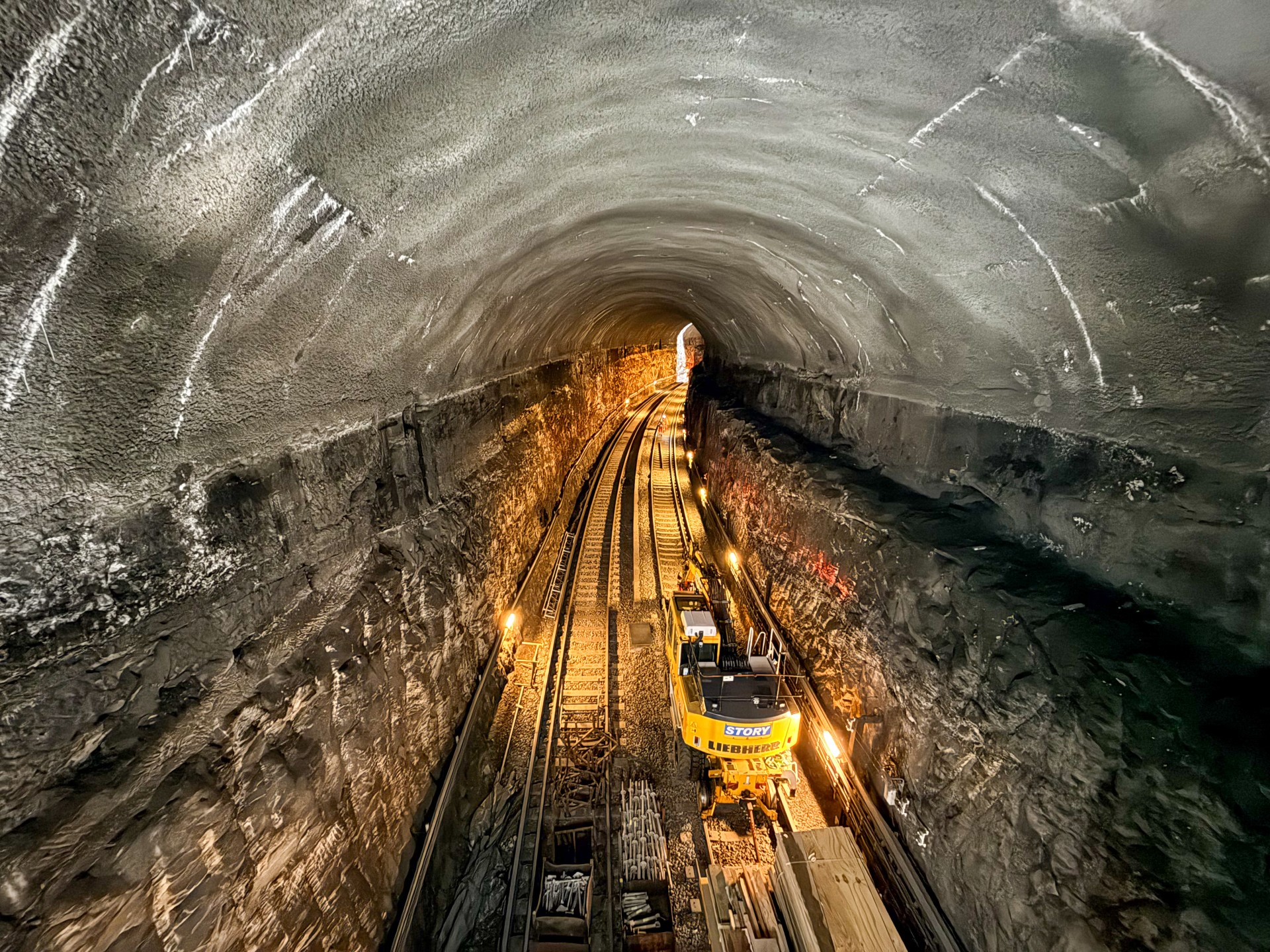
The railway was closed on its southern approach to the city centre from 11 October, with trains returning between Hunts Cross and central Liverpool after 27 days. More than 50 workers took part in the programme, removing sections of deteriorated concrete, treating tunnel walls, and installing drainage features. The works were planned as a concentrated closure because access to the operating railway and its electrified equipment is restricted while trains are running.
Engineers removed 92m² of old concrete before replacement material was applied and drilled 6,500 holes for waterproofing injections. The final report also recorded 115 weep holes, intended to lead water towards drainage, and 1,688m² of treated tunnel wall. These figures describe different parts of the repair: concrete removal prepares defective areas for replacement, while resin injection and drainage address paths through which water can enter and pass along the masonry.
The waterproofing technique involves drilling into the existing brickwork and injecting a liquid resin that sets within the wall. Once cured, the material forms a barrier against water passing through the masonry. Dedicated weep holes provide a route for collected water to reach drainage at track-bed level rather than allowing it to migrate uncontrolled towards the running railway. The work therefore combines restriction of seepage through the tunnel lining with a managed outlet for water that still needs to be removed.
Water control is especially important on a railway that uses an exposed conductor rail to supply traction power. Merseyrail’s system operates with a 750V third rail, so water reaching the electrical installation can contribute to faults and operational restrictions. The tunnel repairs are intended to reduce that risk by protecting the infrastructure surrounding the conductor rail. Network Rail has not released a quantified forecast of avoided outages, so the anticipated reliability benefit should not be expressed as a guaranteed percentage improvement.
The work was undertaken in existing Victorian structures rather than replacing the tunnels. Network Rail previously carried out similar repairs at High Neck Tunnel on the same southern approach in 2022. Concentrating the new treatment on material defects, seepage paths, and controlled drainage allowed the infrastructure owner to maintain the existing rail alignment while intervening in four further structures whose condition could affect operations.
Network Rail used the extended access period to continue another programme covering electrical power control. Track feeder switches and associated control rooms manage the supply to sections of the third rail across the Northern and Wirral lines. Modernising those systems is intended to make it easier for engineers to isolate smaller sections for maintenance or emergency repairs. A more targeted electrical isolation can reduce the portion of the railway that needs to be taken out of service when a fault or planned intervention occurs.
That power control programme is separate from the waterproofing contract, even though both have been carried out during overlapping possession periods. Four extended Sunday closures were used for the control system works. Network Rail expects further feeder-switch upgrades through 2027, mainly at times when trains are not running. It has not ruled out additional closures where they become necessary, but says affected passengers will receive advance information.
The tunnel closure required a temporary operating plan for the passenger network. Replacement buses ran on the section between Hunts Cross and the city centre, while services from Southport, Ormskirk, and Headbolt Lane continued on adjusted patterns. The restrictions were concentrated on the approach from the south rather than shutting the entire network. Reopening on 7 November restored the through rail route after just under four weeks of disruption.
The final construction figures differ from an interim update issued on 27 October, when Network Rail reported 6,400 resin injection holes and 1,672m² of waterproofed wall. Both quantities increased by completion, to 6,500 holes and 1,688m² respectively. Its interim update also listed 197 drainage holes, while the completion account gave 115; the published material does not explain that discrepancy. The completed-work report is used for the final drainage-hole figure rather than assuming that the two releases measured an identical scope.
Liverpool Central recorded more than 14 million station entries and exits in 2024/25, according to Network Rail. Its southern tunnel approach feeds the central section of the Northern Line, making work on water ingress difficult to perform without affecting passenger services. The scheduled possession enabled repairs to proceed behind a planned temporary transport arrangement, avoiding the need to undertake the same activities alongside normal train movements.
Passenger services resumed on 7 November after the waterproofing and concrete repairs were completed. The linked electrical-control investment will continue through 2027, with further track feeder switch upgrades planned mainly outside operating hours. Network Rail has not quantified the reduction in faults expected from the tunnel programme, and additional disruptive possessions will be announced if they become necessary.