IN Brief:
- Avove is delivering the £13m Sedgeletch effluent transfer scheme started in August 2026.
- The works cover a new pumping station, approximately 3.5km transfer route and River Wear outfall.
- Northumbrian Water aims to redirect treated effluent from Herrington Burn by March 2027.
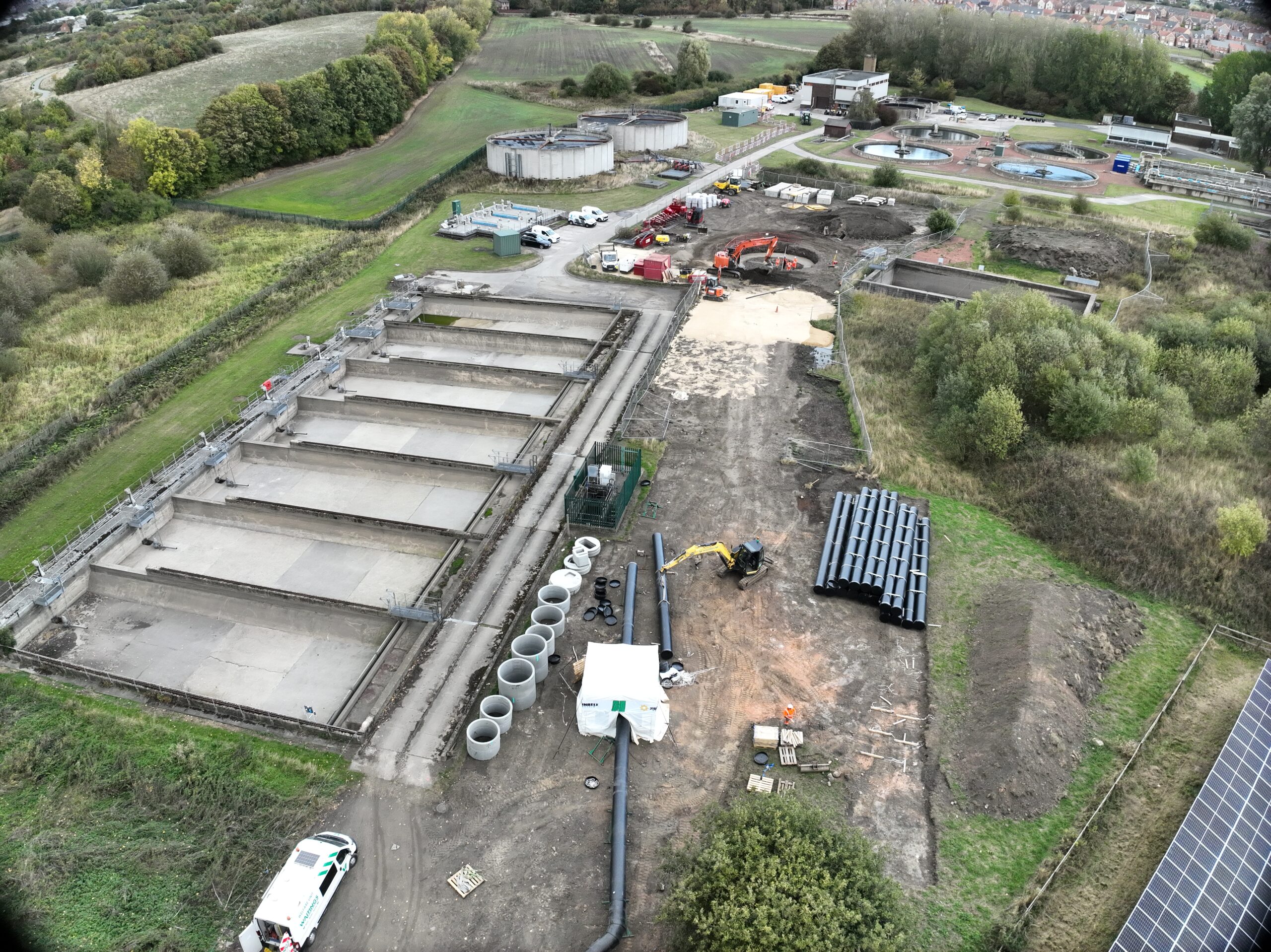
Avove is delivering a £13m treated effluent transfer scheme for Northumbrian Water, connecting Sedgeletch Sewage Treatment Works to a new discharge point on the River Wear. Its October contractor update details the pumping station, buried pipeline and outfall works already under construction. Northumbrian Water said the project began in August 2026 and is targeting completion in March 2027.
The planned route extends approximately 3.5km from the treatment works, between Bournmoor and New Herrington, towards the Wear. The new pumping station will move treated water through the underground pipework to the river, replacing the existing discharge arrangement into Herrington Burn. The client separately refers to approximately 3.7km of underground pipework; it has not explained the difference between that installation figure and the overall route description.
Herrington Burn currently receives the works’ treated effluent. Redirecting that flow to the much larger River Wear is intended to reduce the burden on the smaller watercourse, while allowing greater dilution and dispersion at the new discharge location. The water must still meet applicable treatment and permit requirements: changing the receiving river does not alter the need for effluent to be treated before release.
The new pumping station forms the mechanical link between the treatment works and the transfer main. Its equipment, electrical power and controls must work with the pipeline and outfall as one system, so commissioning will need to establish that the installed components can operate together under the agreed duties. Pump capacity, head and design flow rates have not been published, and cannot be inferred from the project value or route length.
Building the underground connection requires excavation, pipe installation, backfilling and reinstatement along the route. Ground conditions, buried services and access arrangements will affect how much of the corridor can be worked at one time. Any pressure tests and connection checks must take place before the new discharge arrangement is brought into normal operation, with site reinstatement following each completed section.
Northumbrian Water identifies a route through Elba Park and the former railway corridor between Biddick Woods and the A182, with interfaces at the A182 and A183 roads. That alignment introduces crossings and public access constraints in addition to the pipe installation itself. Construction traffic, temporary restrictions and landscape reinstatement must be coordinated with the affected locations, though the current source material gives no definitive road-closure timetable.
Within the operating sewage treatment works, the new transfer equipment must connect to the treated-water outlet without compromising the existing treatment process. Mechanical, civil and electrical work are therefore linked by the eventual changeover of the discharge route. The contractor has not disclosed a sequence of outages, bypass arrangements or commissioning dates for the final connection.
At the river, the project includes a new outfall to receive the pumped discharge. The transition between buried pipework and the riverbank creates a civil engineering interface that must remain stable under the conditions of the site. Dimensions and the selected bank protection or outfall installation method have not been published, so the announced scope should not be taken as a specification for those works.
The transfer project is one part of Northumbrian Water’s environmental improvement plans for the area. Other proposed measures include changes to treatment at Sedgeletch to reduce phosphorus in the final effluent and work on four storm overflows around Houghton-le-Spring and Shiney Row. Those programmes address different sources of pressure on water quality and are separate from the £13m pipeline contract.
Phosphorus reduction targets the composition of treated wastewater before it leaves the works. Relocating the Sedgeletch outfall changes the receiving water after treatment, while storm overflow interventions relate to discharges during particular sewer network conditions. The intended environmental benefits therefore depend on several pieces of infrastructure and their respective operating performance, rather than the pipeline alone.
Northumbrian Water has placed the scheme within its wider £1.7bn environmental programme to 2030. That is a regional programme figure, not a budget for Sedgeletch. Avove’s current civil, mechanical and electrical scope covers the transfer assets, and the £13m refers to this project rather than the separate planned treatment and overflow upgrades.
Colin Butler, Avove’s framework director, said the company was working with Northumbrian Water, nearby communities and other stakeholders during construction. Coordination along the route will be relevant at the public spaces and road interfaces identified by the client, and reinstatement will be needed after sections of the buried main are completed.
The delivery programme continues towards March 2027. Once installation and integrated testing are complete, the treated discharge can be redirected to the new Wear outfall under Northumbrian Water’s operating arrangements. Construction is ongoing; completion of the pipeline and any resulting improvement to Herrington Burn should not be described as outcomes already achieved.