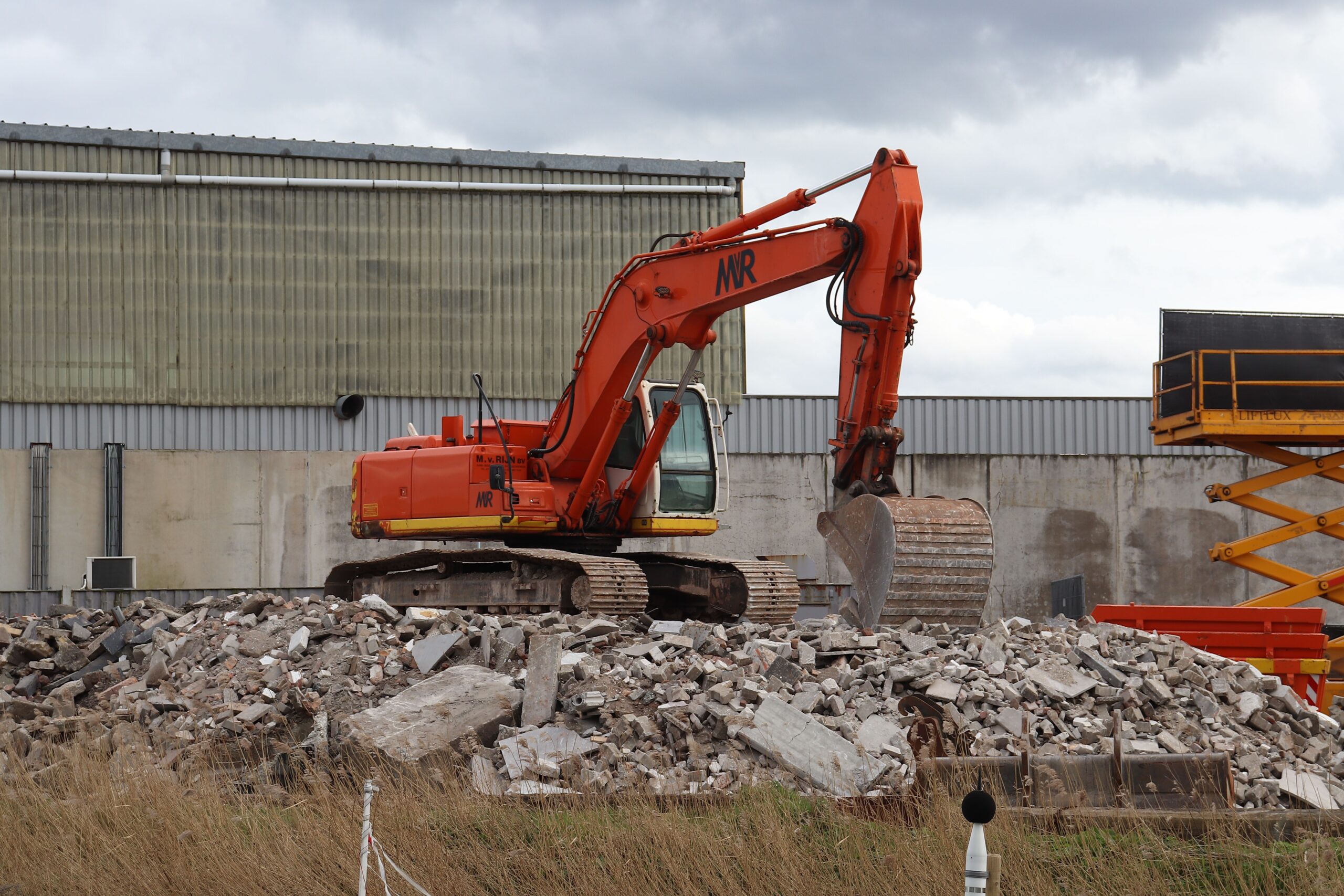
IN Brief:
- More than 70 million tonnes of recycled and secondary aggregates are used annually in Britain’s construction materials market.
- Almost two decades have passed since the last comprehensive government-backed survey of construction waste recycled into aggregates.
- MPA wants updated national evidence to support investment in processing capacity, recycling technology, and future materials planning.
The Mineral Products Association is calling for a new government-backed survey of construction waste recycling, arguing that Britain’s growing use of recycled aggregates is being measured against an increasingly dated evidence base.
More than 70 million tonnes of recycled and secondary aggregates now enter the market annually, according to MPA estimates, supplying a substantial share of the materials used across building, infrastructure, roads, and civil engineering.
Almost two decades have passed since the last comprehensive government-backed survey examining how waste materials are being processed into construction aggregates. MPA says the absence of current, detailed survey data makes it harder to judge where further recycling capacity and technology investment could deliver viable additional supply.
The association’s concern is not that construction waste is going unused on a large scale. Britain already recovers a high proportion of suitable concrete, brick, asphalt, rail ballast, and other hard materials, with recycled products routinely used in applications including fill, capping layers, sub-base, and other civil engineering works.
Secondary aggregates add another source of supply and can include materials arising from industrial and extractive processes rather than demolition alone. The combined market therefore spans several waste streams, processing routes, and end uses that are difficult to capture through one administrative dataset.
MPA has previously estimated that recycled and secondary materials account for close to 30% of total construction aggregate supply in Great Britain. Its latest intervention argues that the detailed evidence needed to understand that contribution has not kept pace with the expansion of recycling operations and processing technology.
The government’s own waste statistics demonstrate some of the problem. Provisional Defra figures show that England generated 63.3 million tonnes of non-hazardous construction and demolition waste in 2024, of which 60.3 million tonnes was recovered, equivalent to a recovery rate of 95.3%.
That dataset excludes excavation waste from the construction and demolition recovery measure, while other national waste statistics use wider definitions covering construction, demolition, excavation, and dredging. The different boundaries make direct comparisons with aggregate supply figures difficult.
Defra also acknowledges uncertainty in the absolute tonnages. Its provisional 2024 construction and demolition estimates rely partly on earlier aggregate production data because final 2024 MPA information was not available when the government statistics were prepared.
A dedicated survey would allow more detailed examination of where recoverable material arises, the equipment being used to process it, the quantities entering particular product markets, and the geographical relationship between waste generation and demand.
Those factors have a direct bearing on plant investment. Crushing and screening equipment can recover relatively straightforward concrete and masonry streams, while washing, sorting, separation, and more advanced treatment can improve difficult materials or create products suitable for higher-value applications.
Investment becomes harder to justify where businesses cannot establish how much suitable feedstock is available within an economic haulage distance or whether enough demand exists for the finished product. Aggregate is a high-volume, relatively low-value material, so transport distance can quickly determine whether a recycling operation remains commercially practical.
Better evidence would also assist mineral and waste planning. Recycled aggregates reduce the amount of primary rock, sand, and gravel required from quarries and marine sources, but their availability is tied to the volume and location of demolition, excavation, and infrastructure work.
That prevents recovered material from acting as an unlimited substitute for primary aggregates. MPA has repeatedly argued that most suitable hard construction and demolition waste is already being recovered, leaving future aggregate requirements dependent on a mixture of recycled, secondary, land-won, and marine resources.
The distinction is becoming more important as housing and infrastructure programmes increase pressure on material supply. Concrete, asphalt, foundations, drainage, road construction, rail projects, and earthworks all consume substantial aggregate volumes, meaning stronger construction output can increase demand more quickly than additional demolition generates recyclable material.
The composition of that demand matters as much as the overall tonnage. Some applications can absorb recycled material relatively easily, while others require specific grading, durability, contamination, or performance characteristics that limit substitution.
Processing technology continues to expand those possibilities. More sophisticated washing and separation systems can remove contaminants and improve consistency, while work on recycled concrete fines and recovered aggregate seeks to retain materials at a higher value within the construction cycle.
Accurate data would give policymakers a clearer basis for judging where those technologies can increase supply rather than simply shifting existing recovered material between uses. It would also allow recycling targets to distinguish between theoretical waste availability and material that can realistically be recovered to an appropriate specification.
Defra’s latest figures already show a mature construction waste recovery market, with more than 95% of England’s measured non-hazardous construction and demolition waste recovered in 2024. MPA’s request is therefore aimed at understanding the detail beneath that headline rate rather than demonstrating that recycling needs to begin from a low base.
A modern survey would replace assumptions formed before much of today’s processing capacity, equipment, and circular-economy policy was established. With recycled and secondary aggregates already contributing tens of millions of tonnes each year, the quality of that evidence increasingly affects decisions about where the next tranche of investment should go.