IN Brief:
- Planning application 26/00916/P proposes an extension to Letham Mains Primary School and associated works.
- The expansion includes four classrooms, additional toilets and greater dining capacity as the pupil roll increases.
- Subject to consent, construction is planned from summer 2027 with completion targeted for August 2028.
East Lothian Council has submitted plans to extend Letham Mains Primary School in Haddington with four additional classrooms, enlarged dining facilities and supporting accommodation as continued housebuilding pushes the school towards its next planned phase of expansion.
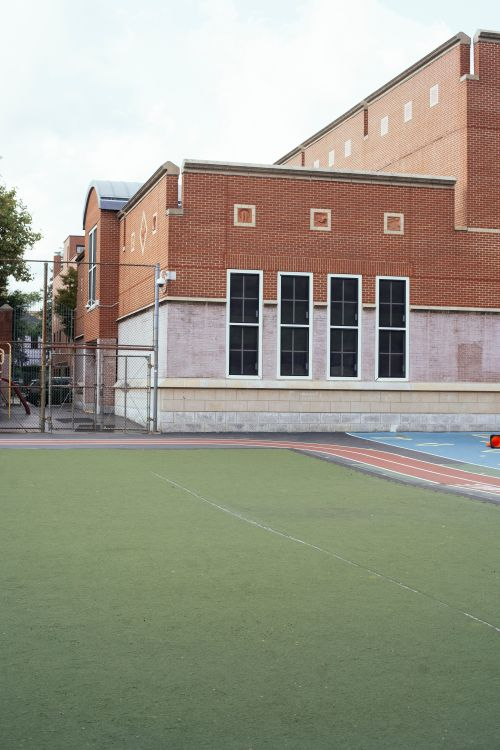
Planning application 26/00916/P was received by the council on 3 September and validated on 15 September. The proposal covers an extension to the existing school building and associated works, using a campus layout that was designed from the outset to accommodate future growth.
The immediate project includes four classrooms, extra toilet provision and additional dining capacity. Subject to planning consent and the remainder of the council’s delivery process, construction is expected to start in summer 2027 and complete by August 2028.
Letham Mains Primary opened in February 2021 as part of the major housing expansion on the western edge of Haddington. The original school contains 14 classrooms, an early learning and childcare centre, dining space, a dance area and a two-court sports hall, together with external facilities for learning, sport and play.
Its initial construction was funded through developer contributions secured from housebuilding at Letham Mains. The relationship between housing delivery and education capacity continues to drive the extension as more homes are occupied and the local school-age population increases.
The school opened with a roll of 32 pupils. Current figures put its primary roll at 337, alongside 108 early years spaces, while the primary population is projected to reach 456 by 2030. Provision for later expansion has therefore moved from a design allowance to a live construction requirement within a relatively short period of opening.
The growth reflects the scale of residential development around the campus. Planning approval for 809 homes at Letham Mains was granted in 2015 with associated infrastructure, while a further 252 homes received consent in 2021. The school was conceived as a phased facility rather than a building whose opening capacity would remain unchanged throughout the housing programme.
Designing for later expansion should simplify some parts of the project. Circulation, shared facilities and external space can be arranged from the outset so that a future classroom extension does not require complete reorganisation of the campus. Service routes and connections can also be positioned with later phases in mind.
That preparation does not remove the difficulty of carrying out building work beside an occupied primary school. A summer 2027 start will require firm separation between pupils and construction traffic, control of noise and dust, maintenance of emergency access and careful programming of intrusive work.
The August 2028 completion target gives the final summer holiday period particular importance. Connections into the existing building, testing, commissioning, furniture installation and work affecting circulation can be concentrated into periods when pupil numbers on site are lower.
Temporary arrangements may still be required during the preceding academic year. Contractor compounds, deliveries and plant movements will occupy space within or around an operating campus, requiring the site logistics plan to evolve as work moves from groundworks through structure, envelope and internal completion.
The funding position has also changed since the original school was built. East Lothian Council has previously confirmed that the extension would use a combination of developer contributions and council borrowing, with £1.912m of borrowing identified when the project returned to the capital programme.
Developer contributions linked to housing growth have also been secured for the expansion, but they do not remove the council’s own capital exposure. Education infrastructure is funded through individual planning obligations and local investment decisions rather than a simple assumption that developers will meet every future cost created by population growth.
The phased approach at Letham Mains reflects that reality. Building every possible classroom before pupils arrive would leave public money tied up in unused capacity, while waiting until the existing building is full risks creating an immediate shortage. The original design attempted to preserve room for growth between those two positions.
The current planning application activates that next phase. The school remains relatively new and is recorded as being in good condition, but physical condition and capacity are separate questions. A modern building can still require expansion when the development around it changes the number of pupils it needs to accommodate.
The project also illustrates the long interval between major housing consent and the infrastructure ultimately required to support occupation. The first substantial residential permission dates from 2015, the permanent school opened in 2021 and the extension is scheduled to complete in 2028.
Planning permission is now the immediate milestone. If application 26/00916/P is approved and the current programme holds, contractors will begin work inside an operating school campus next summer, extending a building deliberately designed to grow as the surrounding housing moved from masterplan to occupied neighbourhood.