IN Brief:
- The Retrofit Centre for Traditional Buildings will form part of the Lock 16 heritage skills campus in Camelon.
- £1m of research funding supports a workshop, materials library, heritage science laboratory and specialist training facilities.
- Almost 500,000 Scottish buildings use traditional construction, increasing demand for technically appropriate energy efficiency measures.
Historic Environment Scotland is adding its national Retrofit Centre for Traditional Buildings to the Centre of Excellence for Canals and Traditional Skills at Camelon, creating a dedicated base for research, training and technical work on improving the energy performance of older buildings.
The facility is supported by £1m from the UKRI Arts and Humanities Research Council through the Research Infrastructure for Conservation and Heritage Science programme. It will include a research workshop, specialist scientific equipment, a retrofit materials library, heritage science laboratory space and facilities for training and knowledge transfer.
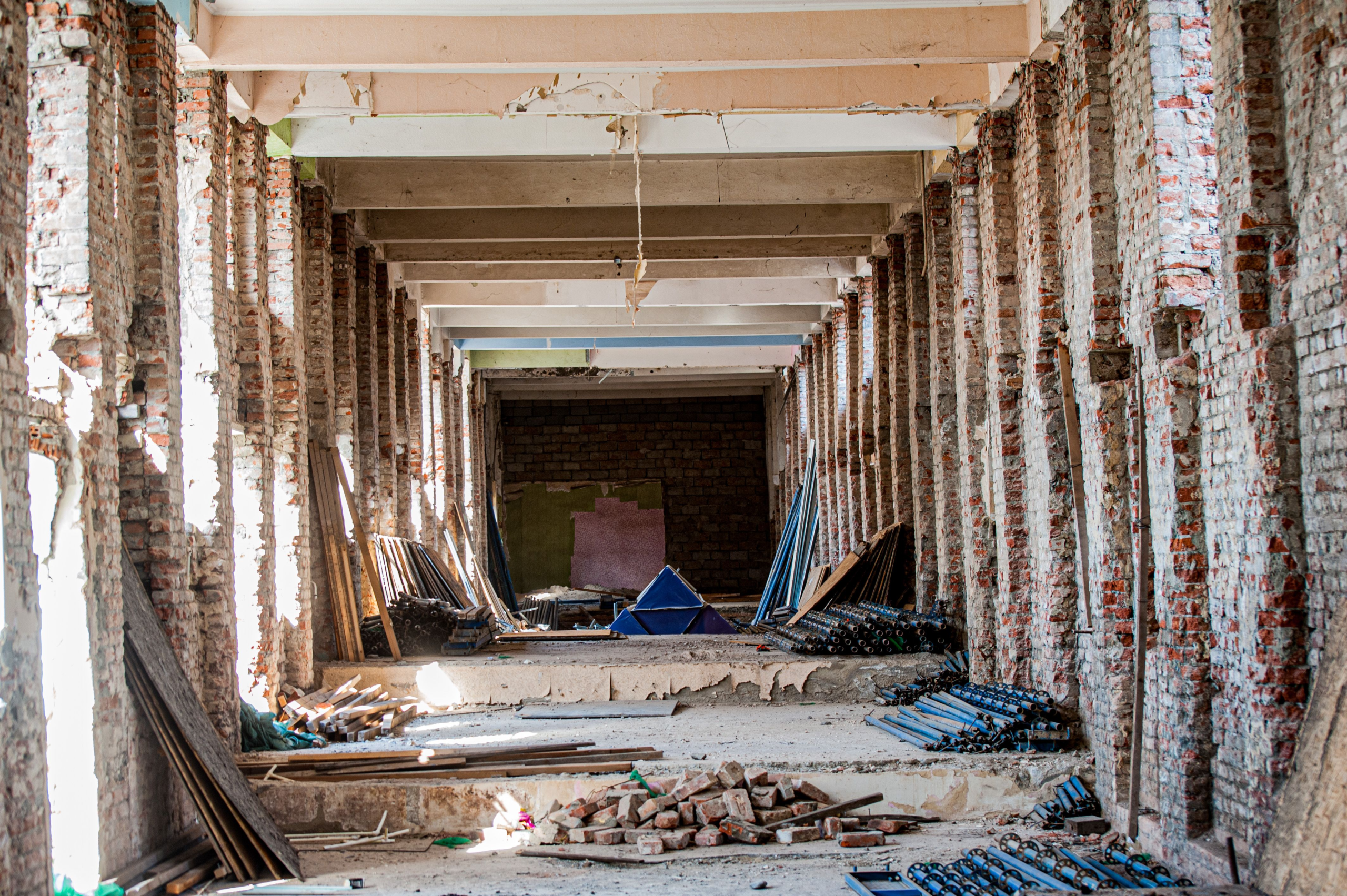
The centre will occupy part of the wider Lock 16 development, where Scottish Canals and HES are converting the former AG Barr factory beside the Forth & Clyde Canal into a national skills and conservation campus. Major internal and external works are already progressing across the existing industrial buildings.
The wider Centre of Excellence is a substantial regeneration project in its own right. Previous project figures put the overall cost at about £12.9m, supported by funding including £4m through the Falkirk and Grangemouth Growth Deal and £3.7m from the National Lottery Heritage Fund, alongside contributions from partners and other public programmes.
Reusing the former factory gives the programme an appropriate technical setting. Existing industrial buildings are being adapted into workshops, stores, training areas, offices and collaborative spaces rather than replaced, placing practical building reuse around the organisations responsible for developing conservation and retrofit practice.
The Retrofit Centre adds a more scientific function to the campus. Its remit covers building performance monitoring, retrofit assessment, materials research and testing of approaches designed specifically for traditional construction. Training will include energy efficiency measures for older buildings alongside professional development for people involved in conservation and refurbishment.
Traditional construction does not always respond well to methods developed for modern framed or cavity-wall buildings. Many older properties rely on vapour-permeable masonry, lime mortars and other materials that allow moisture to move through the fabric. Introducing impermeable layers or poorly detailed insulation can reduce heat loss while creating condensation and trapped moisture elsewhere.
Improving thermal performance therefore requires an understanding of heat, moisture and ventilation together. A wall can appear to perform well in a simplified energy calculation while developing deterioration if the intervention changes drying patterns or moves the location of condensation inside the construction.
The new facility is intended to give researchers and practitioners a stronger evidence base for those decisions. Sensors and monitoring equipment can track temperature, humidity, moisture and heat loss before and after work, allowing predicted results to be compared with actual building behaviour.
A dedicated materials library can support the same process by bringing traditional and newer low-carbon products into one technical environment. Designers and contractors can examine how insulation, mortars, finishes and other products interact rather than considering each component independently.
The potential application is substantial. Scotland’s historic environment data indicates that almost 500,000 buildings are of traditional construction, including a significant share of homes, offices, shops and public buildings. Energy improvement across the existing stock therefore cannot be addressed solely through systems designed for recent construction.
The challenge is made harder by variation between apparently similar buildings. Stone type, wall thickness, exposure, orientation, previous repairs, ventilation and occupancy can all influence performance. A detail that works on one property may create moisture or durability problems on another if those conditions differ.
That places greater weight on survey quality before work starts. Successful traditional-building retrofit often depends on understanding defects, moisture sources and previous alterations before selecting insulation or heating measures. Installing new products without addressing rain penetration, failed pointing or ventilation can merely conceal the original problem.
The facility will sit alongside practical training at Lock 16. Scottish Canals and HES intend the wider campus to support traditional skills such as stonemasonry, together with canal maintenance, apprenticeships, volunteering and professional development. Combining craft training with performance research creates a route for technical findings to move more directly into site practice.
Execution remains as important as design. Junctions around windows, roofs, floors and services can determine whether insulation remains continuous and whether moisture has an escape route. A technically sound specification can still underperform if detailing or workmanship breaks the intended building envelope.
The Retrofit Centre therefore broadens the purpose of the Camelon development beyond heritage skills alone. Lock 16 is becoming a place where existing buildings are reused, traditional trades are taught and proposed retrofit methods can be measured before they are repeated elsewhere.
Its longer term value will depend on whether that work produces guidance that can be applied consistently across real projects. With hundreds of thousands of traditional buildings facing pressure for lower energy use, the construction sector needs interventions that reduce demand without creating a new cycle of moisture, fabric and indoor-environment defects.