IN Brief:
- LCBI Logistics has launched across ten European countries, including the United Kingdom.
- The whole-life methodology measures construction, operational, and end-of-life carbon through life-cycle assessment.
- The methodology and thresholds were tested on 18 pilot projects before the certification scheme launched.
Low Carbon Building Initiative has launched a dedicated certification scheme for logistics buildings across ten European countries, applying a common whole-life carbon methodology to a property sector dominated by large structures, extensive slabs, servicing areas, and energy-intensive operations.
LCBI Logistics is now being introduced in France, Belgium, Luxembourg, the Netherlands, Germany, Spain, Italy, the United Kingdom, the Czech Republic, and Poland. The scheme is intended to allow logistics assets in different national markets to be assessed against the same carbon framework.
The methodology measures emissions across construction, operation, and end of life using life-cycle assessment. Results are compared against defined limit values, creating a certification route based on measured carbon performance rather than a broad basket of sustainability indicators.
LCBI began developing the logistics methodology through a technical committee in March 2025. The organisation worked with consultants, developers, investors, contractors, and logistics property users, while the final methodology and threshold values were tested on 18 pilot projects before launch.
A common metric for a repeatable building type
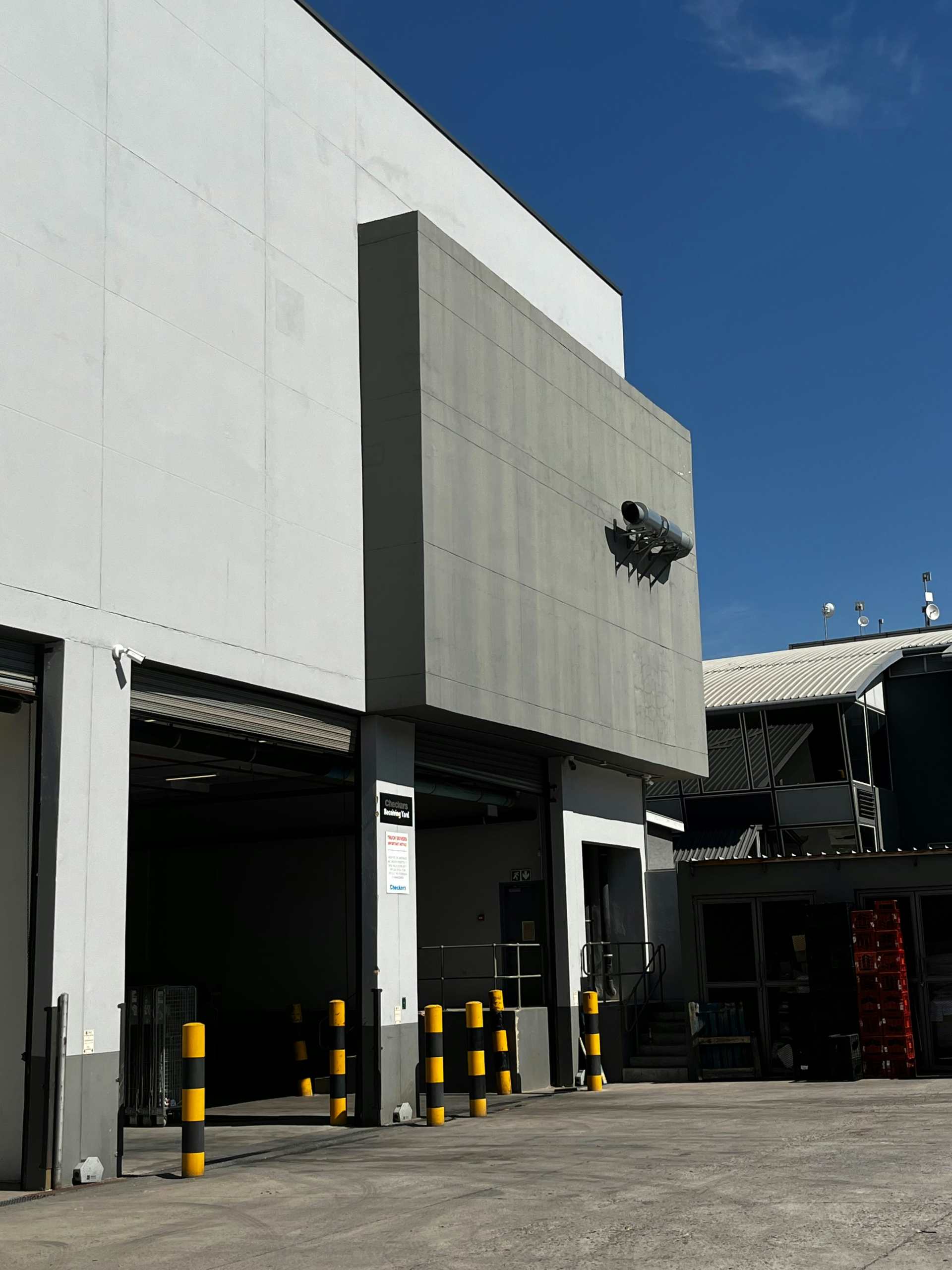
Warehouses and distribution facilities lend themselves to cross-border comparison because many of their core components recur across markets. Large floorplates, structural frames, concrete slabs, insulated envelopes, service yards, loading docks, and relatively simple internal volumes create a more repeatable physical form than many other commercial building types.
That does not make their carbon profiles identical. Structural spans, ground conditions, slab requirements, office content, refrigeration, automation, heating, lighting, and vehicle charging can alter both embodied and operational emissions substantially.
A consistent methodology can make those differences easier to compare if calculation boundaries, datasets, assumptions, and reporting periods are aligned. Without common rules, two apparently similar logistics buildings can produce carbon figures based on different scopes, making direct comparison unreliable.
Embodied carbon places particular emphasis on early design and procurement decisions. Structural steel, concrete, reinforcement, foundations, cladding, and other high-volume materials account for much of the carbon committed before a logistics building becomes operational.
Once the frame, slab, and envelope are specified, the ability to remove that embodied impact falls quickly. Certification criteria therefore have the greatest potential influence when developers and design teams use them before procurement rather than calculating a score after practical completion.
Operational carbon introduces a different set of variables. Some warehouses operate with relatively modest building loads, while cold stores, automated fulfilment centres, and sites with extensive charging infrastructure can consume considerably more energy.
The distinction between landlord systems and occupier equipment also complicates assessment. Lighting and basic heating may sit within the base building, while automation, refrigeration, process loads, or vehicle charging can be driven by the tenant. A portfolio-wide standard has to establish consistent treatment of those boundaries if the resulting ratings are to remain comparable.
LCBI’s technical committee has included Elioth by Egis, Artelia, ELAN, Bureau Veritas, and One Click LCA, alongside developers and occupiers including Baytree, Virtuo Industrial Property, GSE, Lidl, APRC Group, AEW, IDEC, and STEF.
The involvement of both construction and investment organisations reflects the dual purpose of a building-carbon standard. Designers and contractors need a method that can inform specification and material choices, while investors and owners require an output that can be applied consistently across portfolios.
LCBI differs from broader environmental assessment systems by concentrating specifically on carbon. Certification systems such as BREEAM cover a wider group of issues, including water, transport, ecology, and management, whereas LCBI is intended to measure greenhouse-gas impact across the building life cycle.
For UK project teams, adoption is likely to depend initially on client requirements. Developers and investors with assets across several European countries have a clearer reason to use a common benchmark, while domestic schemes may continue to work primarily to planning conditions, corporate standards, building regulations, and existing certification requirements.
The launch nevertheless adds another potential design constraint to logistics projects. Where LCBI is specified alongside BREEAM, EPC requirements, embodied-carbon targets, and corporate reporting commitments, contractors and consultants will have to demonstrate how the different standards interact rather than treating each as an isolated sustainability exercise.
The scheme now moves from methodology development into live certification. Its effect will become measurable through the number and type of projects assessed, the carbon thresholds achieved, and whether developers alter structural, material, or operational specifications to improve results rather than simply reporting them.