IN Brief:
- Almost £1m has been approved to move water, drainage, broadband, and telecommunications infrastructure from the route.
- Phase one comprises a 1.6km link road, with Jackson Civil Engineering delivering the approximately £6.6m construction contract.
- The route is intended to reduce through-traffic, improve active travel, and unlock land allocated for around 225 homes.
North Lincolnshire Council has approved almost £1m of utility diversion work for the first phase of the Barton-upon-Humber link road, clearing water, drainage, broadband, and telecommunications infrastructure from the route before the main highway works advance.
The enabling package is the latest delivery step in a project that has progressed from consultation and planning into construction. Phase one will create a 1.6km link between the A1077, Caistor Road, and Barrow Road, forming part of the wider Barton Connectivity Project supported by the town’s £19.7m Levelling Up Fund allocation.
Jackson Civil Engineering Group was appointed earlier in 2026 to deliver the link road, with the awarded works valued at about £6.6m. The new route is designed to divert through-traffic, including heavy goods vehicles, away from the town centre, while opening access to land allocated for around 225 homes.
The highway cross-section is intended to carry more than vehicles. Council project information describes a 7.3m-wide carriageway with a 3m cycle route to the west, 2m footways, and swale verges intended to support sustainable drainage. The road therefore sits within a wider active-travel and public-realm programme rather than operating as a stand-alone bypass.
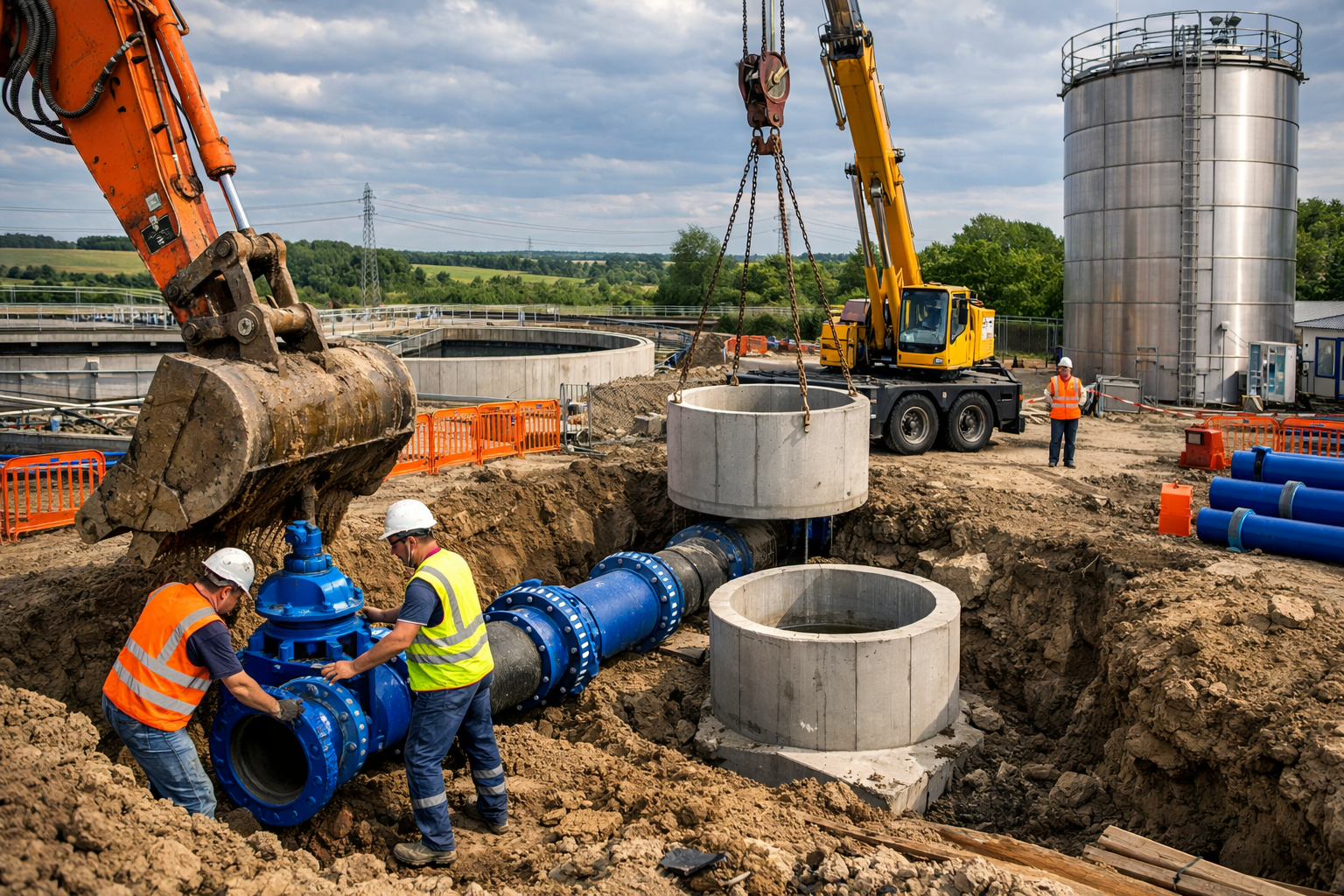
Existing water pipes, drainage runs, fibre connections, and telephone infrastructure may cross the proposed alignment at different depths and under different ownership, each with its own access, isolation, testing, and reinstatement requirements. Completing the diversions before bulk earthworks and pavement construction reduces the risk of service clashes once the principal civils sequence is fully mobilised.
The work also gives the project team an earlier view of actual ground conditions. Record drawings for older buried services can be incomplete or imprecise, while trial holes and diversion works may expose unrecorded connections, changes in depth, or local drainage problems. Resolving those discoveries during enabling works is generally less disruptive than finding them after formation levels, structures, or permanent drainage have been established.
Early service clearance reduces the number of temporary interfaces competing for space once the main road works begin. Utility contractors can complete diversions, testing, and handover before the principal road layers are built, while the civils team gains a cleaner corridor for drainage, kerbs, ducts, and pavement construction. That sequencing becomes particularly valuable where several statutory undertakers share the same route.
The Barton scheme has a long development history. Residents backed a preferred route during consultation in 2022, planning consent for the first phase was granted in 2024, and the construction appointment followed in January 2026. The utility package is less visible than those earlier milestones, but it determines whether the consented road can move into sustained physical delivery without avoidable service conflicts.
The route is also tied directly to housing and regeneration objectives. North Lincolnshire Council says phase one will unlock land adjacent to the road that is identified for 225 homes, so delays to the highway can affect more than transport benefits. Access, drainage, and servicing capacity are often the dependencies that determine whether an allocated housing site can progress into construction.
The wider Barton programme includes improvements to walking and cycling routes and work around the railway station. The station mobility hub has already introduced cycle parking, bus information, electric vehicle charging bays, accessible parking, and other passenger facilities. Together, the interventions are intended to reduce pressure on the historic town-centre road network while improving alternatives to car-only journeys.
Jackson’s remaining programme will need to coordinate the diverted services with new drainage, earthworks, pavement construction, junction tie-ins, landscaping, and active-travel infrastructure. Maintaining local access while connecting a new road into existing routes adds another sequencing constraint, particularly where works interact with the A1077 and roads that remain in daily use.
Traffic management and environmental controls will run alongside the underground work. Diversion crews need working space for excavation, pipework, ducts, jointing, and reinstatement while keeping the surrounding highway network functioning and protecting existing services that remain live. Temporary drainage and access arrangements also have to survive changing weather and ground conditions, because a service diversion that is technically complete can still delay the main works if the corridor is not handed back in a condition ready for earthworks.
Published contract information indicated completion by March 2027. That leaves a concentrated delivery period for the physical road, making the enabling package consequential to the programme even if it is largely buried once complete. Almost £1m of utility work now stands between the approved alignment and the uninterrupted civils corridor needed to build it.