IN Brief:
- Scottish Water is renewing part of the deteriorated rising main between Saltcoats and Stevenston.
- Directional drilling beneath Stevenson Burn uses a 914mm steel sleeve before installation of a new 710mm PE pipe.
- Temporary works include a 10m-deep drive pit, groundwater control, cofferdams, vibration monitoring, and a bridge rated for 26-tonne vehicles.
Scottish Water is progressing replacement of a deteriorated wastewater rising main in North Ayrshire, using directional drilling, deep excavations, cofferdams, groundwater control, and temporary bridging to cross beneath Stevenson Burn.
The work forms part of a longer-term response to repeated failures on the rising main between Saltcoats and Stevenston. George Leslie has carried out emergency repairs on the asset since the first burst in 2022, while further defects identified during works earlier this year reinforced the need to move away from repeated local repairs.
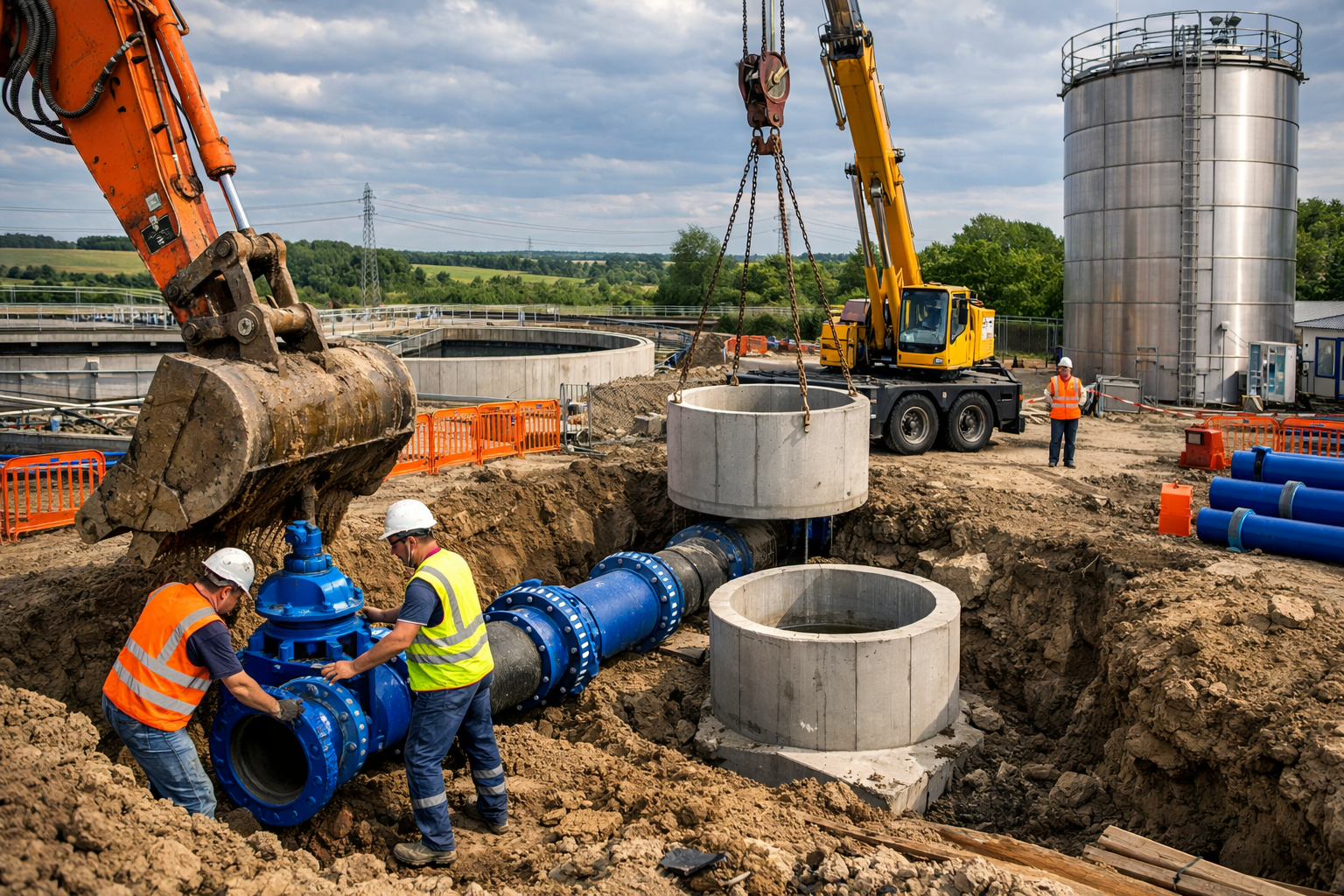
The latest permanent-work package includes a crossing beneath the watercourse beside a nature reserve and caravan park. George Leslie’s construction method uses two cofferdams approximately 70m apart to form a drive pit and reception pit for the directional drilling operation.
A 914mm-diameter steel sleeve has been drilled beneath the burn. The construction team will install a new 710mm polyethylene pipe through the crossing, connect it into the existing network, and decommission the failed section once the replacement is ready for service.
George Leslie separately says a new 120m polyethylene pipeline is being installed as part of the wider replacement of the deteriorated main. The existing ductile-iron pipe is around 30 years old and has suffered repeated failures along the route.
The drilling itself is only one element of the construction problem. The drive pit had to reach a depth of around 10m, at least 2m below the riverbed, following advice from the drilling contractor on the geometry and conditions required for the crossing.
Excavations are also needed for the reception pit and tie-in locations, creating several deep work areas around a high water table. George Leslie installed a dewatering system at the excavation locations, while measures were taken to reduce groundwater ingress through the temporary piling.
Temporary works supplier Mabey Hire provided a 12m flat-top beam bridge designed for vehicles weighing up to 26 tonnes, giving plant, materials, and equipment controlled access across the burn without relying on an unsuitable crossing.
The supplier also designed ground-support systems for the cofferdams using Larsen piles, trench sheets, and heavy bracing frames. Vibration monitoring sensors were installed because of the site’s proximity to residential properties.
Those temporary systems are fundamental to the construction method. Directional drilling avoids open-cut excavation directly through the watercourse, but the method depends on stable launch and reception pits, controlled groundwater, accurate drilling geometry, reliable access, and sufficient working space for specialist plant.
High groundwater can affect excavation stability and productivity if it is not managed continuously. Excessive inflow can interrupt drilling, increase pumping demand, destabilise local ground, and complicate environmental controls around a wastewater asset and adjacent watercourse.
The contractor has also been working with Scottish Water, SEPA, and North Ayrshire Environmental Health during the wider repair and replacement programme. The environmental interface is important because construction activity has to control groundwater, wastewater, silt, fuel, and other potential contaminants while working beside the burn.
The pipeline remains an operational asset throughout the work. Temporary arrangements are being used while the long-term solution is installed, and the final tie-ins will need to be planned around pumping and network conditions so that service can be maintained while the new section is brought into operation.
The repeated failure history is central to the investment case. Individual repairs can restore service after a burst, but defects elsewhere on an ageing pressurised main can leave the network exposed to further failures. George Leslie says the condition of the existing pipe had deteriorated to the point where continued local repairs were no longer a sustainable solution.
The project also demonstrates the amount of engineering that can sit behind a relatively short section of buried utility. Drilling, temporary bridges, piling, cofferdams, deep excavation, dewatering, vibration monitoring, environmental management, commissioning, and specialist pipeline work all have to be coordinated before the replacement disappears below ground.
Early coordination between the civil engineering contractor, drilling specialist, temporary-works supplier, and utility client has allowed the construction method to respond to developing information on ground and groundwater conditions.
The remaining work centres on completing the new polyethylene pipeline, connecting it into the network, and removing temporary systems once the replacement asset is operating. The finished pipe will be largely invisible, but its installation has required a concentrated combination of ground engineering, temporary works, and utility operations.