IN Brief:
- Heidelberg Materials UK has installed more than 600 piles for the Padeswood carbon capture development.
- Groundworks have used over 60,000 tonnes of aggregate and around 5,000m³ of concrete.
- The completed facility is designed to capture approximately 800,000 tonnes of carbon dioxide annually.
Heidelberg Materials UK has passed several major groundworks milestones on the carbon capture facility being constructed at its Padeswood cement works in north Wales.
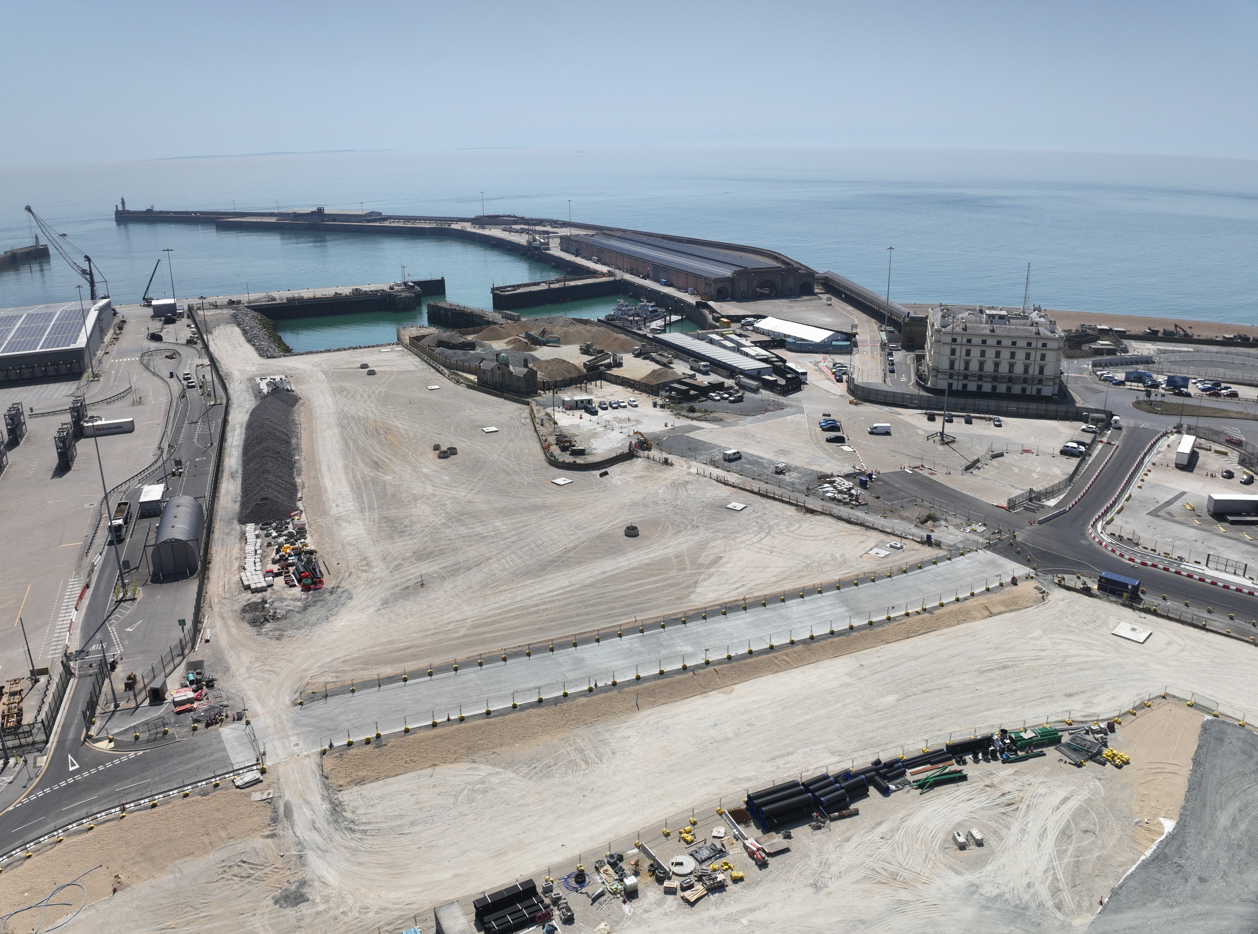
More than 60,000 tonnes of aggregate have been used to form the construction platform, while two piling rigs have installed over 600 concrete piles. Approximately 5,000m³ of concrete has also been placed in a retaining structure supporting the developing site.
The foundations will carry process equipment, structural frames, pipework, and the supporting infrastructure required for the capture plant. Ground conditions and the weight of the future installation make the piling package a critical early stage of delivery.
Concrete used on the project incorporates evoZero near zero cement. The product is supplied through a carbon accounting model linked to captured carbon dioxide at Heidelberg Materials’ Brevik cement plant in Norway, where an operational facility is designed to capture around 400,000 tonnes each year.
Worley and Mitsubishi Heavy Industries are providing engineering, procurement, and construction management services for the Padeswood project. Early enabling works have included wildlife fencing, security measures, overhead power diversions, cable diversions, and the removal of approximately 25,000 tonnes of topsoil for storage and later reuse.
An average of around 80 people are currently working on the site, with the workforce expected to rise to approximately 160 by the end of the year as civil, structural, mechanical, and process packages gather pace.
Once operational, the facility is designed to capture 95% of the carbon dioxide produced by the cement works, equivalent to approximately 800,000 tonnes annually. The captured gas is intended to be compressed and transported for permanent geological storage.
Constructing the cement sector’s carbon transition
Cement remains difficult to decarbonise because a substantial proportion of its emissions comes from the chemical conversion of limestone rather than fuel use alone. Replacing fossil fuels and improving plant efficiency can reduce part of the footprint, but neither measure removes the process emissions released during calcination.
Carbon capture has therefore become central to the sector’s long term strategy. Padeswood applies the technology to an existing UK works, requiring a large new process installation to be integrated beside an operating production plant.
That combination creates a demanding construction environment because new foundations, vessels, columns, compressors, ductwork, power systems, and pipelines must be delivered without compromising ongoing cement production. Connections and shutdown work will need to follow operational windows, while heavy lifting and site logistics must account for both construction traffic and normal plant activity.
The groundworks figures illustrate the physical scale behind industrial carbon policy. Capture rates are usually expressed as annual tonnages, although achieving them requires extensive conventional construction before the process equipment can operate, including earthworks, piling, reinforced concrete, structural steel, utility diversions, roads, drainage, and electrical infrastructure.
Using evoZero cement in the project’s concrete addresses part of the embodied carbon generated during construction. Similar approaches are beginning to appear elsewhere, including the use of lower carbon concrete on road improvement work at Redbridge.
The accounting method behind evoZero will remain important as clients examine how reductions are calculated, allocated, verified, and retained through the product chain. Scrutiny will increase as lower carbon materials move from demonstration projects into larger specifications and procurement frameworks.
Padeswood also depends on infrastructure beyond the cement works. Capturing carbon dioxide at the stack represents only one stage of the system, with compression, transport, and permanent storage required to operate as a coordinated chain.
Delays to transport or storage infrastructure could affect commissioning and the commercial use of the capture plant, even if the construction work at Padeswood proceeds to programme. Interfaces between industrial sites, pipeline operators, storage providers, regulators, and energy suppliers therefore require the same discipline as the physical build.
For contractors and suppliers, the project combines familiar heavy civil engineering with emerging process technology. Piling, concrete, steelwork, mechanical installation, electrical systems, instrumentation, and commissioning remain established disciplines, but relatively few UK teams have coordinated them around carbon capture equipment at full industrial scale.
The expanding workforce will provide an indication of how quickly the project moves from platform construction into structural and process assembly. Labour demand will become more specialised as the programme advances, increasing the requirement for coded welders, process engineers, control specialists, heavy lift teams, and experienced commissioning personnel.
Safety management will become more complex as the site grows because construction activity must coexist with cement production, heavy vehicle movements, process hazards, and major lifting operations. Clear separation of work areas, robust permit systems, and detailed interface planning will be required throughout installation.
The installed piles and retaining works establish the base on which the capture system depends. Padeswood is moving beyond development policy into full construction, where programme integration, engineering quality, and coordination with the wider carbon transport network will determine whether the planned annual capture rate becomes an operating industrial asset.