IN Brief:
- JN Civils has commissioned a CDE wash plant at its Olympic Way facility in Blackpool.
- The system processes construction, demolition, and excavation waste into graded sands and aggregates.
- Recovered products will be reused internally and sold to external construction and groundworks customers.
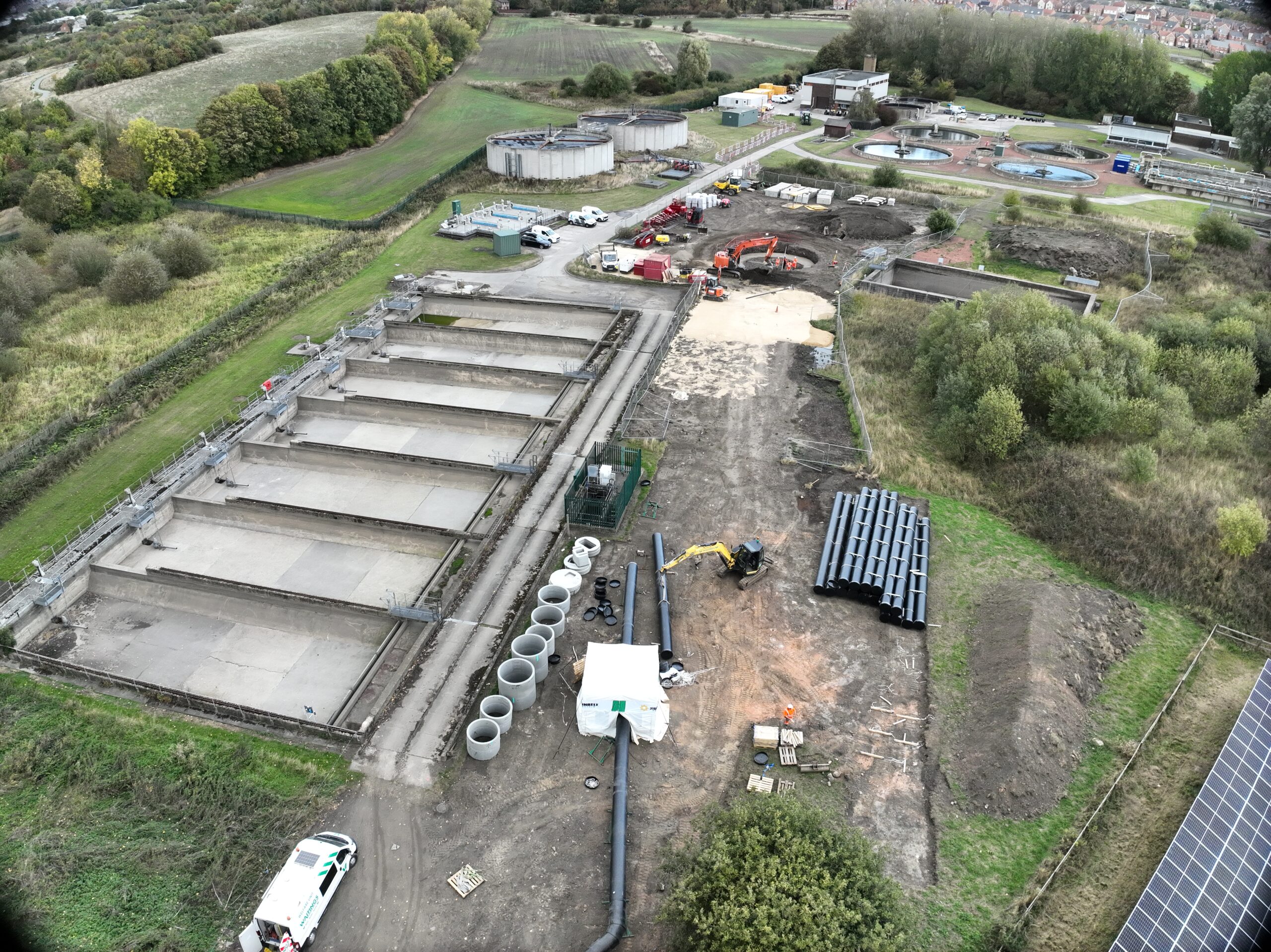
JN Civils has commissioned a 150 tonnes per hour construction, demolition, and excavation waste recycling plant at its Olympic Way facility in Blackpool.
The wet processing system was designed by CDE and allows the civil engineering and utilities contractor to bring material recovery under its own control after previously transporting excavation waste to a third party wash plant.
Although the earlier arrangement enabled material to be recovered, it also created haulage costs, processing charges, delays, and limited control over when recycled products could be returned to use.
The new plant includes an R4500 belt feeder and integrated hopper, an AggMax scrubbing and classification system, an EvoWash sand washing unit, Infinity dewatering screening technology, an AquaCycle thickener, and an X3 ProPress filter press.
Combined within a constrained urban site, the equipment can process mixed construction, demolition, and excavation material into fine sand, coarse sand, and several graded aggregate fractions.
JN Civils is targeting the recycling of 90% of its waste. Initial operation is expected to recover up to 80% of excavation material, producing sands and stone suitable for defined construction applications.
Recovered products are already being used within the company’s own civil engineering work. Spare processing capacity will also allow third party material to be accepted and recycled aggregates to be sold to contractors and groundworks businesses.
Moving the process in house changes waste management from an external cost into an operational activity with potential revenue. Control over output and stock levels can also reduce exposure to delays or shortages in primary aggregates.
Recovered mineral products enter wider procurement
The investment follows wider work to establish more circular use of construction materials. The UK concrete sector’s circular construction plan places increased emphasis on retaining mineral resources, improving recovered material quality, and supporting procurement based on reuse.
Excavation material accounts for a substantial proportion of construction waste movements. Soil, sand, stone, and mixed arisings are frequently transported away from a project before replacement aggregate is brought back, creating two transport movements and the associated cost, emissions, and road use.
Wet processing can separate and clean material that would otherwise retain limited value. Scrubbing breaks down clay bound particles and removes contamination, while classification, washing, screening, and dewatering divide the feed into more consistent products.
Commercial acceptance depends on quality rather than recycled content alone. Aggregates must be tested and documented against their intended use, with grading, strength, durability, and contamination controlled despite variation in the incoming material.
Process management is therefore as important as nominal plant capacity. A system able to handle 150 tonnes per hour will only produce dependable value when feedstock inspection, water management, laboratory testing, maintenance, stockpiling, dispatch, and sales operate together.
The AquaCycle and filter press reduce fresh water demand and the volume of wet residual material. Closed water circuits are particularly useful on constrained sites, where settlement lagoons would require substantial land and create additional environmental controls.
Locating recovery capacity closer to the source of waste can shorten transport distances. JN Civils works across utilities and infrastructure, where excavation material is generated repeatedly from road, drainage, pipeline, and network projects.
An internal processing route gives project teams another option before material is classified for disposal, although transport economics will still determine how far material can be moved profitably to the Blackpool facility.
Plant viability will depend on haulage distance, gate fees, energy, water, staffing, maintenance, utilisation, and the market value of recovered products. Accepting outside material can improve throughput, but it also requires close control over contamination, documentation, and variable feed.
Demand for recycled aggregate is likely to increase as clients introduce embodied carbon requirements and seek evidence that mineral resources remain within productive use. Availability and confidence are still uneven where specifications have been written around familiar primary materials without allowing equivalent recovered products.
Facilities such as Olympic Way can narrow that gap by producing defined outputs rather than treating all excavation material as one low value waste stream. Consistent testing and product information will determine whether designers, buyers, and site teams can specify the recovered materials routinely.
JN Civils’ investment combines waste reduction, supply control, and additional commercial capacity. Its results will be measured through recovery rates, output consistency, plant utilisation, transport savings, sales, and the quantity of newly quarried material displaced across the company’s own projects.