IN Brief:
- Winvic has completed its principal infrastructure and building programme at SEGRO Logistics Park Northampton.
- The work included a rail terminal, bypass, motorway improvements, tunnel, earthworks, and two major logistics buildings.
- Whole life carbon assessment informed material reuse, cement replacement, and recycled rail content.
Winvic Construction has completed a five year programme of civil engineering, transport infrastructure, and building work at SEGRO Logistics Park Northampton, a nationally significant rail connected development beside the M1.
The contractor’s work included the Strategic Rail Freight Interchange, a new 2.6km bypass for Roade, bridge and roundabout construction, substantial earthworks, improvements to Junction 15 of the M1, and two large logistics buildings.
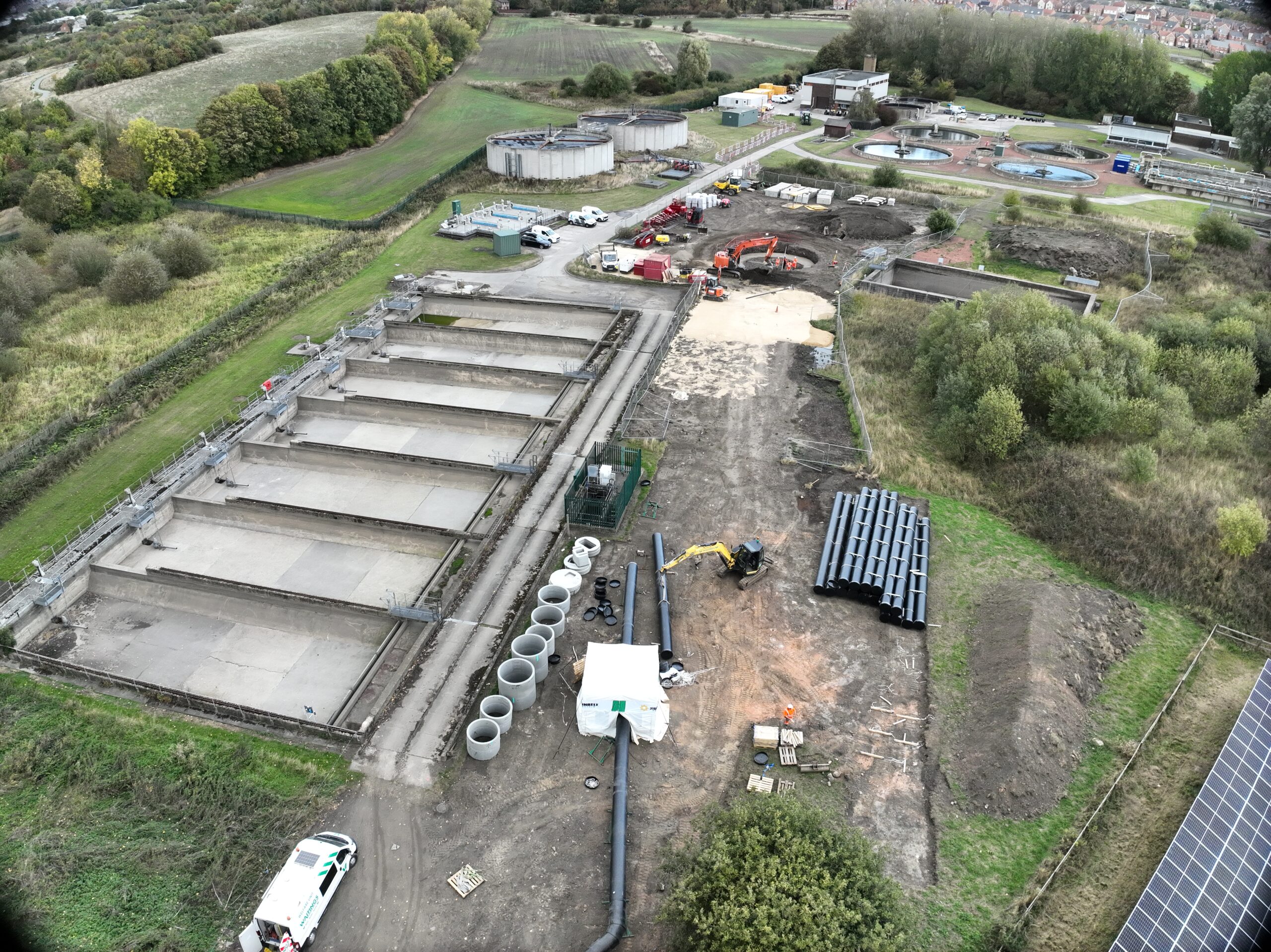
Within the 35 acre rail terminal, 55,000 sq m of hardstanding has been divided between 38,000 sq m of intermodal space and a 17,000 sq m HGV area. Winvic also constructed a 170 metre tunnel protecting rail movements into and out of the terminal.
Highways construction was delivered in phases so that the motorway and surrounding road network could continue operating. The programme included the Roade Bypass bridge, associated junctions, and the infrastructure required to unlock the wider logistics and rail freight development.
Alongside the civil engineering packages, Winvic completed Plot 7, a 2.3 million sq ft distribution facility for a major online retailer, and Plot 4 for Yusen Logistics. The Yusen building provides approximately 1.14 million sq ft at ground level and a further 333,251 sq ft of mezzanine accommodation.
Yusen’s building is the first occupied facility at the park and has achieved BREEAM Excellent and an EPC A rating. Construction was delivered to net zero requirements under the UK Green Building Council framework.
At full development, SEGRO Logistics Park Northampton is expected to provide up to five million sq ft of industrial and logistics accommodation and support approximately 7,450 jobs. Its location beside Junction 15 provides motorway access, while the terminal creates a route for transferring a greater proportion of long distance freight onto rail.
The programme also generated a substantial regional supply chain contribution. Winvic reported employing 793 local people, providing 42 apprenticeship, year in industry, and work experience placements, and spending more than £60m with local subcontractors.
Carbon assessment extends beyond the buildings
SEGRO Logistics Park Northampton has been independently verified as a net zero construction project, with upfront embodied carbon measured across product manufacture, transport, and site activity. Assessments were undertaken during design and construction before final third party verification at RIBA Stage 6.
Earthworks, in situ concrete, roads, paving, and rail infrastructure were identified as major material sources. The project retained and reused excavated material, replaced 30% of the cement content in rail slabs with pulverised fuel ash, and achieved 20% recycled content within the rail track.
The approach follows Winvic’s wider work on consistent carbon measurement, set out through its construction carbon whitepaper. The contractor has called for clearer requirements so that targets can be specified, measured, compared, and verified on a consistent basis.
Infrastructure projects carry a difficult carbon profile because much of their impact is created before the asset begins operating. Roads, bridges, terminals, tunnels, slabs, and earthworks require large quantities of concrete, steel, asphalt, aggregates, and fuel, so reductions depend heavily on design efficiency, material reuse, logistics, and construction methodology.
Rail freight can reduce long term road movements, but the operational benefit does not remove the carbon associated with constructing the terminal and its connecting infrastructure. Measuring both allows developers to assess the initial investment against the transport changes the development is intended to support.
The Northampton programme also illustrates the breadth of coordination required on large logistics sites. Motorway interfaces, local roads, bridges, drainage, utilities, rail systems, tunnels, earthworks, landscaping, warehouses, and tenant installations must reach completion in a sequence that supports occupation.
Using one principal contractor across several major packages can reduce interface gaps, although it concentrates responsibility for programme, temporary works, logistics, and resource allocation. A delay to a bridge, road, utility connection, or rail asset can prevent a completed warehouse from operating as intended.
Rail connected developments are becoming increasingly important as occupiers seek alternatives to wholly road based freight. Their commercial performance still depends on terminal capacity, service frequency, train paths, network reliability, container handling, and sufficient occupier demand to keep the infrastructure in productive use.
The scale of the enabling works reflects an investment model built around future expansion rather than one completed warehouse. Roads, earthworks, rail systems, and utilities have been constructed to support several million square feet of accommodation as later plots are developed.
That front loaded infrastructure creates opportunity but also requires a continuing flow of occupier commitments. The return on major rail and highways investment depends on the pace at which buildings are constructed, occupied, and connected to the terminal.
After five years of work, the Northampton programme has moved from enabling construction into an operational logistics environment. Its combination of rail, road, buildings, social value, and measured embodied carbon provides a detailed example of how freight developments are increasingly being designed and assessed as integrated infrastructure rather than isolated warehouses.