IN Brief:
- Manufacturing is restarting at the 10-acre Croespenmaen timber site in South Wales.
- Several employees from the former sawmill operation are returning to the facility.
- The site will manufacture, treat, and distribute fencing and landscaping products nationally.
Premier Forest Products is restarting manufacturing at its Croespenmaen site in South Wales following the closure of SDL Sawmills.
Premier Forest owns the 10-acre facility and had previously sublet its manufacturing operation to SDL. Through a phased restart, the company is now bringing the site back into direct use, with several former SDL employees returning to the business.
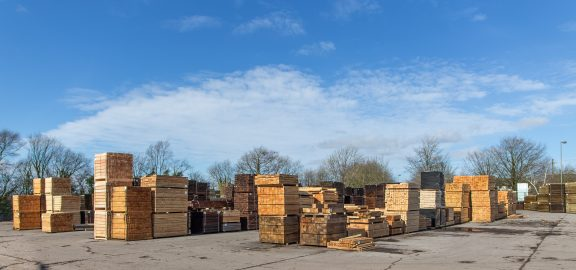
Croespenmaen will be developed as a manufacturing and distribution centre for fencing and landscaping timber. The site includes log and secondary-processing lines, fence-panel assembly machinery, and two treatment plants.
Production capacity and employment are expected to increase as recommissioning progresses. Deborah Llewellyn has been appointed operations manager, while Rhys Watkins will lead sales activity from the facility.
By combining processing, treatment, assembly, storage, and dispatch at one location, Premier Forest intends to strengthen its national supply capability. Finished products will be distributed into merchant, contractor, landscaping, and repair markets across the UK.
Timber treatment will form a central part of the operation because fencing and external landscaping products are exposed to moisture, biological decay, ground contact, and variable maintenance. Consistent service life depends on species, moisture content, penetration, preservative retention, drying, storage, and installation conditions.
Operating the treatment plants alongside machining and assembly gives the company greater control over those variables. It should also reduce the need to transport semi-finished material between separate processing and treatment sites.
Although restarting an existing facility avoids the time and planning burden of developing replacement capacity, machinery that has been idle still requires inspection and recommissioning. Extraction systems, saw lines, conveyors, treatment vessels, lifting equipment, guards, electrical installations, and emergency controls must all be tested before production rises.
The return of former SDL employees provides continuity during that process. Their familiarity with the machinery, product range, material flow, maintenance history, and operational constraints should reduce some of the risks associated with rebuilding a workforce from the beginning.
A phased restart allows early production to establish the condition of equipment and the level of customer demand before every line returns to full output. It also gives the business time to assess labour requirements, stock movement, energy consumption, yield, and maintenance expenditure.
Processing capacity supports a more responsive supply chain
Construction-product suppliers continue to reassess the balance between imported finished goods, imported raw material, domestic processing, stockholding, and regional distribution. Timber remains exposed to exchange rates, forestry output, shipping costs, energy prices, and construction demand across Europe and other producing regions.
Domestic processing does not remove those exposures, particularly where logs or sawn material are imported, but it gives suppliers greater control over final dimensions, treatment, assembly, packaging, and delivery. Production can be adjusted more quickly when demand changes across regional markets.
Fencing and landscaping products serve several parts of the construction economy. New housing requires boundary treatments and external works, while infrastructure, agriculture, public realm, repair, maintenance, and improvement projects create demand that does not always move in line with mainstream building starts.
That spread can stabilise volumes, although the market remains price-sensitive and highly competitive. Contractors and merchants expect consistent dimensions, dependable treatment, available stock, and predictable delivery, particularly where fencing forms part of a larger landscape or handover package.
Material yield will have a direct effect on commercial performance. Sawing and machining generate bark, chips, dust, offcuts, and rejected sections, so grading and cutting optimisation determine how much of each log becomes a saleable product.
Suitable untreated residues may find outlets in biomass, panel manufacture, animal bedding, landscaping, or other industrial processes. Treated timber requires more controlled handling because preservative chemicals affect the available routes for reuse and disposal.
Quality control becomes increasingly important as output rises. Variable moisture, distortion, splitting, incomplete treatment, and inconsistent machining can cause installation problems or early failure even where the product appears simple.
Fencing components must also remain stable through storage and transport. Poor stacking, insufficient airflow, prolonged exposure, or uneven drying can undo much of the control achieved during manufacturing.
Distribution will shape the site’s competitiveness because timber is bulky in relation to its unit value. Vehicle utilisation, loading efficiency, route planning, and delivery distance therefore have a substantial effect on cost.
Regional production can shorten lead times and improve availability, although a national customer base still requires disciplined stock planning. Holding excessive inventory ties up capital and increases the risk of weathering or damage, while insufficient stock can leave merchants and contractors waiting during peak seasonal demand.
The reopening also retains manufacturing skills that might otherwise leave the sector. Sawmilling, grading, treatment, maintenance, machine operation, and production planning rely on experience that cannot be recreated immediately after a closure.
Croespenmaen now moves from the disruption of one operator’s exit into a new production phase under the site owner. The strength of the restart will depend on stable machine performance, retained expertise, efficient material use, and Premier Forest’s ability to convert combined processing and treatment capacity into dependable national supply.