IN Brief:
- Volvo Construction Equipment has highlighted zero-emission construction equipment during London Climate Action Week.
- The company pointed to a London pilot with FM Conway and Transport for London using electric site machines.
- The discussion focused on electric compact equipment, mobile charging, and cleaner urban construction sites.
Volvo Construction Equipment has used London Climate Action Week to push for wider adoption of zero-emission construction equipment in urban areas.
The company helped convene a discussion with the Swedish Chamber of Commerce and the Embassy of Sweden, bringing together policymakers, industry leaders, air-quality specialists, and researchers to examine how cleaner construction sites can be delivered at scale.
Volvo CE highlighted a 12-week London trial with Transport for London and FM Conway, where electric construction machines were used as a direct replacement for diesel equipment. The trial showed the machines operating without compromising performance, while removing tailpipe emissions and reducing noise.
The company said further London sites have since adopted zero-emission machines, supported by mobile charging. It also argued that compact diesel construction equipment remains an overlooked source of urban air pollution because smaller engines are not subject to the same stringent requirements as larger equipment or on-road vehicles.
Compact plant is widely used close to homes, schools, shops, pavements, and occupied workplaces. Excavators, loaders, dumpers, rollers, and other small site machines may have lower individual output than heavy plant, but their operation at street level can concentrate emissions in locations where exposure is high. Reduced noise can also extend the practical benefits of electric equipment on constrained urban projects, night works, and sites near sensitive buildings.
The technical case for electric compact equipment has strengthened as more machines move from demonstration to live site use. Many short-cycle urban tasks are well suited to battery-electric machines, provided the duty cycle, charging window, and site logistics are planned properly. The more difficult challenge is building a reliable operating model around the machines.
Electric site equipment needs charging access, power planning, trained operators, maintenance support, battery management, and procurement models that value emissions and noise reductions alongside capital or hire cost. Sites without permanent power can struggle to support electric machines unless temporary charging is integrated into the works plan from the outset.
Mobile charging is becoming a central part of that transition. Construction sites often lack fixed high-power connections, particularly during enabling works, utilities projects, roadworks, and short-term urban schemes. Battery-backed temporary charging can support electric machinery where grid access is limited, an approach also being developed across adjacent power markets through temporary-site charging systems for electric equipment.
Clients and local authorities are likely to determine the speed of adoption. Where low-emission plant is required or heavily weighted in procurement, contractors have a stronger incentive to invest in equipment, training, and charging capability. Where it remains optional, uptake will remain concentrated around pilots, larger contractors, and high-profile city projects.
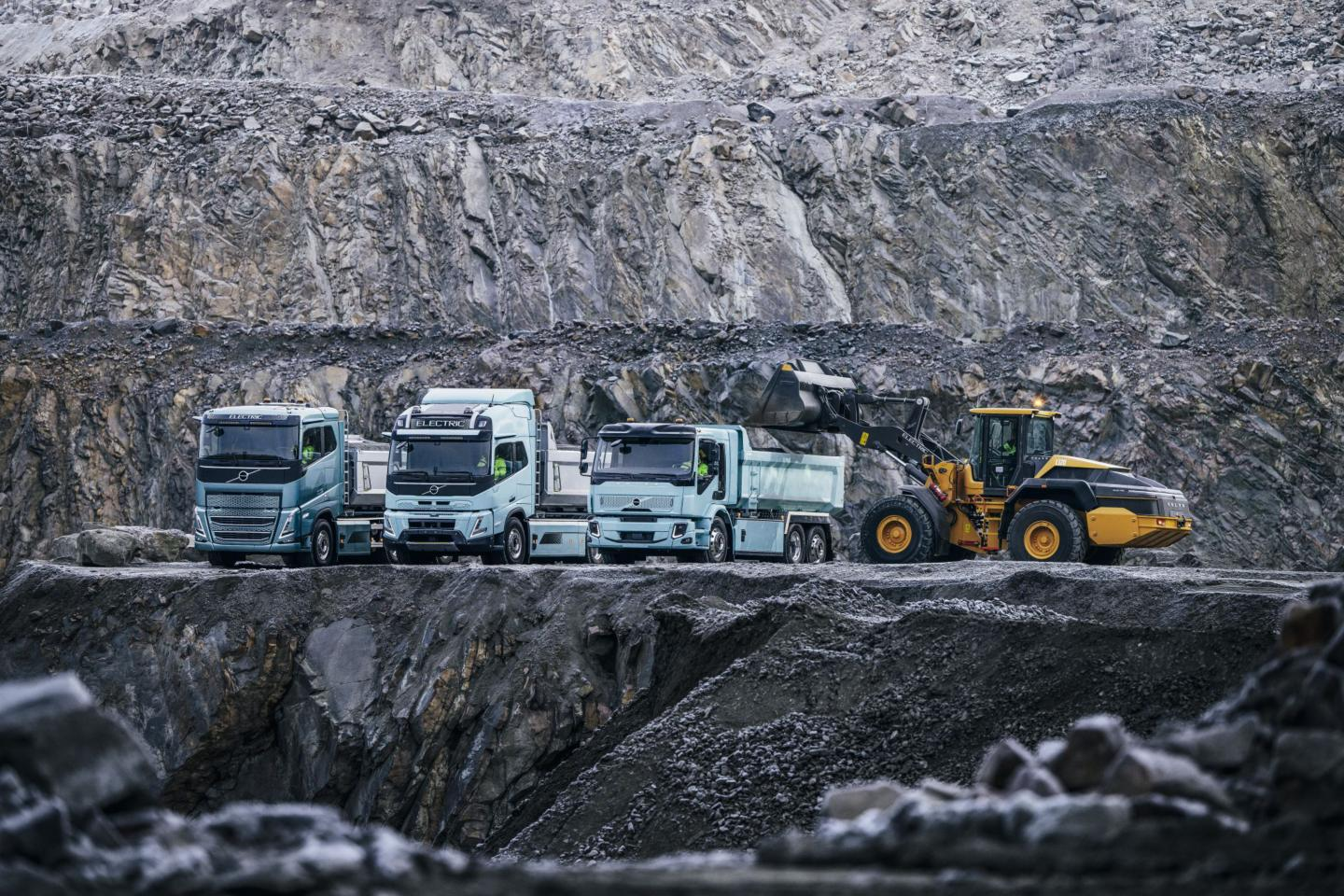
Plant manufacturers are already responding with electric fleets, charging partnerships, and service models built around lower-emission work sites. Electric equipment frameworks between major manufacturers and construction materials operators, including large-scale electric fleet partnerships, show how electrification is moving into procurement strategy rather than remaining a demonstration exercise.
The next stage will require better integration between equipment, site power, and programme planning. Electric compact machines cannot simply be hired as one-for-one replacements if charging, utilisation, and logistics are unresolved. Contractors need to understand when machines will be used, when they can charge, what power source is available, and how backup arrangements will work.
Volvo CE’s intervention adds pressure to a policy area that has often lagged behind road vehicles and building energy standards. Urban construction is becoming more exposed to air-quality, noise, and carbon expectations, and the plant used on those sites is now part of the same performance conversation as materials, logistics, and building operation.