IN Brief:
- The five-year framework is valued at CHF100 million and spans Holcim’s global operations.
- It combines electric equipment supply with autonomous haulage, fleet management, and dispatch technology.
- The agreement pushes electrified heavy plant further into multi-year procurement planning for large materials operations.
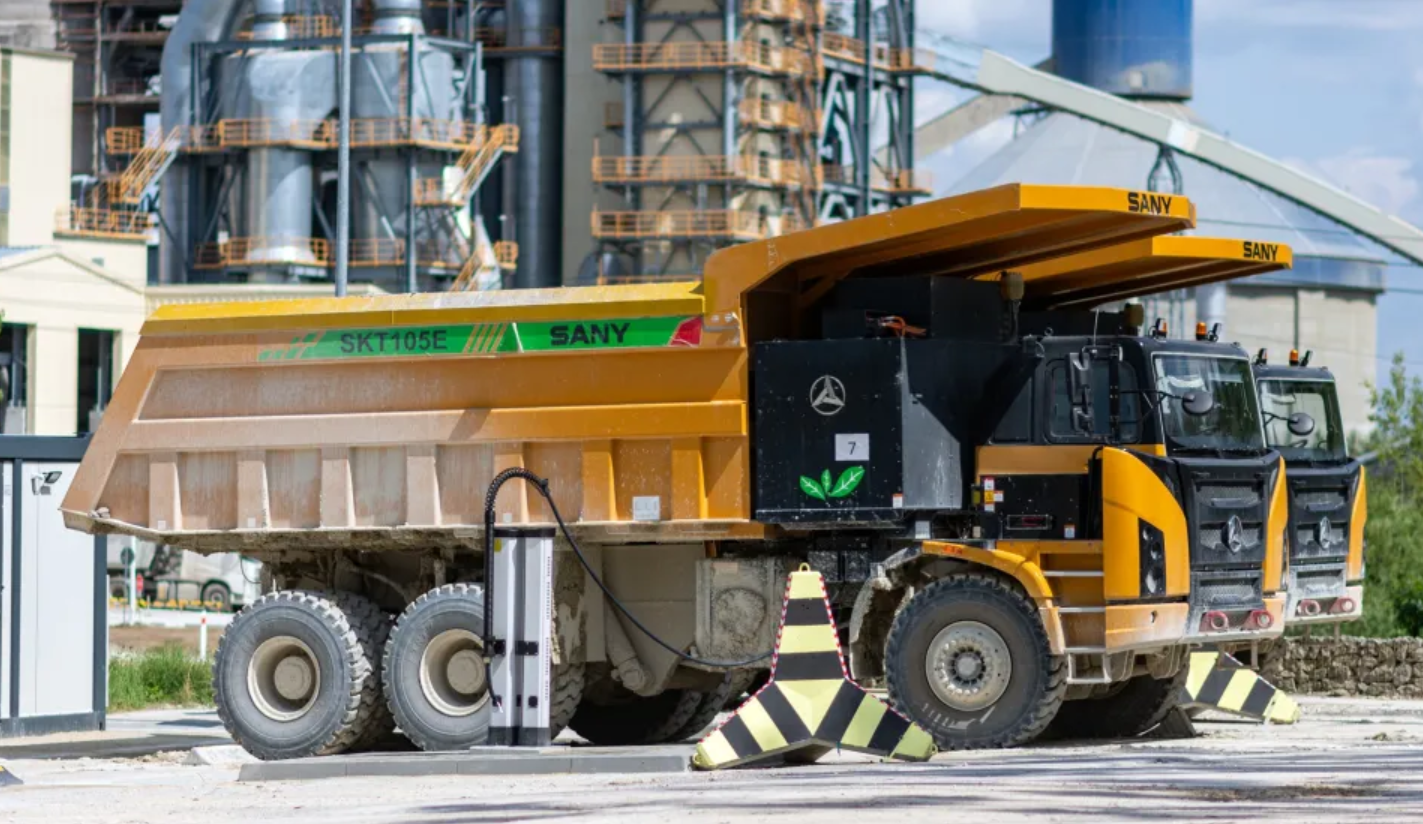
SANY Group and Holcim have signed a CHF100 million procurement framework covering electrified and autonomous construction equipment over the next five years. The agreement provides for 100 units of electric equipment to be delivered within the next three years, alongside 20 autonomous mining trucks to be deployed across Holcim’s global operations over the next two years.
The deal extends a relationship that began in 2019 and moves it onto a larger industrial footing. SANY said the latest phase follows pilot work involving SY500H excavators and electric fleets in Europe and Latin America, and the framework also includes fleet management systems, intelligent driving functions, and automated dispatching. That takes the arrangement beyond machine supply alone and into the software layer that increasingly governs utilisation, scheduling, and site productivity.
For major quarrying and construction materials operators, the scale is notable. Holcim reported net sales of CHF15.7 billion in 2025 and operates across 43 markets, giving the programme a wide deployment platform. The company has already been building out zero-emission fleet capacity elsewhere, having announced in 2023 that it would deploy up to 1,000 Volvo electric trucks across Europe by 2030.
The new SANY framework adds another layer to that transition, this time with site equipment and autonomous haulage in the mix. It places electrification, digital fleet control, and autonomous operation inside a single long-term procurement structure, rather than treating them as separate trials. For construction materials sites, where mobile plant, dispatch control, and operating cost are tightly linked, that makes this one of the larger recent indicators of how fleet decarbonisation is starting to move deeper into mainstream heavy-equipment planning.