IN Brief:
- Barhale has been appointed to a £12.5m Thames Water tunnel inspection and maintenance programme.
- The work covers nearly 48km of tunnels, including assets within the Thames Water Ring Main and Lee Valley area.
- The programme includes man-entry inspections, ROVs, CCTV, sonar surveys, confined-space works, and valve replacement.
Barhale has secured a £12.5m Thames Water programme to inspect and maintain strategic tunnel assets across London and the wider Thames Water network.
Awarded under the AMP8 Tunnels and Aqueducts programme, the work covers infrastructure including the Thames Water Ring Main, North London Abstraction, and New River Zone raw water assets. Production tunnels within Thames Water’s treatment works are also included, taking the overall inspection scope to almost 48km.
On the Thames Water Ring Main, Barhale will use primarily man-entry inspections, supported by limited remotely operated vehicle work, across 12 sections of tunnel at depths of up to 65m. The package represents around 20% of the asset’s overall extent.
Across the North London Abstraction and New River Zone, the contractor will carry out 24 inspections focused around the Lee Valley reservoir complex. The tunnels range from 30m to 5,450m in length and are buried up to 50m deep, with 24.9km to be inspected across the Lee Valley area.
Where man-entry is not possible, Barhale will deploy ROV, CCTV, and sonar surveys. Work will be carried out through existing shafts under confined-space conditions, with teams also clearing sludge, silt, stones, and invasive mussel concentrations that affect flows. Around 3,120 tonnes of waste is expected to be removed.
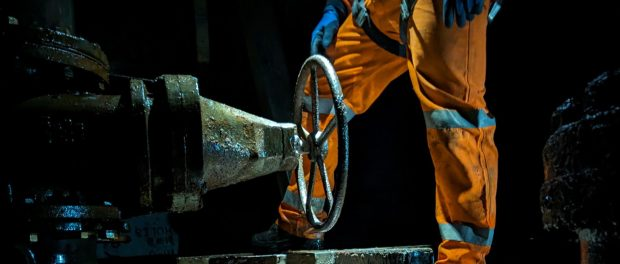
The programme includes minor repairs such as mortar works, leak sealing, resin injection, and repair or replacement of access furniture, including ladders, landing platforms, and covers. Specialist diving teams will carry out repairs to inlet screens, eel screens, and external shafts, while nine large-diameter valves will also be replaced.
Environmental constraints add further complexity. Several Lee Valley locations sit within Sites of Special Scientific Interest and Ramsar-designated areas, while Walthamstow Wetlands remains open to the public as a conservation area. Works are being planned around protections for bat and newt populations within the tunnel environment.
The contract forms part of a wider AMP8 workload that is placing renewed pressure on water-sector contractors to deliver inspection, repair, resilience, and environmental improvement work at scale. As AMP8 activity builds, delivery partnerships around materials handling, waste treatment, and site logistics are becoming more important to programme certainty.
Water infrastructure is becoming one of the most reliable sources of medium-term civil engineering demand. Regulatory expectations on leakage, storm overflows, asset resilience, water quality, and environmental performance are translating into substantial underground, confined-space, and treatment-works programmes.
The technical demands are high. Existing water assets are often deep, difficult to access, operationally sensitive, and environmentally constrained. Inspection teams have to work around live networks, changing flows, contamination risk, specialist rescue planning, and strict isolation procedures. Long-term asset knowledge and trained confined-space teams carry real value in that environment.
Remote inspection technology is also becoming central to asset management. ROVs, sonar, and CCTV reduce the need for man-entry in higher-risk locations, provide more detailed defect data, and allow clients to prioritise interventions before failures become operational incidents. In older tunnel networks, the quality of asset information can be as important as the repair work itself.
Barhale’s appointment gives Thames Water a specialist delivery route for a programme where safety, access, environmental management, and operational continuity all have to be managed together. With AMP8 now moving deeper into delivery, inspection data must be converted into targeted maintenance before small defects become expensive failures.