IN Brief:
- United Infrastructure and SoilDri have formed a national partnership to support AMP8 water-sector delivery.
- The partnership will focus on excavated material reuse, sustainable reinstatement, and reduced reliance on imported aggregates.
- The model targets lower carbon, fewer lorry movements, reduced waste, and more efficient delivery across infrastructure works.
United Infrastructure and SoilDri have formed a national partnership focused on sustainable AMP8 delivery, with excavated material reuse and reinstatement efficiency at the centre of the agreement.
The partnership brings together United Infrastructure’s delivery role across water-sector programmes with SoilDri’s approach to treating and reusing excavated material. The aim is to reduce imported aggregates, cut waste, lower transport movements, and support carbon reduction across infrastructure works.
AMP8, the current asset management period for the water industry in England and Wales, runs from 2025 to 2030 and is expected to drive significant investment in water and wastewater infrastructure. Utilities are under pressure to improve environmental performance, resilience, capacity, leakage, storm overflow performance, and customer service while reducing carbon across capital delivery.
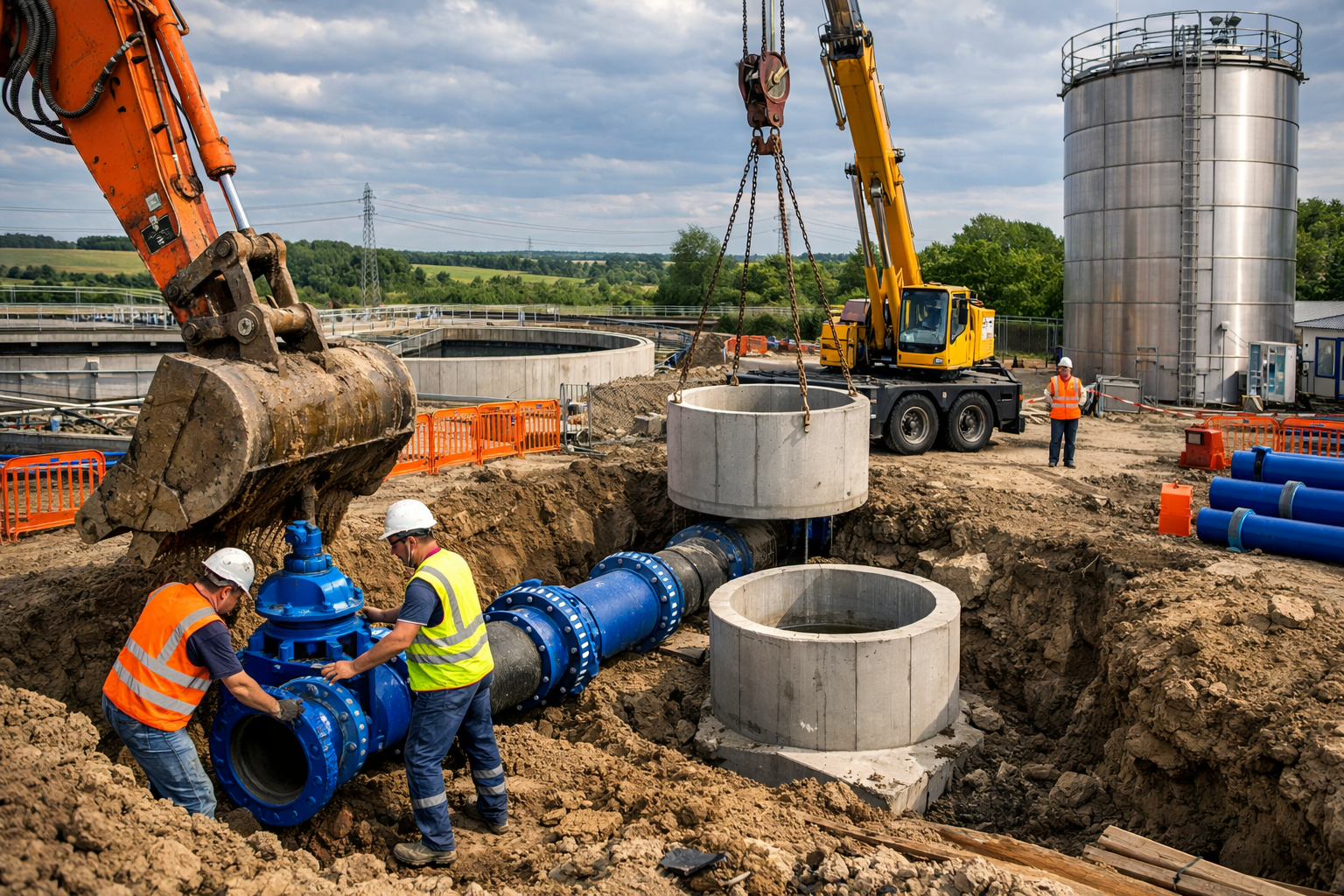
That investment cycle will generate a large volume of groundworks, trenching, reinstatement, site access, pipeline, chamber, and civil engineering activity. Excavated material is therefore not a peripheral issue. On utility and linear works, the movement, disposal, replacement, and reinstatement of material can shape cost, programme, carbon, traffic disruption, and community impact.
SoilDri’s model focuses on treating excavated material so it can be reused rather than removed from site and replaced with imported aggregate. The company has positioned reuse as a route to lower tipping costs, fewer transport miles, reduced aggregate demand, lower carbon, and less exposure to reinstatement delays.
The approach aligns with wider AMP8 procurement activity. Southern Water’s £72m minor civils framework shows how utilities are structuring delivery routes for the next wave of planned and reactive works across water and wastewater assets. Material handling and reinstatement discipline will sit at the centre of those programmes, particularly where works affect roads, access routes, chambers, drainage, and pipelines.
Material reuse changes site logistics. Traditional methods often involve removing spoil, transporting it to disposal or treatment facilities, bringing in replacement aggregate, and coordinating reinstatement around deliveries. That creates vehicle movements, haulage costs, carbon emissions, storage constraints, and disruption to local roads.
On-site or near-site treatment can reduce that loop, provided the process is planned properly. Material classification, moisture content, contamination risk, quality control, compaction, compliance, equipment availability, storage, and reinstatement standards all need to be managed. Reuse has to produce material that performs correctly in the reinstated asset.
The partnership also reflects a wider shift in infrastructure delivery from linear consumption towards circular material management. Water, highways, energy, and telecoms projects all generate excavated material. If that material can be safely and consistently reused, the benefits accumulate across multiple small and medium-sized schemes rather than only on major projects.
Transport reduction is one of the strongest commercial and environmental arguments. Infrastructure works often take place in residential streets, rural lanes, constrained urban roads, and operational utility sites. Fewer lorry movements can reduce congestion, emissions, noise, and safety risk while simplifying programme planning.
Aggregate demand adds another pressure point. Imported primary aggregates carry extraction, processing, haulage, cost, and availability impacts. Reusing suitable excavated material helps reduce dependency on virgin supply and can provide more stable local material flows. It also supports clients seeking to demonstrate lower embodied carbon and resource efficiency across regulated investment programmes.
AMP8 will test whether these approaches can be standardised across large volumes of work. Pilot schemes and individual project successes are useful, but utilities need repeatable methods that contractors can deploy across regions, asset types, and delivery partners. That requires clear specifications, training, equipment access, documentation, and client acceptance of reuse where performance criteria are met.
The United Infrastructure and SoilDri partnership gives the model a national delivery platform. Its success will depend on whether excavated material reuse becomes part of everyday planning rather than a special measure. If it can be embedded across AMP8 delivery, the approach could carry into highways, energy, telecoms, and wider infrastructure maintenance.