IN Brief:
- Morgan Sindall Construction has completed a £26m Community Diagnostic Centre in Epping.
- The project refurbished and extended an existing building at St Margaret’s Hospital.
- A further £6m extension is expected to add additional diagnostic capacity in early 2027.
Morgan Sindall Construction has completed a £26m Community Diagnostic Centre at St Margaret’s Hospital in Epping for The Princess Alexandra Hospital NHS Trust.
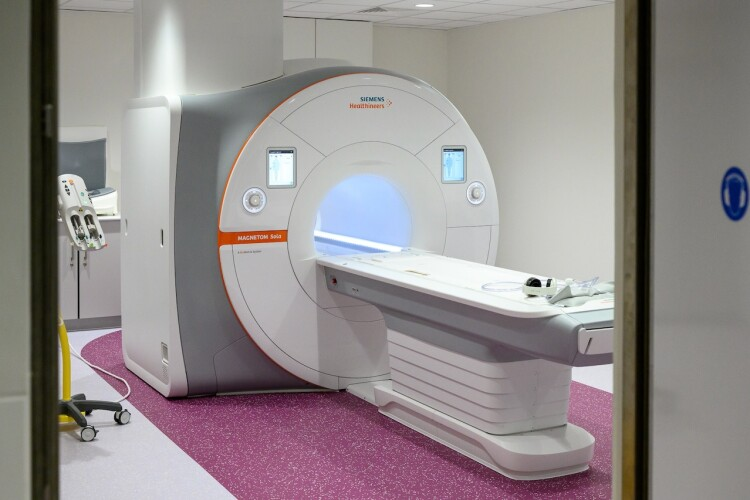
Procured through the ProCure23 framework, the project forms the main element of a wider three-stream programme for the trust. It involved refurbishing and extending an existing building to provide outpatient and diagnostic services, including MRI, X-ray, and non-obstetric ultrasound facilities.
The completed centre is designed to increase diagnostic capacity outside acute hospital settings, supporting faster access to tests and reducing pressure on main hospital sites. A further £6m extension is due in early 2027, adding capacity for fibroscan, ultrasound, X-ray, and trans-nasal endoscopy services.
Morgan Sindall used its CarboniCa digital carbon analysis tool during the project, with the decision to work with an existing building reducing embodied carbon compared with a new-build approach. Retrofit-led healthcare construction is becoming more prominent as estates teams seek additional capacity while limiting cost, disruption, and carbon impact.
Healthcare projects of this type combine construction, clinical planning, public procurement, and operational resilience. The finished building has to satisfy demanding requirements around infection control, patient flows, imaging equipment, shielding, accessibility, building services, commissioning, and long-term maintainability.
The diagnostic centre also follows a broader shift in NHS estate delivery. Community-based healthcare facilities are being used to move testing and treatment closer to patients, freeing acute hospitals to focus on more complex care. That model places greater emphasis on smaller but technically sophisticated projects, often delivered through refurbishment, extension, or conversion rather than wholly new sites.
Existing healthcare buildings bring their own construction pressures. Contractors must manage surveys, phased access, live-site working, asbestos and services risks, and close coordination with clinical teams. Programme certainty is critical because healthcare clients need to plan equipment commissioning, staffing, patient pathways, and operational opening dates around the construction schedule.
Framework procurement gives public healthcare clients a route to bring contractors in early and carry lessons between projects. ProCure23 is intended to support consistency, repeat learning, and cost assurance, particularly where clients need to balance speed with clinical and technical complexity.
Hospital and community healthcare work is competing for resources within a constrained public capital environment. Alongside smaller diagnostic schemes, the wider healthcare pipeline is being shaped by major programme decisions, with contractors aligned to a new wave of hospital projects as government and NHS bodies attempt to move delayed estate investment forward.
Retrofit is becoming a central part of that estate strategy. Many healthcare buildings remain structurally useful but require modernisation to support new care models, digital systems, improved patient flows, and stronger energy performance. Refurbishment can reduce embodied carbon and make better use of existing public assets, provided hidden building risks are identified early and managed properly.
The Epping centre shows how community healthcare construction is moving toward targeted capacity upgrades rather than single large interventions. Demand for diagnostic services continues to rise, and similar projects are likely to remain a steady source of work for contractors with healthcare, MEP, and live-environment capability.
As NHS estates teams look for faster routes to additional capacity, projects that combine refurbishment, extension, and technical clinical fit-out are likely to become more common. The challenge for delivery teams will be maintaining programme discipline while working in buildings that were not originally designed for modern diagnostic demand.