IN Brief:
- Construction and commissioning have been completed at the Rivenhall Integrated Waste Management Facility near Kelvedon, Essex.
- The two-line energy-from-waste plant is designed to process up to 595,000 tonnes of residual waste each year.
- Kanadevia Inova will remain involved under a long-term service agreement.
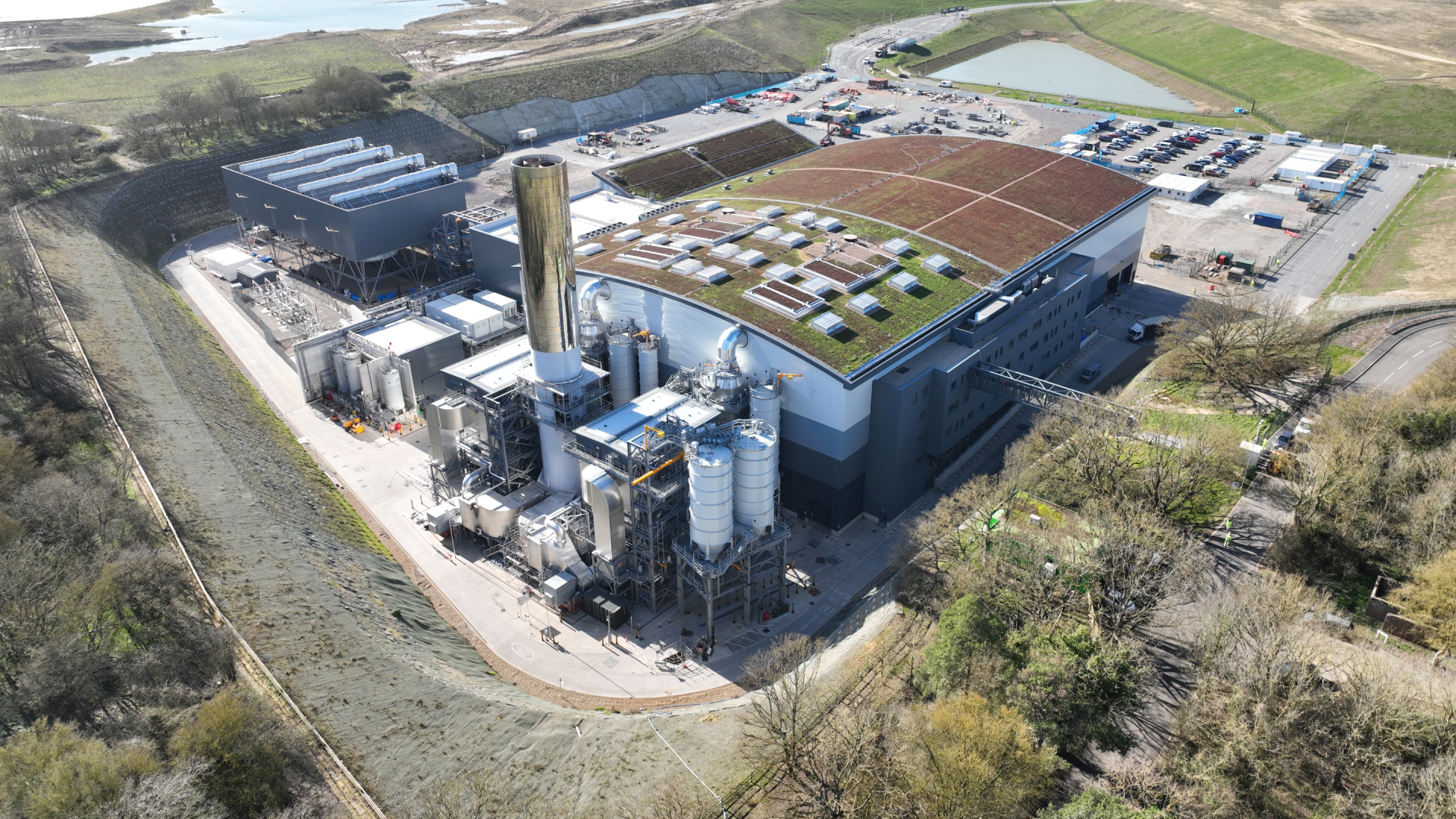
Kanadevia Inova has completed construction and commissioning of the Rivenhall Integrated Waste Management Facility near Kelvedon in Essex.
The facility, developed by Indaver through Indaver Rivenhall Limited and designed and built by Kanadevia Inova, achieved provisional acceptance on 18 April 2026. The certification confirms that construction and commissioning activities have been completed following the start of works in October 2022.
Indaver previously awarded contracts worth up to £500m for construction of the plant. Kanadevia Inova will remain involved under a long-term service agreement agreed in June 2025, supporting operation and maintenance after handover.
Located within a former quarry site, the Rivenhall IWMF is a two-line energy-from-waste plant designed to process up to 595,000 tonnes of residual municipal and commercial waste each year. The facility is expected to generate approximately 55MW of electricity.
Indaver Rivenhall secured Essex County Council’s medium-term residual waste treatment contract, which began in April 2025. The agreement runs for seven years, with an option to extend for a further seven years.
The completion of Rivenhall adds another major facility to the UK’s energy-from-waste estate. EfW projects sit across waste management, power generation, industrial construction, public-sector procurement, and long-term operations, making delivery more complex than a conventional process building.
Projects of this type require close coordination between civil engineering, structural work, mechanical installation, process systems, emissions control, grid connection, commissioning, and regulatory compliance. The provisional acceptance milestone marks the point at which construction and commissioning risk begins to move into operational performance.
The use of a former quarry site also reflects the role of brownfield and industrial land in accommodating large process facilities. Repurposed sites can reduce pressure on greenfield development, but they bring ground conditions, access, remediation, and environmental management requirements that need to be resolved early in the programme.
The handover comes as the UK waste sector adjusts to policy and market pressure around recycling rates, residual waste volumes, landfill diversion, and carbon performance. Energy-from-waste remains contested, particularly where critics argue it can compete with waste prevention and higher recycling. Local authorities and commercial waste operators still require dependable residual treatment routes while materials recovery systems continue to develop.
Rivenhall also reflects a delivery model where construction capability is tied to lifecycle performance. Kanadevia Inova’s continuing role under a service agreement links design, build, maintenance, and plant availability beyond the completion certificate.
With construction and commissioning complete, Rivenhall moves into operational delivery. Its long-term performance will be measured by processing reliability, emissions control, power generation, and its contribution to Essex’s residual waste strategy.