IN Brief:
- Kier has secured a two-year extension to its South West Water network services role, worth around £140m.
- The contract covers repair and maintenance, leakage, metering, developer services, and network reliability works.
- The extension adds continuity as AMP8 water-sector investment moves from planning into delivery.
Kier has secured a two-year extension to its South West Water Network Services Alliance contract, in a deal valued at around £140m.
The extension keeps Kier in place as sole contractor on the framework until March 2028, continuing a relationship that began in April 2024. The work covers repair and maintenance, leakage activity, network reliability schemes, developer services, and metering across South West Water’s operating region.
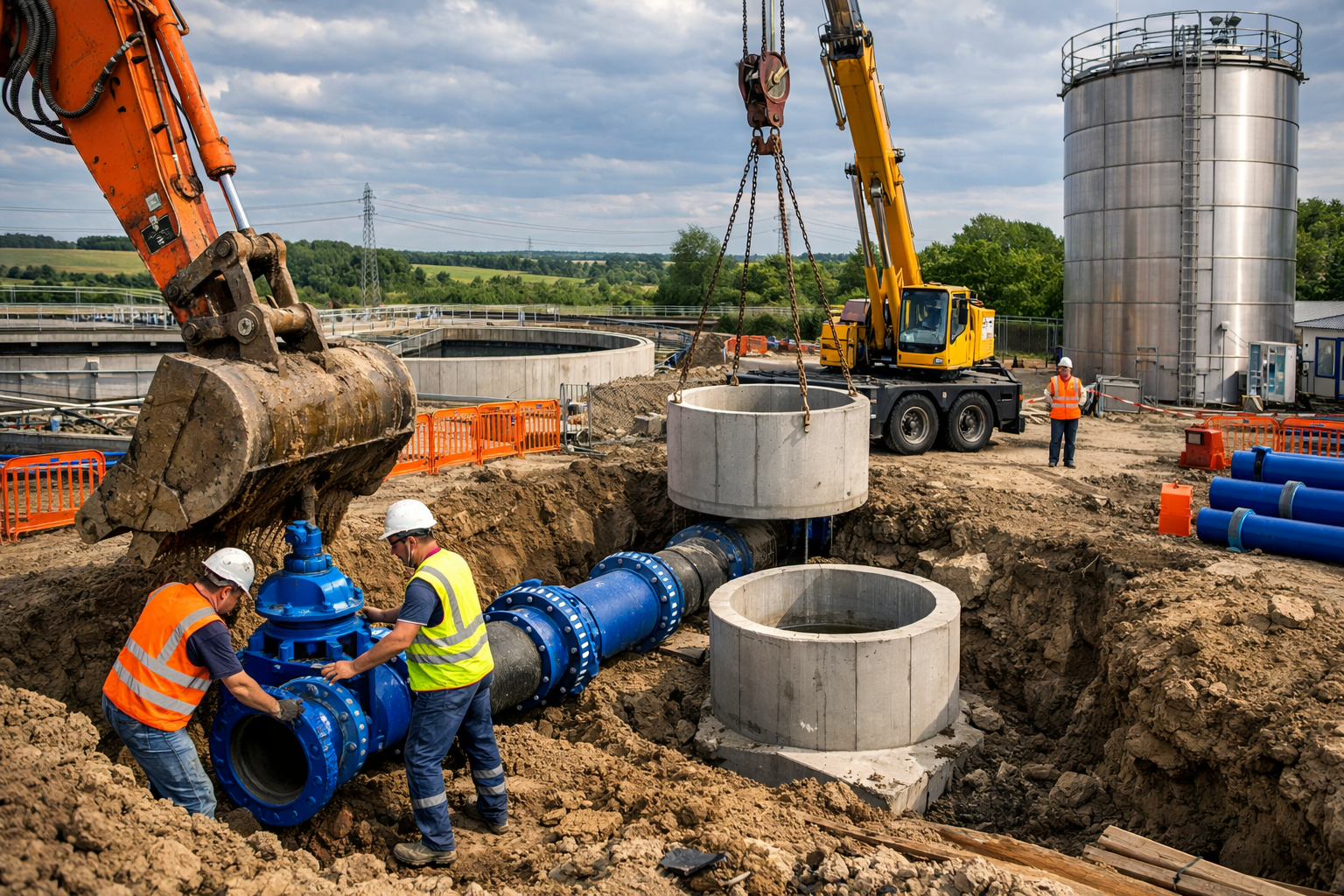
Rather than being tied to a single project site, the contract covers a rolling programme of interventions across live water assets, customer connections, and network performance requirements. Kier’s teams have already completed more than 25,000 repair and maintenance jobs, repaired more than 18,000 leaks, and carried out more than 32,000 metering jobs under the alliance.
Under the extended agreement, Kier will also support project roles connected to the AMP8 regulatory period, including enabling works, pre-construction planning, and site team activity across the south west. Those additions move the appointment beyond routine operational maintenance and into the early delivery structure for a major water-sector investment cycle.
Water companies are entering AMP8 under sharper public and regulatory scrutiny, with leakage, resilience, environmental performance, and customer disruption all sitting high on the agenda. Contractors working in the sector are being asked to deliver across dispersed networks where performance is measured through response times, programme control, safety, reinstatement quality, and local impact.
Kier’s reported 97% attendance rate for priority works within two hours underlines the operational intensity behind the framework. For a regional utility network, delivery capacity depends on field teams that can respond quickly while maintaining the documentation, reinstatement standards, and customer handling expected in a regulated environment.
Across the water sector, delivery models are increasingly combining maintenance, minor works, digital monitoring, and targeted capital upgrades. That approach favours contractors able to manage workforces, traffic management, emergency response, customer communication, and asset data within the same operating structure.
Trenchless and lower-disruption techniques are already moving into AMP8 renewal planning, with pipe-bursting equipment being used on water-main replacement work where open-cut methods would create greater disruption. Kier’s extension sits within the same shift towards network renewal that has to balance engineering output with public-facing delivery constraints.
For Kier, the South West Water extension strengthens a utilities order book supported by regulatory spending rather than speculative development cycles. That gives the business steadier workload visibility, but it also places the contractor inside a performance regime where output, quality, and responsiveness are measured continuously.
The contract also shows how utilities work is becoming more technically integrated. Leakage repair and metering now sit within a broader data-led approach to network management, consumption monitoring, and asset prioritisation. Site teams still need core civil engineering capability, but field reporting and asset intelligence are becoming part of the same delivery process.
Running through to March 2028, the extension will cover a critical early period of AMP8, when utilities and their supply chains must convert investment commitments into visible improvements on the ground. For South West Water, continuity with an incumbent contractor reduces mobilisation risk. For Kier, it deepens exposure to one of the construction market’s more resilient infrastructure workstreams.