IN Brief:
- Agratas is changing construction delivery arrangements on its £4bn Somerset battery gigafactory.
- The project is one of the UK’s largest industrial construction programmes, with a 40GWh production target.
- The next phase will place greater pressure on package coordination, process interfaces, and programme control.
Agratas is changing construction delivery arrangements on its £4bn battery gigafactory at the Gravity Smart Campus near Bridgwater, Somerset.
The development is one of the UK’s largest current industrial construction schemes, with the planned facility intended to support battery cell production for electric mobility and energy storage markets. The first phase is expected to deliver 40GWh of annual battery cell capacity, giving the site enough planned output to supply hundreds of thousands of electric vehicles.
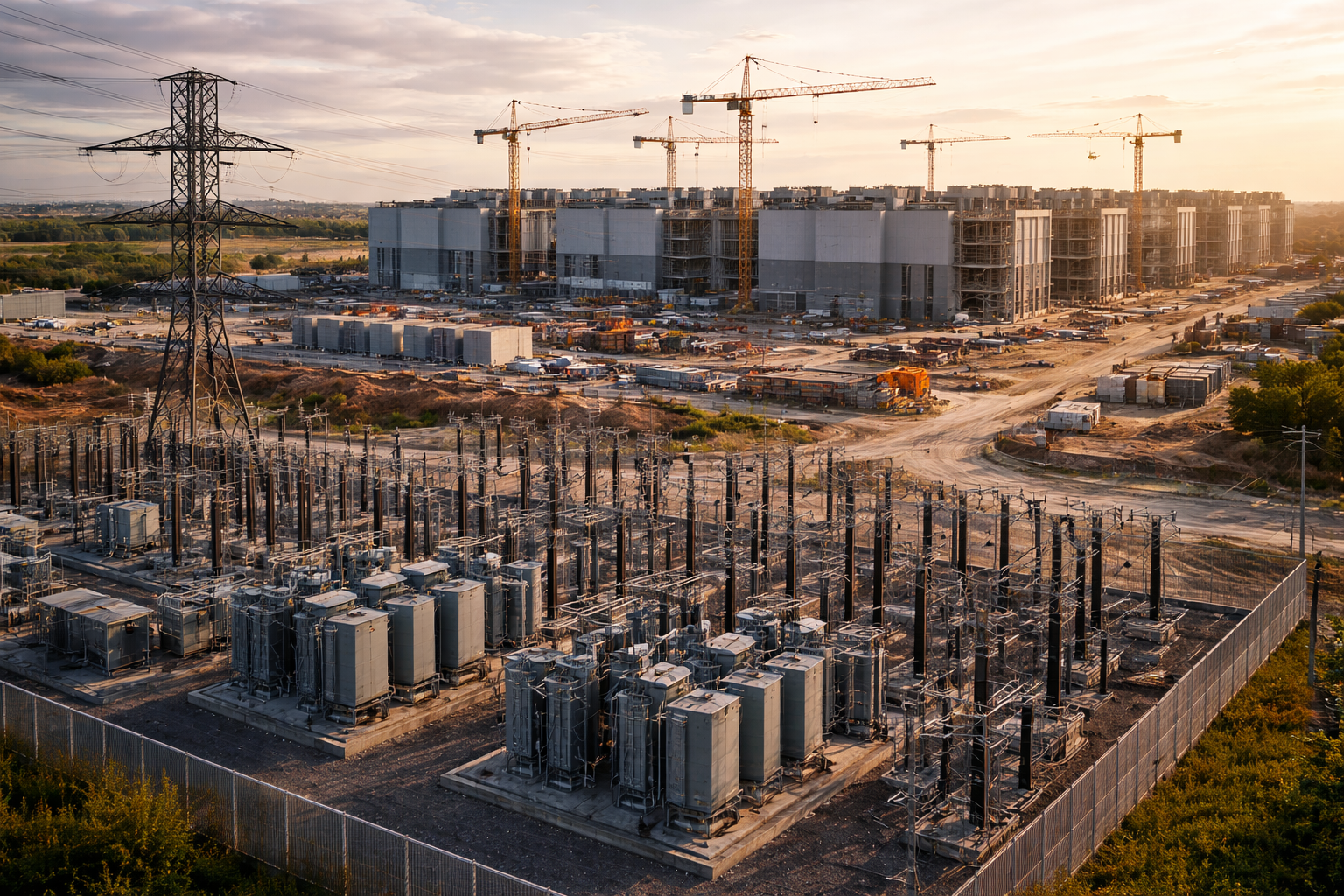
Work at the Somerset site has already moved through major enabling and structural stages, with the building designed on a scale more commonly associated with heavy manufacturing than conventional commercial construction. Agratas has previously described the facility as roughly 525m long, 167m wide, and 34m high, with tens of thousands of tonnes of steel required for the structure.
Sir Robert McAlpine has been involved in early construction delivery, while Agratas is now moving to revised arrangements for the next phase of work. The transition comes as the project enters a more technically demanding stage, where structure, envelope, process utilities, power infrastructure, clean and dry environments, internal logistics, and commissioning routes must be coordinated in detail.
Gigafactory construction places unusual demands on contractors because the building is only one element of the final asset. Battery cell production requires tightly controlled manufacturing conditions, extensive services infrastructure, heavy process-equipment integration, and a sequencing strategy that allows production systems to be installed without compromising the main construction programme.
Those requirements make package coordination especially sensitive. A delay or design change in one area can affect mechanical and electrical services, internal fit-out, equipment installation, commissioning, or production-readiness milestones. As a result, industrial clients are increasingly weighing the benefits of single main-contractor delivery against more direct control over specialist packages.
The Somerset project also carries weight beyond the site boundary. Battery manufacturing capacity remains a strategic gap in the UK’s industrial base, particularly as automotive manufacturers move towards higher electric vehicle volumes and stronger domestic supply-chain requirements. Agratas expects the facility to create up to 4,000 jobs once operational, with construction already supporting a large site workforce.
The scale of the scheme changes the risk profile for every organisation involved. Direct package management can give an industrial client closer control over specialist suppliers, late-stage technical decisions, and equipment interfaces, although it also demands stronger client-side delivery capability. A single delivery partner can provide clearer accountability, but may offer less flexibility when process requirements move during the build.
Across Europe, large battery projects have faced pressure from changing demand forecasts, technology decisions, energy requirements, skills availability, and supply-chain capacity. The UK adds its own constraints, including grid connection planning, specialist labour depth, and the relative lack of domestic experience in gigafactory-scale construction.
For the construction sector, the Somerset programme shows how advanced manufacturing projects are reshaping procurement and delivery. Industrial buildings of this type cannot be treated as large sheds with complex fit-out added later. They need construction logic aligned with the eventual manufacturing process from the earliest design and procurement stages.
The next phase at Gravity will therefore test more than build speed. It will test how effectively the delivery structure manages technical change, supplier interfaces, site logistics, and the transition from shell construction to production-ready industrial asset. On a project carrying national manufacturing significance, that coordination will be as important as the headline contract value.