IN Brief:
- Eurovia opened its Green Aggregates recycling facility in Thurrock on 28 October.
- The plant processes selected materials recovered during road resurfacing into quality-controlled aggregates for asphalt manufacture.
- Covered storage and material reuse are intended to reduce energy consumption, transport movements and demand for virgin resources.
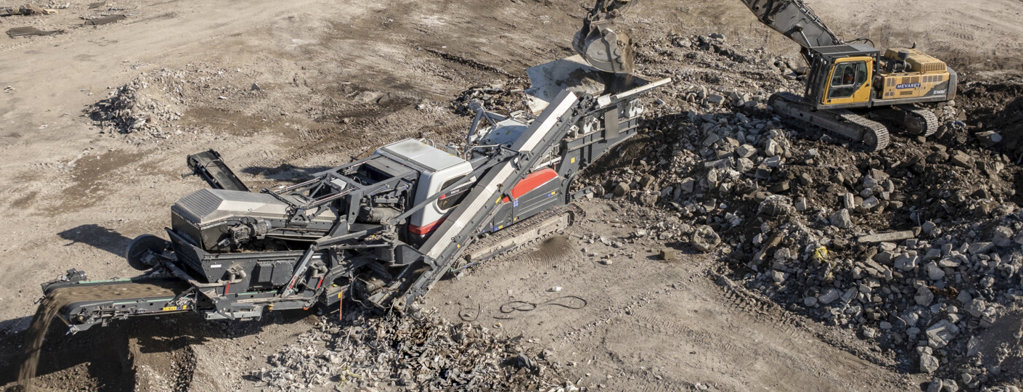
Eurovia has opened its Green Aggregates recycling facility in Thurrock, Essex, creating a new processing operation for materials recovered during highway resurfacing. The multimillion-pound investment uses specialised reprocessing equipment to convert selected reclaimed road materials into quality-controlled aggregates for asphalt production, with the company aiming to reduce reliance on newly quarried resources.
The plant was officially opened on 28 October by Lord Deben, the former chairman of the UK’s Climate Change Committee. Eurovia describes the development as a UK first and intends to use the facility to increase the proportion of existing road materials incorporated into new asphalt, extending the recovery and reuse activities associated with its highway construction operations.
The process begins with materials removed during the initial milling stages of resurfacing. Milling equipment cuts into existing pavement layers and recovers road planings containing mineral aggregate and bituminous binder. The composition of those planings depends on the original asphalt mixture, the depth of removal and the condition of the pavement, making material selection and processing important to the production of consistent recycled aggregates.
At Thurrock, selected recovered materials undergo further processing to produce aggregates suitable for asphalt manufacture. Eurovia says the resulting material is designed to provide performance comparable with newly quarried aggregates, allowing recovered constituents to be incorporated into mixtures subject to the same engineering requirements as conventional road construction products.
Aggregate quality affects the performance of asphalt because the particle sizes, shapes and distribution determine how mineral materials pack together within the finished mixture. The resulting structure must work with the binder to provide the properties required for the intended road application. Variations in recovered material can influence mixture design, making consistent grading and control of the constituent materials essential to reliable production.
Road planings also contain binder that has already experienced manufacturing, laying and service conditions. Its properties can differ from those of new bitumen, affecting how recovered asphalt is incorporated into fresh mixtures. The proportion of reused material must therefore be matched to the characteristics of the recovered constituents, the additional binder and aggregates used, and the specification of the finished asphalt.
Eurovia’s new facility is intended to improve the consistency of material recovered from highways before it enters asphalt production. The company has developed the processing approach using its engineering experience and technologies applied elsewhere in its operations. The resulting investment connects the removal of existing pavement with a more controlled route for returning its constituent materials to road construction.
Covered storage forms another element of the operation. Eurovia identifies keeping materials under cover as a means of reducing energy consumption during subsequent processing and asphalt manufacture. Exposure to rainfall increases the moisture carried by stored mineral materials, and that moisture must be managed when aggregates are heated or dried during production.
Reducing the moisture entering the asphalt manufacturing process can lower the heat energy required to prepare the mixture. The extent of the saving depends on the starting condition of the aggregates, production temperatures and plant operation. Eurovia has identified energy reduction as an objective of the Thurrock investment, alongside improvements in the management and quality of recovered materials.
The new processing capacity also changes the movement of materials between resurfacing sites, recycling operations and asphalt plants. Highway maintenance generates road planings that must be transported away from the work area, while replacement asphalt requires supplies of aggregates, binder and finished mixtures. Recovering a greater proportion of usable constituents creates opportunities to reduce incoming virgin materials and associated transport demand.
The practical transport benefit depends on the location of resurfacing projects, the recycling facility and the asphalt manufacturing operation. Trucks must still move recovered materials to processing equipment and deliver usable products to their next destination. Eurovia’s approach is intended to improve those material flows through higher recovery and reuse within its construction supply chain.
The company also expects the investment to contribute to reduced demand for imported bitumen. Existing asphalt contains binder as well as mineral aggregate, so increasing the effective reuse of road planings may reduce the quantity of new constituents needed in certain mixtures. The actual reduction will depend on the properties and proportions of the recovered material and the asphalt specification.
These material considerations influence how recycled aggregates can be used across different highway products. Asphalt for a road surface must satisfy requirements associated with its intended loading and operating conditions, while mixtures for other pavement layers may have different performance characteristics. Recovery and processing provide alternative material sources, with the finished product still needing to satisfy the relevant technical specification.
Quality control is therefore closely connected to the commercial use of the plant’s output. A recycling facility must supply materials with predictable characteristics so asphalt manufacturers can design and produce consistent mixtures. Managing variability before the material reaches the asphalt plant can support the use of recovered constituents across repeated production runs and highway schemes.
Eurovia operates across highway surfacing and associated construction activities, providing an established route for bringing processed materials into new road projects. The Thurrock facility extends those activities by creating additional capacity to prepare recovered aggregates, while existing pavement maintenance programmes provide a continuing source of material for treatment.
The opening also provides a basis for evaluating wider adoption of the process. Paul Goosey, managing director of Eurovia, said the company wanted to engage with industry colleagues and government about applying the approach across the UK, with greater reuse of existing asphalt forming part of its plans for future road-material production.
Further deployment will depend on the performance of recycled products, the availability and quality of recovered road materials, and the economics of processing and transporting them. Asphalt producers will also need to establish suitable mixture designs and quality assurance arrangements for the recovered aggregates used in their products.
Green Aggregates is now an operational investment in Eurovia’s highway materials supply chain. The Thurrock plant provides a processing route for converting selected road planings into usable aggregates, with the company’s next activity centred on incorporating those materials into asphalt production and assessing the results of a more resource-efficient manufacturing process.