IN Brief:
- Eric Wright Construction has topped out the new-build element within its £22m Leyland Market and commercial redevelopment contract.
- The existing market hall is being refurbished; the scheme also includes Market Square and 16 council-owned apartments.
- The wider £34m Town Deal separately includes 22 Quin Street homes, and autumn 2027 remains an anticipated completion date.
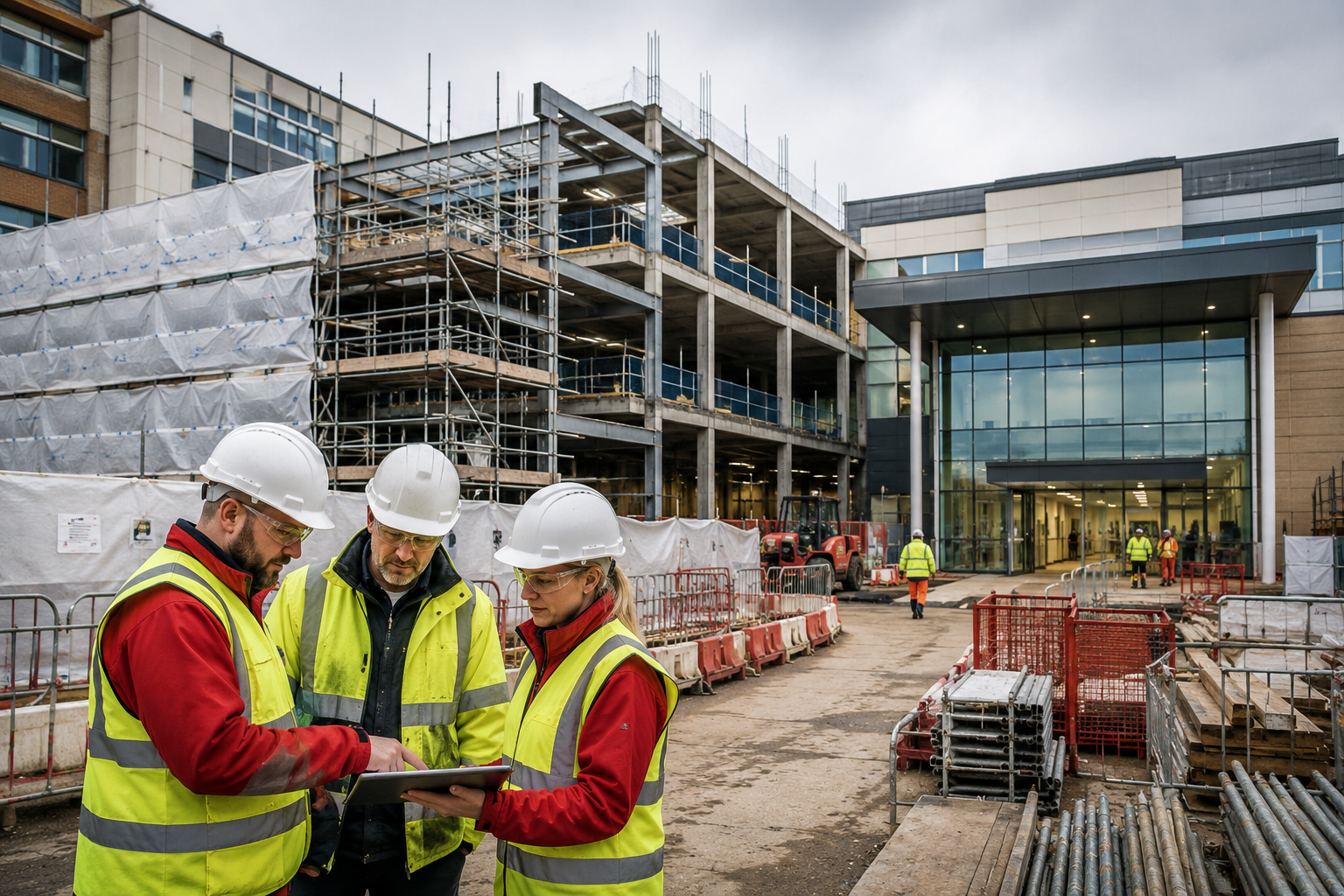
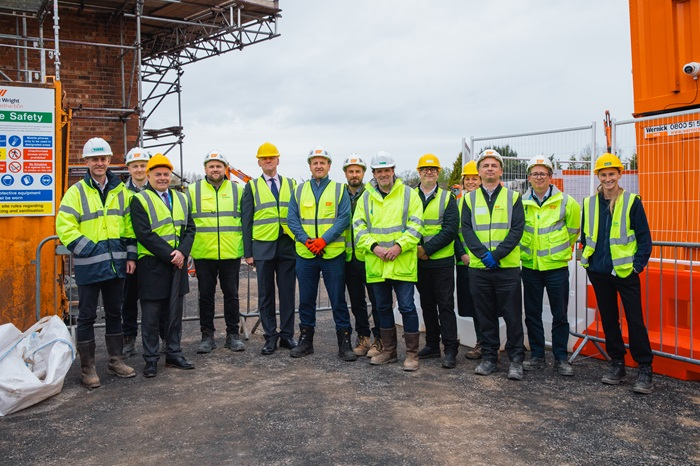
Eric Wright Construction has marked the topping out of new buildings within the £22m Leyland Market redevelopment for South Ribble Borough Council. The milestone records the highest point of the current new-build structures; it does not mean the existing market hall refurbishment, interiors, services or public realm are complete. Eric Wright’s package covers the retained hall, two new mixed-use buildings and Market Square as one component of the wider £34m Leyland Town Deal.
The existing Leyland Market Hall is being refurbished rather than replaced with a wholly new market building. Its historic internal structure is being retained, while the scope includes replacement of the roof, alterations to the trading environment and changes to its relationship with Market Square. The hall’s conservation and refurbishment work must be distinguished from the topping out of neighbouring new structures within the same contract.
The refurbished hall is expected to provide 18 upgraded permanent stalls, supplemented by additional outdoor and pop-up trading areas. Those external pitches will connect directly with the new Market Square. The arrangement is intended to link established indoor trading to activity in the public realm, but the latest construction announcement does not establish the final occupancy of individual stalls, detailed market operating arrangements or the precise materials specification of the new roof.
Two new mixed-use buildings are planned alongside the retained market, accommodating commercial, community and residential functions. The £22m redevelopment includes 16 council-owned apartments within this market-led package. Another 22 affordable homes on Quin Street belong to a separate Town Deal scheme being delivered by Tyson Construction. The two residential figures concern different sites and contractors, rather than a combined 38-apartment Eric Wright project.
Topping out is the point at which a building’s highest structural level has been reached. It does not confirm that the roof is weathertight or that the building has been commissioned for occupation. At Leyland, work must still progress through enclosure, services installation, internal finishes, testing and the external areas that link the development to existing streets. The detailed programme for those remaining trades has not been published in the latest milestone report.
The redevelopment has additional complexity because it involves an occupied town centre and a market with an established trading function. South Ribble temporarily relocated traders to Kings Court so that the original building could be vacated for construction. Work on the existing market included stripping internal finishes and windows, isolating services and preparing the structure for roof replacement. Temporary trading arrangements and the construction timetable are separate from the ultimate return of businesses to the refurbished hall.
Retaining the old hall’s internal structure while replacing its roof creates different requirements from assembling a wholly new shell. Work on the roof must be planned around the geometry and condition of the retained building, and the new structure must connect with the original fabric without imposing assumptions about its capacity. The announcement describes the roof replacement but does not provide the structural assessment, load calculations or detailed material choice, which would be needed before a more specific account of the engineering could be justified.
Eric Wright took possession of the market and commercial site in January 2026, according to council project records, following earlier design and enabling preparations. Subsequent work has advanced the new buildings alongside stripping out, service isolations and roof-replacement preparations at the retained hall. Construction across the wider Town Deal has different contractors and programmes, so topping out at the market site is not a collective completion milestone for regeneration work elsewhere in Leyland.
The Market Square is a key interface between the buildings and the surrounding centre. Constructing new external trading space and pedestrian areas alongside an active town centre requires coordination of ground levels, drainage, utilities, delivery access and connections to existing routes. Although the overall plan identifies these areas, no detailed public-realm construction specification or completed handover date for the square has been established by the topping-out announcement.
The new commercial accommodation introduces different access, servicing, fire safety and acoustic requirements alongside the 16 council-owned apartments. Their interfaces with the retained hall, the new Market Square and adjoining streets require coordination through construction and fit-out. The topping-out reports do not identify final tenants or confirm that commercial occupiers have taken possession.
The Leyland Town Deal is a wider regeneration programme worth approximately £34m. It encompasses the £22m Eric Wright Market Hall, commercial buildings and Market Square package alongside separate Quin Street housing and associated public realm, highway and access improvements. Quoting the £34m total as the value of Eric Wright’s market contract would overstate that commission; likewise, attributing the Quin Street homes to the market scheme would misidentify their location and delivery team.
The market-led development is anticipated to reach completion in autumn 2027. Earlier council updates set out older programme expectations, but they are not evidence that a reopening has taken place. The autumn 2027 timing is a forecast rather than a confirmed date for construction completion, handover or traders returning to the refurbished hall.
The structural milestone leaves roof and building-envelope work, internal fit-out, services testing and public realm construction to be completed before the redeveloped premises can be occupied. Restoration of the existing market and the new commercial and residential accommodation may require different finishing and commissioning sequences. South Ribble’s latest autumn 2027 target remains prospective, while work at the separate Quin Street site follows its own delivery arrangements.