IN Brief:
- RJ McLeod has completed the new A7 junction linking the existing highway to the planned Center Parcs Scottish Borders access route.
- The 2.5km entrance road, surfacing and car park construction are continuing separately from the completed junction.
- The £450m figure applies to the overall village; summer 2029 opening, employment and economic benefits are projections.
Center Parcs has confirmed completion of the new A7 junction serving its planned Scottish Borders village between Hawick and Selkirk. Civil engineering contractor RJ McLeod delivered the junction connecting the public highway to an entrance road still under construction. Finishing the road junction on schedule is a defined milestone in the enabling works for the overall £450m resort, not completion of its 2.5km approach road, car parks or buildings.
RJ McLeod’s enabling package extends beyond the finished highway junction to the approximately 2.5km entrance road, site car parks and associated access works. Center Parcs said in its October project update that surfacing of the entrance road was progressing and car park construction was under way. The completed tie-in to the A7 provides the point at which construction traffic can reach the developing site, while surfacing, parking areas and other internal access infrastructure remain subject to their own completion and handover stages.
Access from an operating public highway presents different constraints from those associated with building a road entirely within a controlled development site. The public highway must remain usable while the new entrance is formed, with temporary layouts, workforce protection and traffic management arranged around the construction sequence. The project used temporary traffic signals on a section of the A7 between late August and late September, together with planned overnight closures in early September. Those restrictions were announced for the junction construction period, rather than as permanent changes to the road.
Connecting an active trunk route to a new development requires a geometry and drainage interface capable of managing vehicles leaving and entering the highway. Visibility, carriageway surfaces, traffic management and construction safety all affect delivery. Center Parcs has not published the final detailed design, traffic capacity or drainage specification for the completed junction, so a specific capacity improvement or design performance figure cannot be inferred from the handover announcement.
The access route will have two distinct operational roles over the project’s life. During construction it is intended to carry contractors, plant, materials and other site traffic into the village. Once the development opens it is planned to become the principal arrival route for guests and suppliers. A route designed around both uses must be coordinated with the timing of construction activity and the later operation of the destination, rather than being treated solely as a temporary haul road.
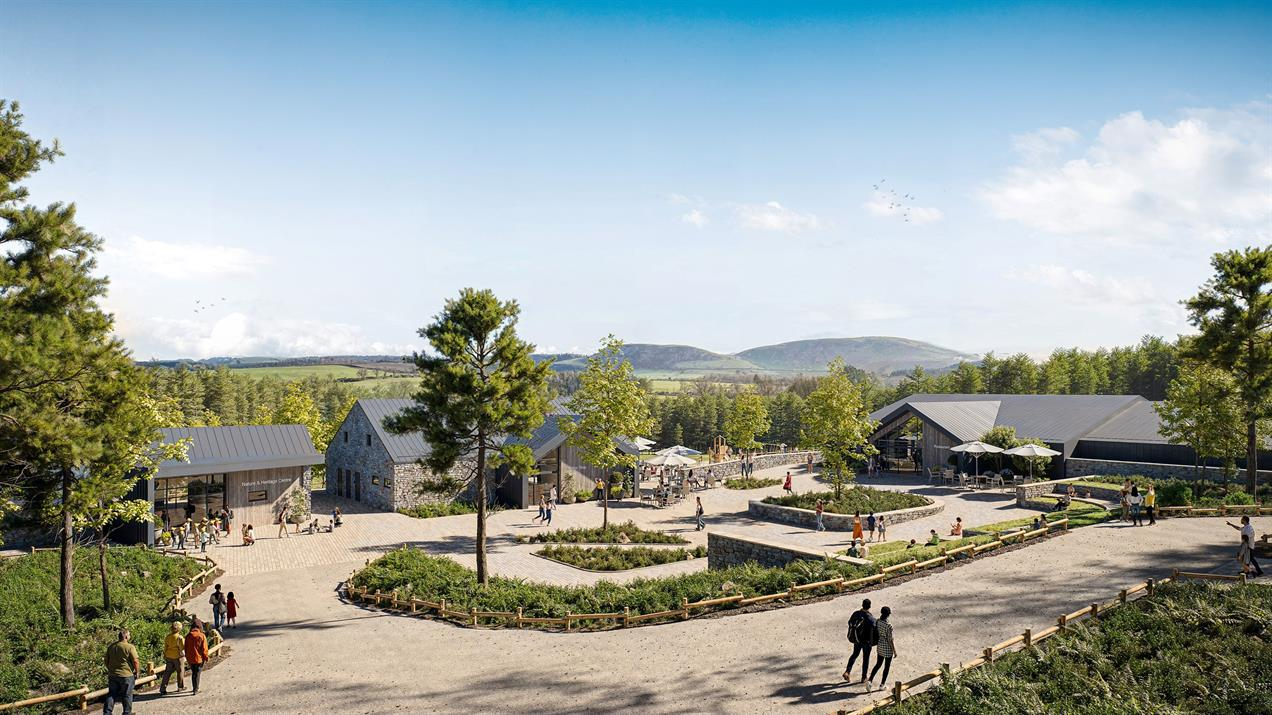
The village is being developed on a predominantly open grassland site just off the A7. Center Parcs describes a landholding of approximately 1,000 acres, with around 500 acres allocated to the holiday village itself. The scheme includes new woodland planting alongside accommodation and central facilities, introducing interfaces between the road network, landscape works, drainage and the areas designated for future buildings. The precise local ground conditions and pavement build-up have not been published in the latest junction announcement.
The developer appointed RJ McLeod earlier in 2026 as part of its initial construction procurement. St Boswells company D.E. Fencing secured a separate contract for perimeter fencing, while Alba Trees was selected to supply trees for the afforestation programme. Center Parcs has said the fencing work will take account of wildlife movement. These packages demonstrate that preparation of the site encompasses boundaries and landscape establishment as well as conventional earthworks and road construction.
Scottish Borders Council granted planning permission for the planned village in December 2025, before the subsequent appointment of enabling contractors and the A7 roadworks during 2026. The junction’s completion is a further, narrower stage in that sequence: consent for the overall development, commencement of preparatory construction and completion of one external road connection are different events. Remaining infrastructure and building packages are not thereby certified as finished.
Later contract packages are expected to cover lodges and the village’s central buildings, with Center Parcs planning Meet the Buyer events in 2027 for companies in the Borders and Dumfries and Galloway. No awards for those future major construction packages are established by the A7 junction completion. The delivery timetable must accommodate remaining civil engineering and servicing before those contractors can work at scale.
The overall village proposal envisages up to 700 lodges, together with central leisure facilities, restaurants, shops, an indoor water attraction and a spa. These planned buildings will require access, site services, foundations, drainage and interfaces with the surrounding landscape. Their inclusion in the £450m development does not mean they were delivered under RJ McLeod’s junction contract or have reached the same construction milestone.
Center Parcs forecasts approximately 750–800 mainly regional construction jobs and more than 1,200 jobs once the resort is operational. It estimates that construction could generate around £15m in gross value added in the Scottish Borders and £212m across Scotland. The forecasts describe potential employment and economic activity over the wider programme, rather than jobs already filled or benefits demonstrably realised when the A7 junction was completed.
A separate environmental programme is intended to establish extensive new woodland across the landholding. Delivering it alongside roads, buildings and services will require sequencing so that construction routes and working areas do not conflict unnecessarily with planting and retained landscape. The developer has stated an intention to use Scottish contractors where practicable, but the precise volume of construction expenditure to be placed locally is not established by this latest announcement.
Center Parcs is targeting summer 2029 for its first Scottish Borders opening, contingent on progress with the access road, car parks, service networks and later accommodation and central-building packages. With the new A7 junction finished, the next identifiable civil engineering work concerns surfacing and completing the 2.5km approach, developing the parking areas and preparing the wider site for subsequent contractors. Neither the opening date nor the projected local employment and economic contribution is a completed outcome.