IN Brief:
- Phase-two work on Durranhill Viaduct will start on 28 September and is expected to finish in February 2027.
- Metcalfe Plant Hire will replace expansion joints and waterproofing while undertaking surfacing and masonry repairs.
- Temporary signals and footway restrictions will allow Eastern Way to remain operational during construction.
Cumberland Council will begin the second phase of remedial works on Durranhill Viaduct in Carlisle on 28 September, with Metcalfe Plant Hire appointed to deliver a package covering bridge joints, waterproofing, surfacing, and masonry repairs.
The works apply to the part of the viaduct crossing the Settle-Carlisle and Carlisle-Newcastle railway lines. The structure carries Eastern Way, the C1045, between Warwick Road on the A69 and London Road on the A6, making it an important link on Carlisle’s eastern highway network.
Metcalfe was appointed through Cumberland Council’s Capital Works Framework following a competitive procurement process. The council’s contract register records an awarded value of £495,315 against an estimated £450,000 for the phase-two package.
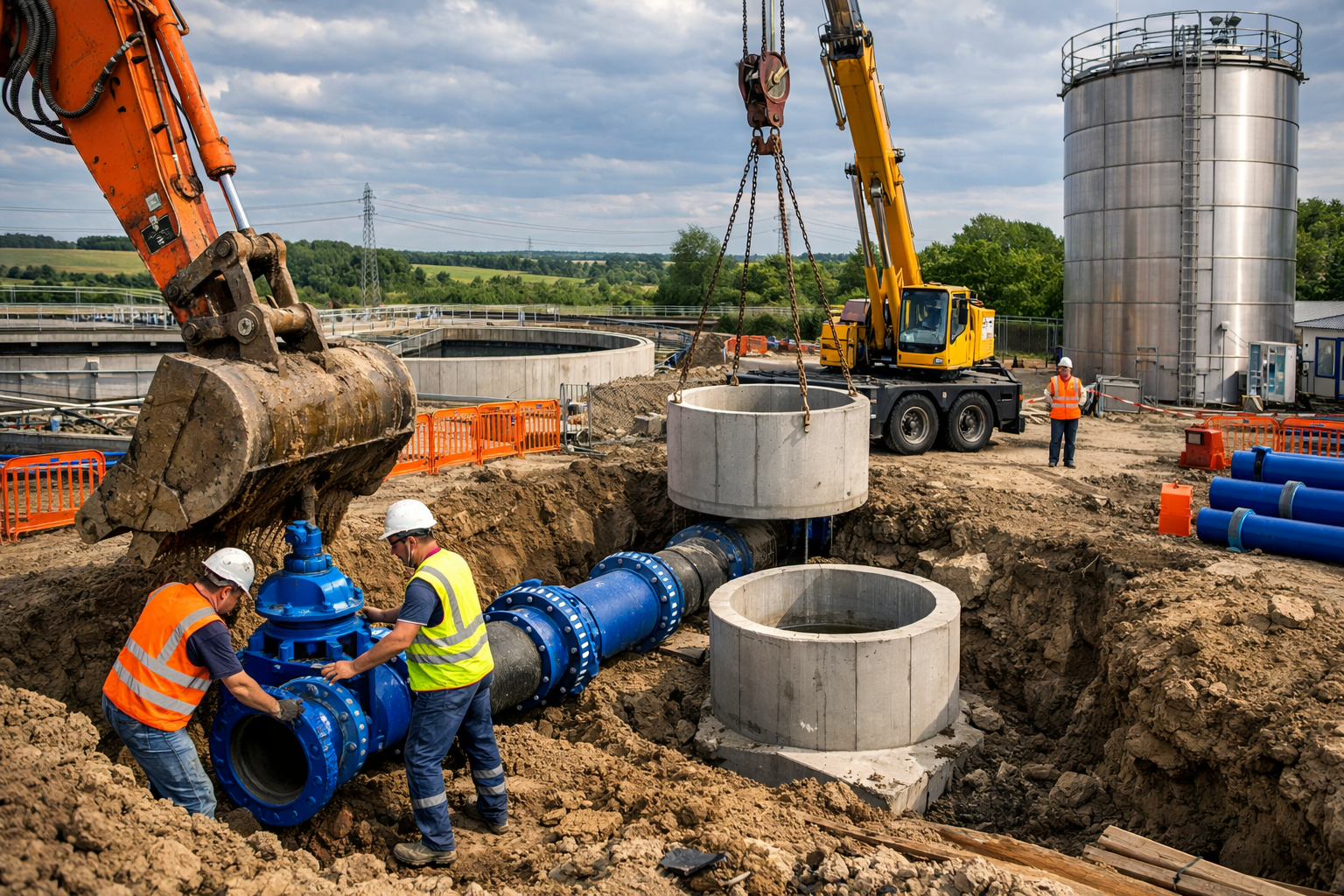
The scope includes replacing bridge expansion joints, installing new waterproofing systems, resurfacing sections of carriageway and footway, removing vegetation, and carrying out localised repairs to masonry parapets. The work is intended to extend the service life of the structure and reduce the risk of smaller defects developing into more disruptive repair requirements.
Construction is planned to run for about ten weeks from 28 September before a scheduled pause over Christmas and New Year. Metcalfe is due to return on 4 January 2027, with overall completion expected in February, subject to weather and other unforeseen conditions.
Two-way temporary traffic signals will operate during the works, with footway closures introduced where required. Cumberland says at least one footway will remain open at all times, with safe pedestrian crossing points maintained around the work area.
Keeping the route open changes the way the package has to be delivered. Joint replacement, waterproofing, and surfacing need access to the bridge deck, but traffic management limits the area that can be occupied at any one time. Work sequencing therefore has to balance production efficiency against the requirement to retain highway access.
The rail interface adds another constraint. The phase covers spans above two operational railway lines, so site planning has to account for the boundary between highway and rail infrastructure even where the council has not announced a rail closure as part of the programme.
Bridge expansion joints are relatively small components but have an outsized influence on durability. They accommodate movement while maintaining the running surface, and when seals or joint assemblies deteriorate they can allow water and de-icing salts to reach bearings, deck ends, concrete, and steelwork below.
Waterproofing performs a related role beneath the carriageway surface. Failure can allow moisture and chloride contamination into the deck, increasing deterioration that remains largely invisible until more intrusive repairs are required. Replacing the membrane while resurfacing is already taking place can therefore reduce future intervention rather than treating the road surface in isolation.
The £495,315 award is also representative of a large part of the highway-structures market that attracts less attention than major bridge replacement. Local authorities manage substantial inventories of bridges, culverts, retaining structures, and other assets where planned packages of joints, surfacing, drainage, parapet, and concrete repair are necessary to keep networks operating.
Durranhill is being treated in phases rather than through a single closure and comprehensive rebuild. The first phase began in January 2026 and included joint replacement, waterproofing, resurfacing, drainage improvements, steel and masonry parapet repairs, and new bollards on the west footway.
Cumberland had already indicated that work on the remaining spans would follow during the 2026/27 financial year, subject to funding. The September start therefore represents continuation of an established asset-management programme rather than a response to an unexpected failure.
Phasing can spread capital requirements and reduce the length of disruption at any one time, but it also increases the importance of keeping records consistent between packages. Joint details, waterproofing interfaces, surfacing levels, drainage, and parapet repairs have to tie into earlier work so that the finished structure performs as one asset rather than a series of disconnected interventions.
The council is also holding public drop-in sessions at Harraby Community Centre on 8 September and Botcherby Community Centre on 10 September to explain the programme and traffic-management arrangements. That engagement is intended to give residents, businesses, and road users advance notice before temporary signals are installed later in the month.
Once the work begins, the most visible effect will be traffic control and restricted footways, while much of the engineering value will be hidden beneath the resurfaced deck. The February completion target will close the second phase of a programme focused less on changing what Durranhill Viaduct does than on ensuring it can continue doing it without more costly intervention.