IN Brief:
- HD Hyundai Site Solution has delivered an unmanned autonomous excavator to KIBAG in Switzerland.
- The 22-tonne machine uses the Real-X solution, combining HD Hyundai’s smart platform with Gravis Robotics’ AI autonomy.
- It will carry out a 1km earthworks task at a site in Tuggen.
HD Hyundai Site Solution has delivered an unmanned autonomous excavator for use on a live construction site in Switzerland, putting AI-enabled construction equipment into civil engineering work.
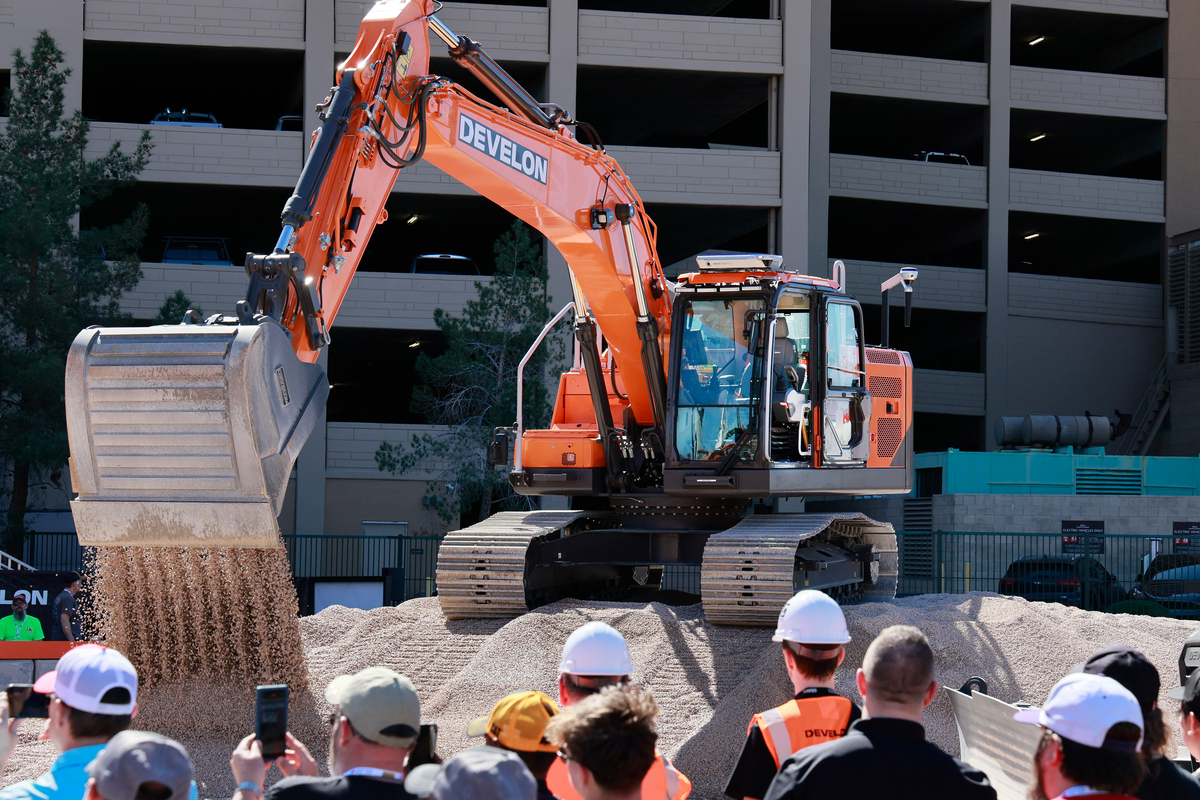
The 22-tonne mid-sized excavator from HD Construction Equipment has been supplied to a site operated by KIBAG in Tuggen, Switzerland. The machine is fitted with HD Hyundai’s Real-X solution, which combines the company’s smart excavator platform with Gravis Robotics’ AI autonomy technology.
The excavator is due to carry out earthworks measuring 3m deep, 12m wide, and 1km long without human intervention. HD Hyundai says the Real-X-equipped machine can perform tasks according to set targets without being affected by operator fatigue or concentration levels, with average productivity of around 120% compared with manned operation.
The deployment follows a construction equipment autonomy cooperation project between HD Hyundai Site Solution and Gravis Robotics. The companies signed a memorandum of understanding at Bauma 2025 in Germany and have continued technical cooperation since then.
HD Hyundai began developing unmanned autonomous construction equipment solutions in 2019, with the aim of automating construction sites. It has demonstrated Real-X equipped machinery to global customers at construction machinery exhibitions in Europe and North America and is now moving the system into operational use.
The company has also been developing smart construction and unmanned platforms with global partners. In 2024, it partnered with Amazon Web Services to develop smart equipment and began collecting data through on-site demonstration cooperation with Holcim.
Earthmoving is one of the clearest early applications for autonomy in construction equipment. Excavation can be repetitive and measurable, but real sites bring changing ground conditions, interfaces with other trades, weather, access constraints, and safety risks that are harder to manage than a demonstration area.
Autonomous plant also changes the way site productivity is measured. The discussion is no longer only about removing an operator from the cab. It involves digital work planning, machine guidance, survey data, remote supervision, safety zoning, equipment telemetry, maintenance, and integration with wider site controls.
Labour and productivity pressures across European construction are increasing the appeal of autonomous equipment. Skilled operators remain difficult to recruit in many markets, while infrastructure and energy projects are demanding greater certainty on programme, cost, and safety. Autonomous machines will still require experienced personnel, but those roles are likely to shift toward planning, monitoring, and exception management as machines handle repeatable production tasks.
The Tuggen deployment will test reliability, supervision requirements, and site integration in live conditions. Consistent performance could accelerate fleet trials across long linear infrastructure, quarries, bulk earthworks, and sites where repetitive excavation can be tightly planned before work begins.