IN Brief:
- Provisional anti-dumping duties of 16.25%–71.74% apply to specified Chinese boom lifts from 20 August.
- The measure covers boom lifts with working heights of six metres or more and specified major assemblies.
- Importers must guarantee the potential duty while the Trade Remedies Authority completes its investigation.
The UK has imposed provisional anti-dumping duties ranging from 16.25% to 71.74% on specified boom lifts imported from China after the Trade Remedies Authority found that the goods were being dumped and had caused, or were causing, injury to UK industry.
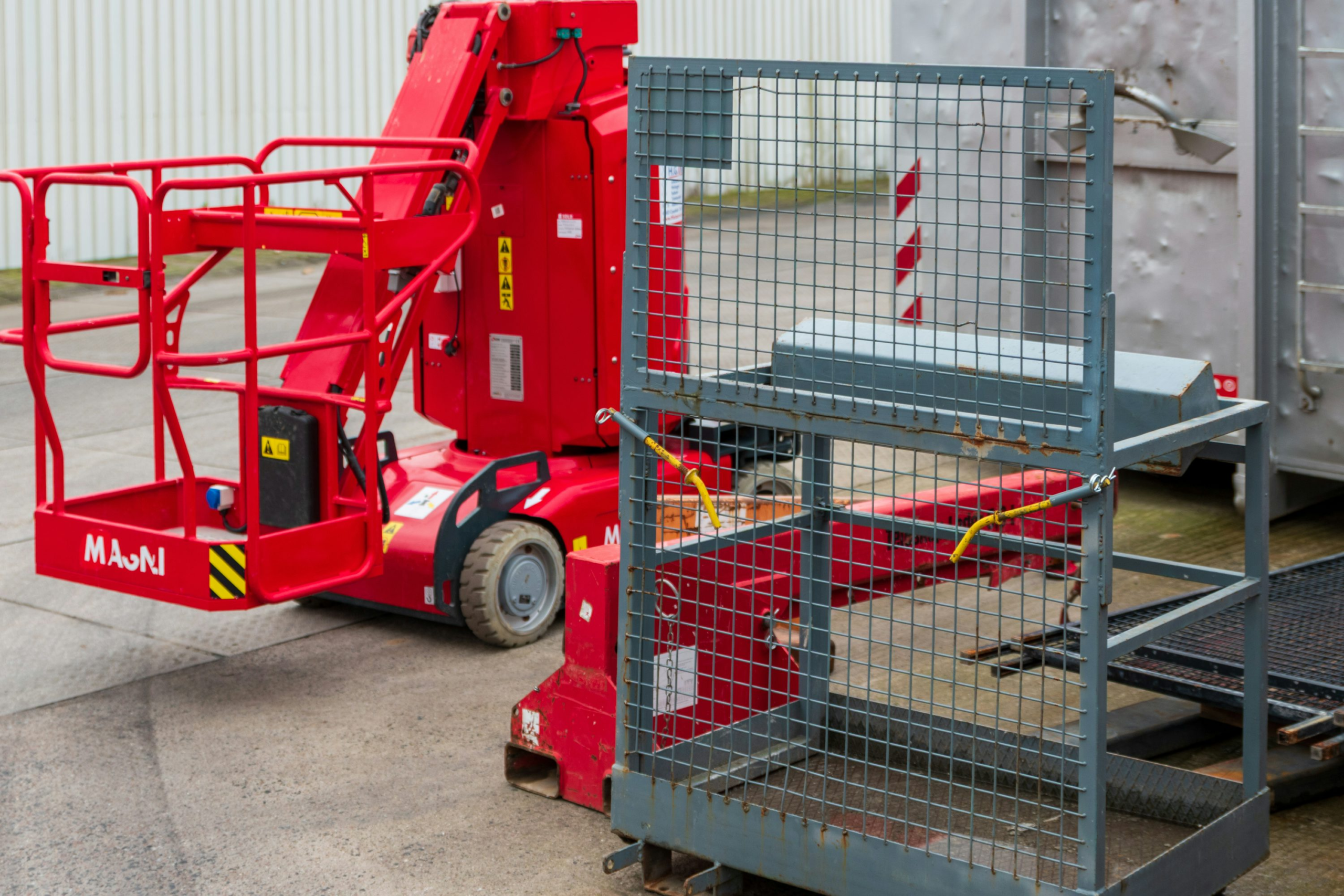
The measure took effect on 20 August 2026 and applies to boom lifts designed to lift people, equipment, or materials with a maximum working height of six metres or more, together with specified pre-assembled or ready-to-assemble sections. The goods description covers booms, chassis, turrets or turntables, and platforms or baskets where they meet the conditions set out in the notice.
Rates vary sharply by producer. Zhejiang Dingli Machinery is subject to a provisional duty of 16.25%, Lingong Heavy Machinery to 64.25%, non-sampled cooperating producers to 28.12%, and all other overseas exporters to the residual rate of 71.74%.
Importers must provide a guarantee against the estimated duty through a bank guarantee, bond, or cash deposit while the provisional measure is in force. The secured amount becomes payable only if definitive measures are imposed, and the provisional regime can run for a maximum of six months or until a definitive remedy is implemented sooner.
The case began in December 2025 following an application from Milton Keynes manufacturer Niftylift. The TRA’s provisional affirmative determination found evidence of dumping and injury, while its economic-interest assessment supported temporary measures during the continuing investigation.
Access equipment costs diverge by supplier
Boom lifts are widely used for façade work, steel erection, roofing, MEP installation, maintenance, fit-out, and other tasks where mobile access can replace or reduce more fixed temporary-access systems. Changes in landed equipment cost can consequently feed into fleet purchasing, rental pricing, and replacement decisions across contractors and plant-hire businesses.
The difference between the named duty rates is substantial. An importer sourcing from a producer subject to 16.25% faces a markedly different potential liability from one falling under the 71.74% residual rate, making manufacturer identification and customs documentation part of the commercial calculation rather than a routine administrative detail.
Producer-specific treatment depends on a valid commercial invoice carrying the declaration required by HM Revenue & Customs. If the invoice or declaration is absent, the residual duty rate applies, creating a direct financial penalty for incomplete documentation even where the underlying manufacturer would otherwise qualify for a lower rate.
The notice is not a blanket charge on every form of powered access. Only goods falling within the stated boom-lift description and specified tariff codes are subject to the provisional measure, while products outside that description are excluded even where they sit within a related customs classification.
That distinction becomes particularly important for distributors handling several access-platform formats or assemblies. Buyers need to establish the producer, product configuration, tariff treatment, and documentary requirements before assuming a particular landed cost, especially where machines have already been ordered but have not yet entered the UK.
Domestic production gains temporary protection
Niftylift’s role as applicant places the investigation directly within the domestic access-equipment market. The company manufactures powered access equipment in Milton Keynes, while Chinese brands have developed a significant presence in international boom-lift and mobile elevating work-platform markets.
The provisional measure gives domestic producers temporary protection while the TRA works towards its final recommendation, but it does not determine the eventual level of any permanent duty. If a definitive rate is lower than the provisional amount, only the lower sum will be collected; if it is higher, collection is capped at the amount secured under the provisional measure.
Plant-hire businesses may respond differently according to fleet age, utilisation, forward orders, and supplier relationships. Higher landed costs can be absorbed, passed through into rental rates, deferred through longer replacement cycles, or avoided through changes in procurement, although the final response will depend on whether the duties are confirmed and at what levels.
Equipment availability matters alongside purchase price. A rapid change of manufacturer can bring its own consequences around parts inventories, technical support, operator familiarity, fleet standardisation, residual values, and maintenance capability, so headline duty rates will not necessarily translate directly into an equivalent switch in buying behaviour.
Powered access also remains embedded in site-productivity planning. Boom lifts can reduce scaffold requirements for some activities, shorten repetitive access movements, and allow teams to move between changing workfaces, meaning acquisition or rental cost has to be considered alongside utilisation, labour, programme, and alternative access methods.
The TRA will continue its investigation before submitting a final recommendation. Until then, the construction-equipment market is working with a tariff spread of more than 55 percentage points between the lowest named producer rate and the residual rate — wide enough for customs classification and invoice paperwork to have an unusually direct influence on the price of equipment arriving on site.