IN Brief:
- The Department for Transport is consulting on £428 million of RIS3 capital reductions across the first four years of the investment period.
- CECA wants the A38 Derby Junctions and A46 Newark Bypass postponed rather than cancelled.
- The association is also seeking different commercial models, risk sharing, and targeted reductions to other capital spending.
The Civil Engineering Contractors Association has urged government to postpone rather than cancel two major road schemes as the Department for Transport considers £428 million of reductions to capital spending during the first four years of the third Road Investment Strategy.
CECA’s consultation response focuses on the proposed removal of the A38 Derby Junctions scheme and A46 Newark Bypass, together with an approximately 2% reduction in other capital funding. The association wants both projects retained for possible delivery in a later road period rather than being abandoned outright.
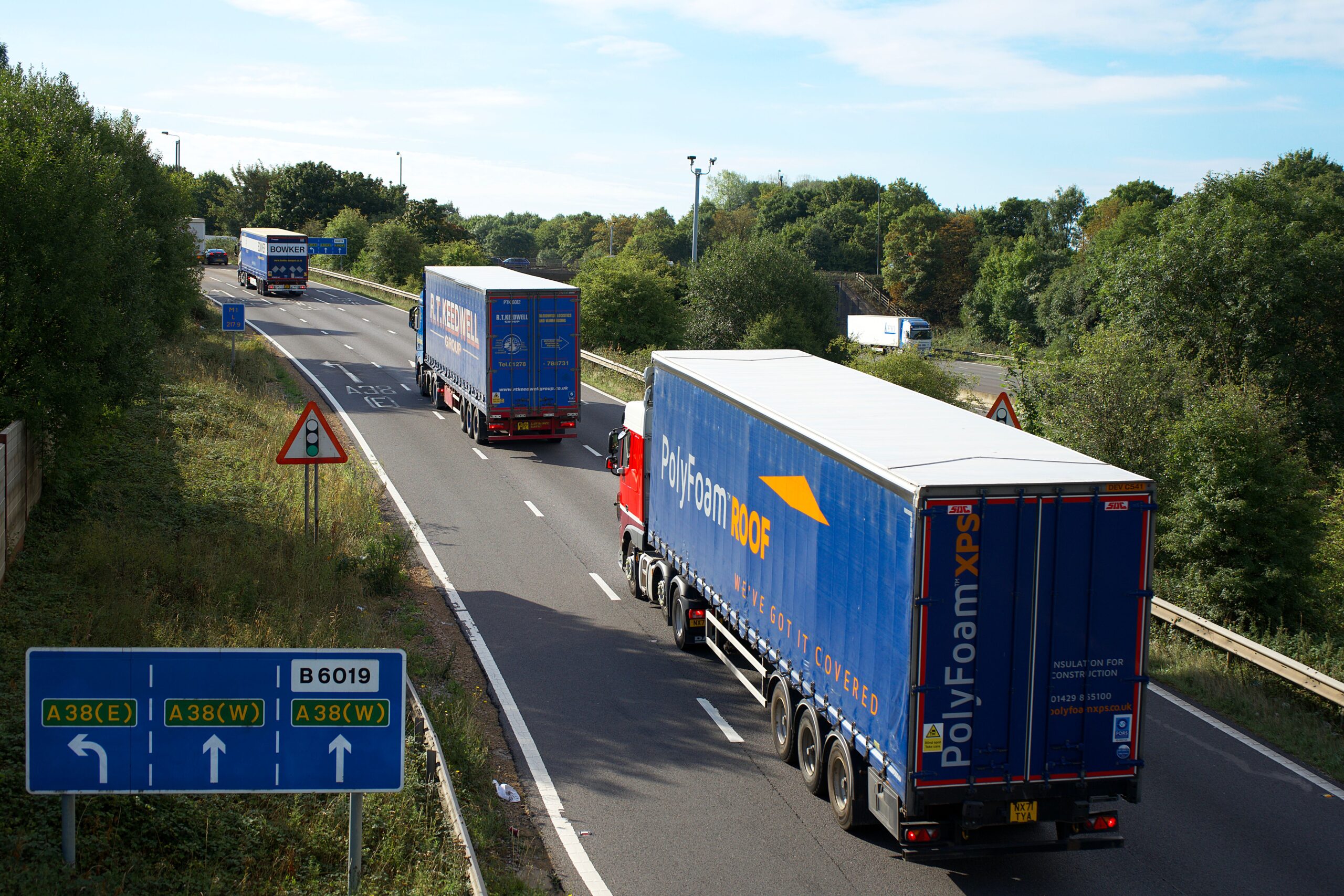
The A38 project would replace the Kingsway, Markeaton, and Little Eaton roundabouts with grade-separated junctions, separating through traffic from local movements on one of Derby’s principal strategic routes. The A46 scheme would upgrade the remaining single-carriageway section around Newark and improve the connection between the M1 and A1.
Both schemes have already passed through prolonged development work, so the consultation is not dealing with projects that exist only as early concepts. Design, appraisal, planning, environmental work, and procurement preparation have already absorbed public and private-sector resources.
CECA argues that postponement would preserve more of that accumulated project knowledge and give future road programmes the option to return to the schemes. Cancellation risks dispersing project teams and allowing design assumptions, cost plans, surveys, and procurement work to age to the point where significant elements have to be repeated.
The distinction matters particularly for infrastructure programmes with long development cycles. Roads of this scale can spend years moving through option selection, consultation, statutory consent, detailed design, and commercial preparation before the first main construction activity appears on site.
CECA has also used its response to press for changes in the way strategic road projects are procured and managed. It wants greater innovation in design and construction, alongside commercial models that give National Highways more certainty over outcomes and distribute risk in ways intended to reduce uncontrolled cost escalation.
The association is additionally asking government to revisit road-user charging alongside fuel duty and vehicle taxation as part of a broader debate about attracting private investment. For the proposed 2% reduction elsewhere in the programme, it wants National Highways and the supply chain to identify spending cuts that cause the least damage to RIS3 objectives.
That approach reflects the difficulty of reducing an infrastructure programme after projects have entered different stages of maturity. A percentage cut applied evenly may appear administratively simple, but individual budgets cover activities ranging from major construction packages to maintenance, technology, surveys, asset renewal, and project development.
The effect on contractors extends beyond the two threatened schemes. Strategic roads sustain design consultancies, geotechnical specialists, structures teams, earthworks contractors, utility diversions, drainage, traffic management, surfacing businesses, materials suppliers, and plant fleets, often through programmes whose investment decisions are made several years ahead of physical delivery.
An uncertain pipeline makes those resources harder to plan. Businesses can move people and equipment between projects to a point, but repeated delays or cancellations eventually reduce the confidence needed to recruit apprentices, retain specialist teams, purchase equipment, or expand capacity around future highways work.
The A46 debate also has a regional-development dimension. The Newark section remains a bottleneck on a strategic east-west route, and local bodies have continued to associate its improvement with journey reliability and planned economic growth.
The project secured development consent before later commercial uncertainty emerged, including the ending of an earlier contractor arrangement. That leaves a scheme which has advanced through a substantial part of the statutory process but remains vulnerable because its main delivery commitment has not been locked in.
The A38 has a similarly long history. Its three Derby junctions have remained within successive road-investment discussions because they combine strategic through traffic with substantial local demand, creating recurrent congestion and reliability problems around the city.
Neither project becomes cheaper simply because it is deferred. Inflation, revised standards, changed environmental requirements, expiring surveys, and the need to remobilise design teams can increase the eventual cost when paused infrastructure returns to the programme years later.
Against that, ministers are dealing with a finite capital settlement and a wider portfolio of roads competing for funding. Schemes that have not entered their principal construction contracts are inevitably easier to remove from near-term expenditure than projects already carrying significant contractual commitments.
CECA’s proposal is effectively an attempt to separate short-term affordability from long-term project abandonment. Postponement still removes expenditure from the current period, but keeps a formal route open for future reassessment rather than requiring the projects to be recreated as new proposals.
The consultation will determine whether government accepts that distinction. Until then, contractors and local authorities face two mature schemes whose engineering cases remain intact while their delivery status is uncertain — an increasingly familiar position for infrastructure projects caught between long development timelines and shorter political spending cycles.