IN Brief:
- Caddick Construction has topped out The Sidings at Upper Trinity Street in Birmingham.
- Its current project record specifies 211 apartments across three blocks totalling approximately 182,985 sq ft.
- The principal contractor reports a £43.6m project value and targets completion in spring 2027.
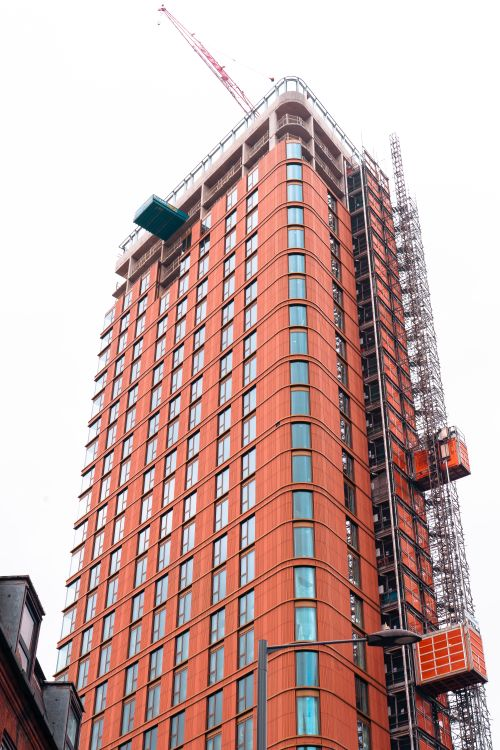
Caddick Construction has topped out The Sidings, a residential development of 211 apartments in Birmingham’s Digbeth district, reaching the highest point of the principal structure. The scheme is the first phase of the Upper Trinity Street regeneration programme led by Cole Waterhouse, Taurus Investment Holdings and Housing Growth Partnership. The contractor expects to complete the development in spring 2027, following the remaining external enclosure, services, internal accommodation and associated works.
Across three blocks of differing heights, The Sidings provides approximately 182,985 sq ft, with 115 one-bedroom and 96 two-bedroom apartments, and the tallest block reaches ten storeys. These 211 homes form the first residential phase of Upper Trinity Street, where later elements of the regeneration remain separate from Caddick’s current contract. The floor area and block arrangement follow the principal contractor’s project specification.
Following demolition and enabling works on the former industrial site, Caddick began constructing the residential blocks under a design and build contract valued at £43.6 million. Its scope includes the apartments, amenities, courtyard and other external works alongside the associated fitting out. The contract value covers this construction phase, while the development partners have established separate financing arrangements for the investment and wider regeneration programme.
Although the structure has reached its planned height, the façade, roof interfaces, building services and internal apartments still require completion before occupation. External enclosure enables more of the internal work to proceed in protected conditions, while commissioning must follow installation of the relevant equipment. The October topping out therefore leaves a substantial construction sequence before inspection and handover, with spring 2027 remaining the principal contractor’s target.
As work progresses inside the three blocks, services must be routed between floors through openings coordinated with the structure and internal compartments. Water supply and drainage require vertical distribution, while penetrations through walls and floors must satisfy the relevant fire and acoustic requirements. Maintenance access to plant and equipment also influences the finished layouts. No complete technical specification has been released for The Sidings, so individual plant capacities and energy performance figures remain unconfirmed.
The internal services programme includes pipework and plumbing across residential, landlord and plant areas, which mechanical contractor Calumet Services has confirmed within its own package. Calumet expects to complete that work in April 2027, broadly aligning with Caddick’s spring 2027 target. Its appointment covers a defined portion of the development rather than the entire construction contract, with installation and testing dependent on progress in the surrounding building areas.
At Little Digbeth, the work is taking place alongside existing streets, neighbouring buildings and other regeneration activity, limiting the space available for construction traffic and material handling. Deliveries for the remaining building envelope and internal trades must be coordinated with access through the development as the work progresses. Caddick has not published the detailed lifting or temporary works method used for topping out, so the structural milestone alone does not establish which particular plant or construction systems were employed.
Beyond the apartments now under construction, the Upper Trinity Street masterplan envisages additional homes, employment accommodation and public spaces. Its proposals include Pump House Park and Makers Courtyards, which would support activity around the residential phases if progressed. Delivery of those later elements depends on separate development decisions, while completion of The Sidings will provide the first occupied residential part of the wider scheme.
The first phase has been supported by brownfield regeneration funding through arrangements involving the West Midlands Combined Authority, alongside the financing secured by its investment partners. Earlier demolition and enabling work prepared the former industrial site for new construction, although the team has not disclosed quantities for ground remediation or any specific treatment method. The available funding and site preparation information therefore establishes how the project advanced into construction without quantifying unreported underground works.
As the internal accommodation nears completion, Caddick must also deliver the shared courtyard and external circulation spaces covered by its contract. Access routes used by finishing trades and materials deliveries may overlap with areas requiring final paving or landscaping, making the order of external work dependent on progress inside the blocks. Detailed handover phases have not been announced, although both the external works and finished apartments must be complete for the development’s intended use.
The topping out follows the demolition, enabling and structural stages of a project that is continuing towards internal completion, with other residential and commercial developments progressing elsewhere in Digbeth. The Sidings has its own construction scope and timetable within that wider activity, and the October milestone relates specifically to its primary structure. No contract award for the subsequent Upper Trinity Street phases accompanies the completion of the highest structural point.
Caddick continues to target spring 2027 for completion of the 211 apartments, with services installation, finishing works and commissioning still to be delivered. The first phase will add residential accommodation to Little Digbeth, while further development decisions will determine the sequence of the broader workspaces and public realm proposed for Upper Trinity Street.