IN Brief:
- Network Rail has opened lifts on Batley station’s new footbridge, providing step-free access between both platforms for the first time.
- The earlier bridge installation required piling and formed part of a phased programme that also includes track and overhead line work.
- Waiting shelters, environmental improvements and the return of car parking with three accessible spaces are due by spring 2027.
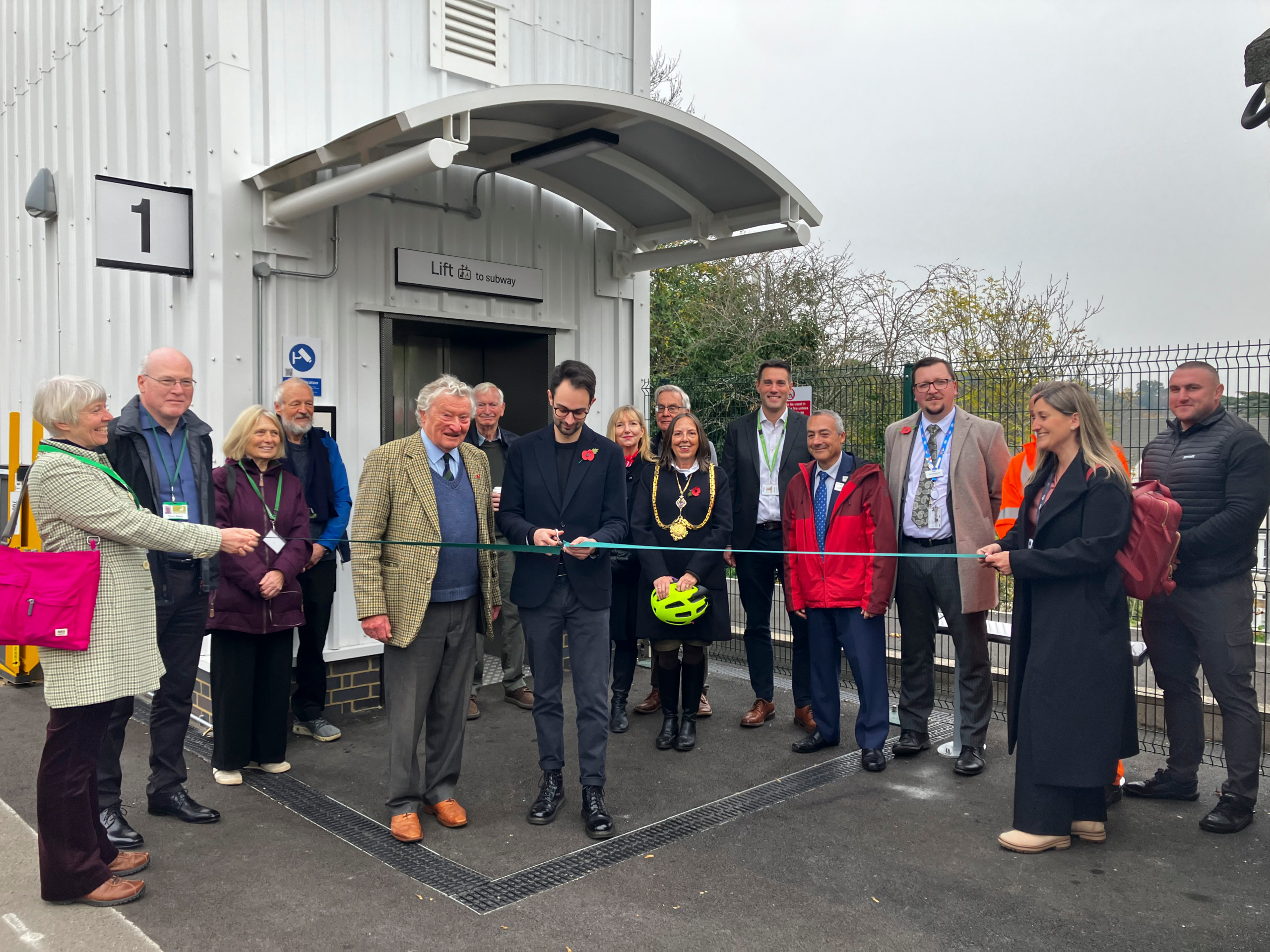
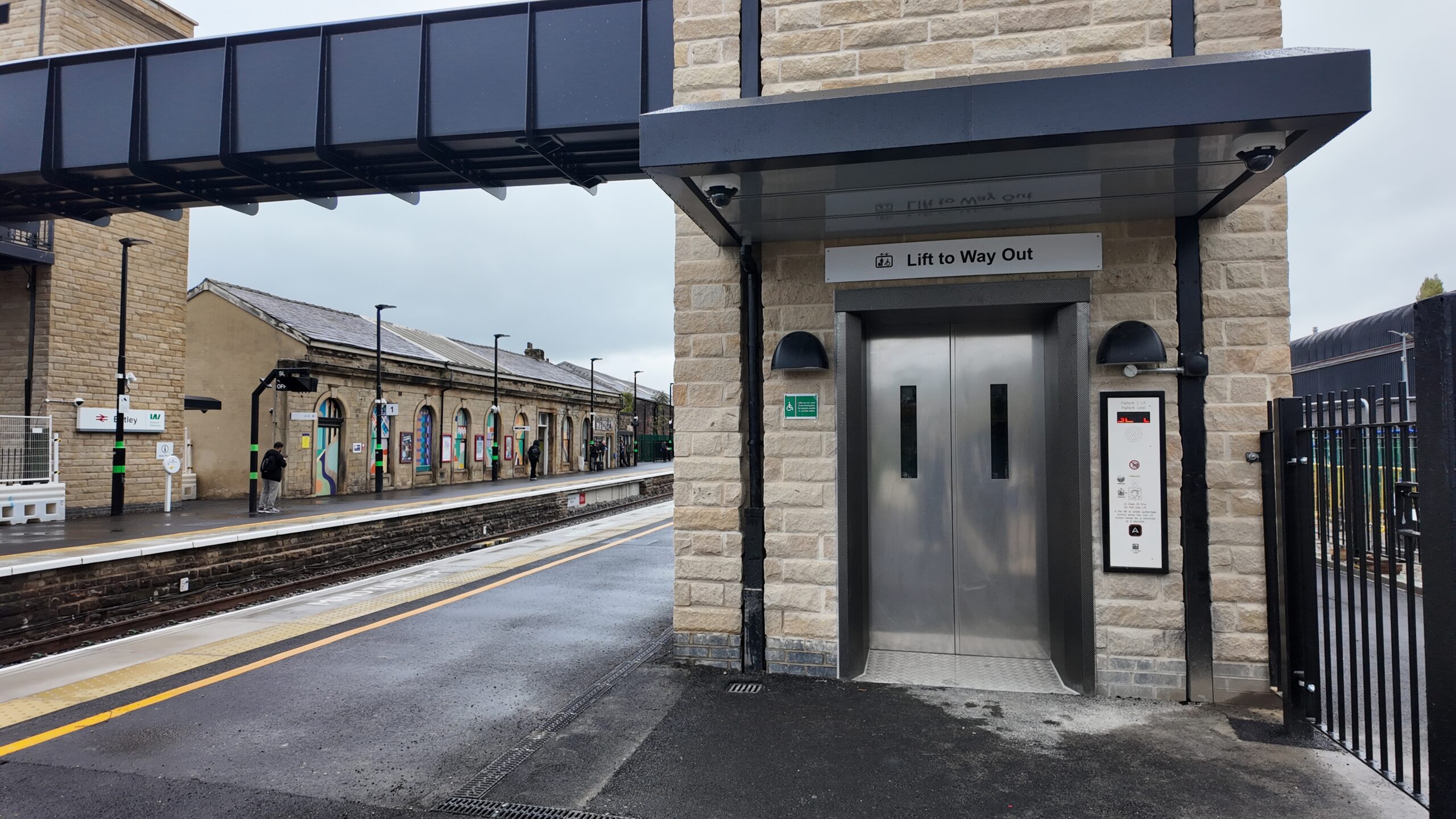
Network Rail has opened the lifts on Batley station’s new footbridge, creating step-free access between its two platforms for the first time. The West Yorkshire station is being rebuilt in stages under the Transpennine Route Upgrade (TRU). Its bridge structure was available earlier in the year, but the November commissioning of the lifts brings the accessible crossing into service while other station improvements continue.
The replacement crossing takes the place of the former subway route and links the platforms above the railway. Work to prepare for the new structure included piling and restrictions on the adjacent station car park so that teams could establish the bridge foundations and bring equipment to the site. The project also includes refurbishment and extension of the platforms, with a 150-metre platform length identified in Network Rail’s construction plans. The bridge and lifts are therefore one element in a broader reconfiguration of the station and the railway alongside it.
Constructing an accessible crossing in phases separates the civil engineering work from the later commissioning of its passenger equipment. Foundations and structural members carry the bridge, while lift shafts, machinery, controls, landing areas, and safety systems must operate together before a step-free route is usable. At Batley, passengers who could use stairs gained the new crossing before those who depended on lifts. Opening the lifts completes that connection between the platforms, even though the remaining external works have a separate handover date.
A 28-day closure between Dewsbury and Morley during summer 2026 enabled concentrated engineering access to the railway. Teams carried out track renewals and installed overhead line equipment as part of the wider route modernisation. That combination involved permanent-way work, station alterations, and the infrastructure needed to supply traction electricity to future services. Completing several activities within one possession reduced the need to interrupt the railway independently for each work site and allowed different contractors to work around shared access arrangements.
Platform extensions and overhead electrification place different demands on the same corridor. Longer platforms must align with the usable stopping positions of trains and with passenger routes through the station. Overhead line masts and associated structures need clearance from platforms, track, and neighbouring assets before electric trains can operate. The station bridge and its lift landings also have to connect to the final passenger circulation layout, so construction sequencing is important even where different elements of the project are delivered under the same programme.
Temporary changes to car parking illustrate the pressure on space at a functioning station. The site compound and piling activities took areas otherwise used by passengers, while the work continued around railway infrastructure and access routes. Earlier arrangements provided alternative parking and accessible bays during the works. Network Rail now plans to reopen the station car park with three new accessible parking spaces, alongside new waiting shelters and environmental improvements, as the final local construction activities are completed.
Jonathan Hepton, TRU project sponsor, said the new footbridge and lifts had delivered step-free access at Batley for the first time. He linked the opening to the programme’s wider work on station accessibility and thanked construction teams and local communities involved in the project. Northern’s customer representatives also welcomed the completion of the accessible route. The November handover is a defined improvement for passengers, rather than the completion of every remaining platform, landscaping, and car park task.
Batley’s works form part of a route-wide upgrade connecting Manchester, Huddersfield, Leeds, and York. Network Rail is delivering electrification, track capacity improvements, signalling changes, and alterations to stations as the scheme advances. The 28-day summer closure was one of several planned blocks of engineering access needed to construct that infrastructure on an operating railway. While the lift opening serves a local access requirement, the nearby track and overhead line installations form part of the wider system that will support future services.
The programme includes improvements at 23 stations, with completed station work at Morley and Mirfield providing nearby examples of changed passenger facilities and access arrangements. Different sites require different interventions: a bridge at one station, lengthened platforms at another, and track or junction changes elsewhere along the route. At Batley, commissioning the lifts removes a longstanding movement barrier between its two platforms. It also means the remaining station improvements can continue without withholding use of the newly completed accessible crossing.
The new lift route serves wheelchair users and passengers who would otherwise struggle to use stairs, including people travelling with pushchairs or heavy luggage. Its usefulness depends on the equipment remaining in service and the entrances being kept clear and accessible, making maintenance and passenger information part of the station’s operation after handover. The remaining construction activities will still require local site management and access arrangements, particularly around the car park and new waiting areas.
Network Rail expects the waiting shelters, reopened car park, three accessible parking spaces, and associated environmental work to be completed in spring 2027. Until then, Batley has an operational footbridge and lift connection within a station whose wider construction programme is not yet finished. The confirmed November milestone gives passengers step-free movement between platforms while route contractors continue work on railway capacity, electrification, and the remaining local facilities.