IN Brief:
- Approximately 800 metres of sewer infrastructure was reconstructed using extra-strength vitrified clay pipes in nominal diameters from DN 300 to DN 800.
- An 86-metre section required construction within a corridor just 1.25 metres wide, stabilised using in-situ reinforced concrete.
- Pipe manufacturer Steinzeug-Keramo reports that the project was completed within its 52-week construction programme while maintaining key transport routes.
Restricted excavation widths and installation depths of up to seven metres influenced the selection of vitrified clay pipes for a €6m sewer reconstruction programme in Zurich’s Oerlikon district.
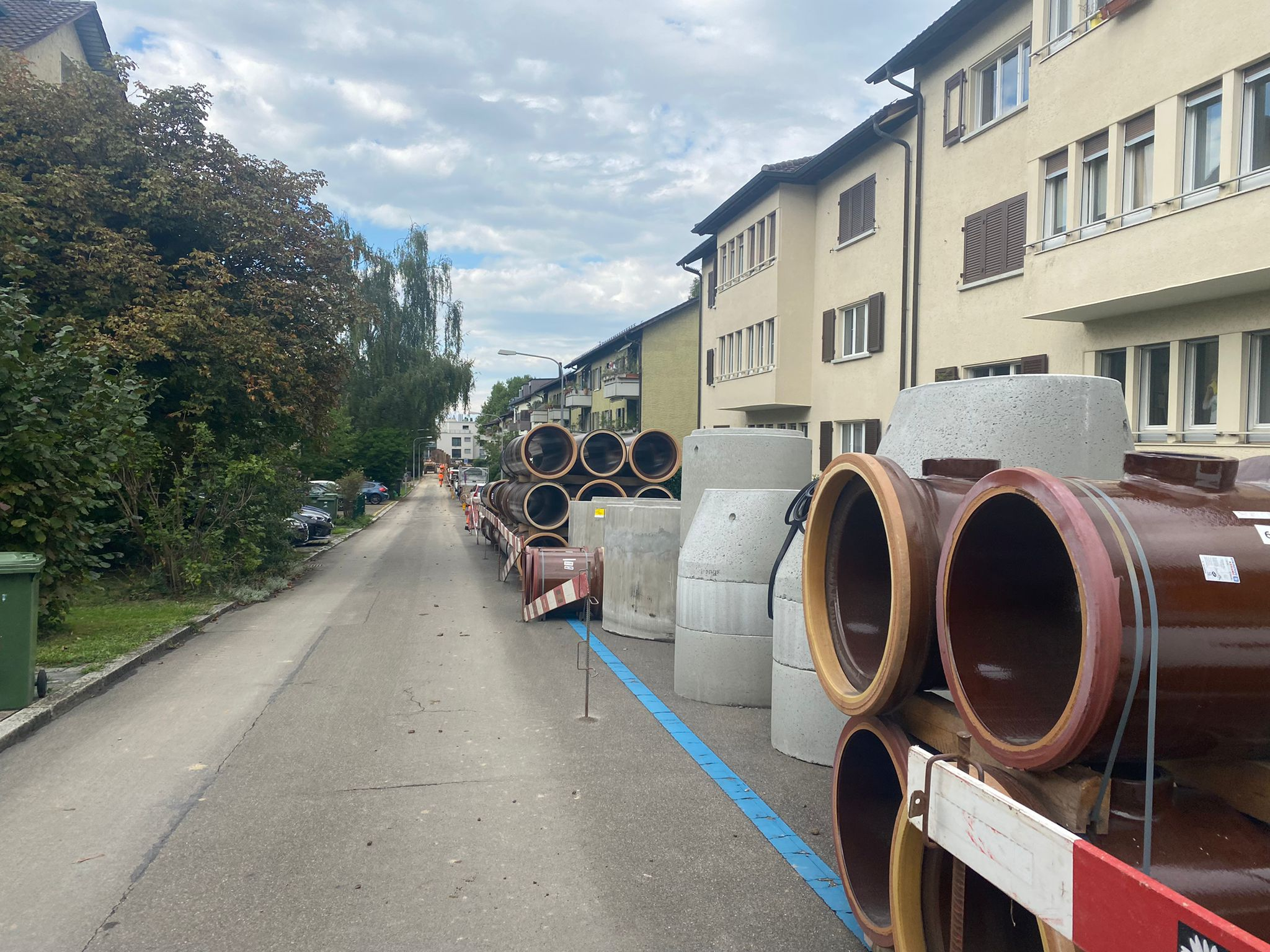
A technical case study published by pipe manufacturer Steinzeug-Keramo details the construction of approximately 800 metres of wastewater infrastructure, designed by engineering consultancy Heierli AG and delivered by Implenia Schweiz AG for the City of Zurich.
Growth across Oerlikon’s residential, industrial, and recreational areas had increased demands on the existing sewer network. Reconstruction was undertaken to improve hydraulic capacity while establishing infrastructure capable of accommodating future urban development.
The construction programme required surrounding infrastructure and transport routes to remain operational, constraining the space available for excavation, equipment movement, and material handling.
Installation depths ranged from three to seven metres, with one particularly challenging section extending for 86 metres through a corridor just 1.25 metres wide. The excavation was stabilised using in-situ reinforced concrete, allowing construction to proceed within the available working area.
Deep open-cut construction requires excavation support capable of accommodating pressures generated by the surrounding ground and adjacent infrastructure. The required configuration depends on soil properties, groundwater conditions, excavation geometry, and loading from activities at the surface.
Restricted excavation widths also influence the selection of installation equipment and the sequence through which pipework can be placed. Preparing pipe foundations, handling individual sections, assembling joints, and positioning supporting materials must be coordinated within the space available between the excavation boundaries.
The reinforced concrete stabilisation used in Oerlikon addressed the specific constraints of the narrow installation corridor. Its detailed reinforcement specification and structural configuration have not been disclosed.
Steinzeug-Keramo supplied its KERA.Pro range of extra-strength vitrified clay pipes in nominal diameters from DN 300 to DN 800. The manufacturer’s open-trench pipes and fittings are manufactured in accordance with EN 295-1, part of the European standard governing vitrified clay sewerage products.
Vitrified clay pipes behave as rigid structural elements. Their performance under external loading depends on the relationship between the strength of the pipe, the condition and configuration of its bedding, and the loads transferred through the surrounding ground.
Burial depth is therefore one of several factors influencing pipe specification. Traffic loading, soil characteristics, trench geometry, and installation conditions must also be considered when determining the appropriate strength classification.
Supporting materials distribute loads around the pipe, with installation quality influencing the stresses experienced by individual components. The condition of the underlying foundation and consistency of bedding become particularly important where ground conditions change along the pipeline.
Alignment between pipe sections and the accommodation of differential movement also affect the performance of joints, especially at connections with existing infrastructure or associated sewer structures.
Steinzeug-Keramo identifies KERA.Pro as its extra-strength range for installations requiring greater load-bearing capacity. Selecting this classification for the Oerlikon project addressed the structural demands associated with deep installation beneath a developed urban area.
Chemical resistance formed another component of the material specification. Wastewater infrastructure can encounter aggressive compounds generated by sewage composition and biological processes within the network.
Hydrogen sulphide, for example, can be converted through microbial activity into sulphuric acid on exposed sewer surfaces. The resulting chemical attack can affect susceptible construction materials, with the extent of deterioration influenced by environmental conditions and material composition.
Vitrified clay offers resistance to a broad range of chemical exposure conditions. Its glazed internal surface also provides relatively low hydraulic roughness, although the capacity of an installed sewer depends on pipe diameter, gradient, flow characteristics, and the configuration of the wider network.
The use of nominal diameters between DN 300 and DN 800 allowed the reconstruction to accommodate different wastewater conveyance requirements along the route. The manufacturer reports that hydraulic capacity has increased, although quantified flow improvements have not been disclosed.
Durability carries particular significance where future repairs would require excavation several metres beneath operational urban infrastructure. The commercial consequences of premature failure can extend beyond replacement pipework to traffic management, excavation support, reinstatement, and disruption affecting surrounding premises.
Steinzeug-Keramo cites potential service lives exceeding 150 years for vitrified clay products. That figure represents a manufacturer-stated material durability expectation rather than a guaranteed lifespan for the complete reconstructed sewer, whose performance will also depend on its joints, associated structures, installation quality, and maintenance.
According to the manufacturer, the Oerlikon sewer reconstruction was completed within its specified 52-week construction programme without disruption to key transport routes. The project demonstrates the relationship between structural pipe specification, excavation constraints, and long-term maintenance requirements when upgrading wastewater infrastructure beneath established urban areas.