IN Brief:
- Completion of the second phase of refurbishment has moved from spring to autumn 2027.
- Water ingress affecting underdeck steelwork prevented reliable application of the originally specified protective coating system.
- The existing 7.5-tonne vehicle weight restriction will remain throughout the refurbishment programme.
Refurbishment of the Menai Suspension Bridge has been delayed until autumn 2027 after previously unidentified water ingress affecting its underdeck steelwork forced changes to the protective coating specification and construction programme.
The Welsh Government confirmed on 23 November that UK Highways A55 Ltd, which is responsible for delivering the second phase of refurbishment, had revised its completion forecast by at least six months. The works had previously been expected to conclude in spring 2027.
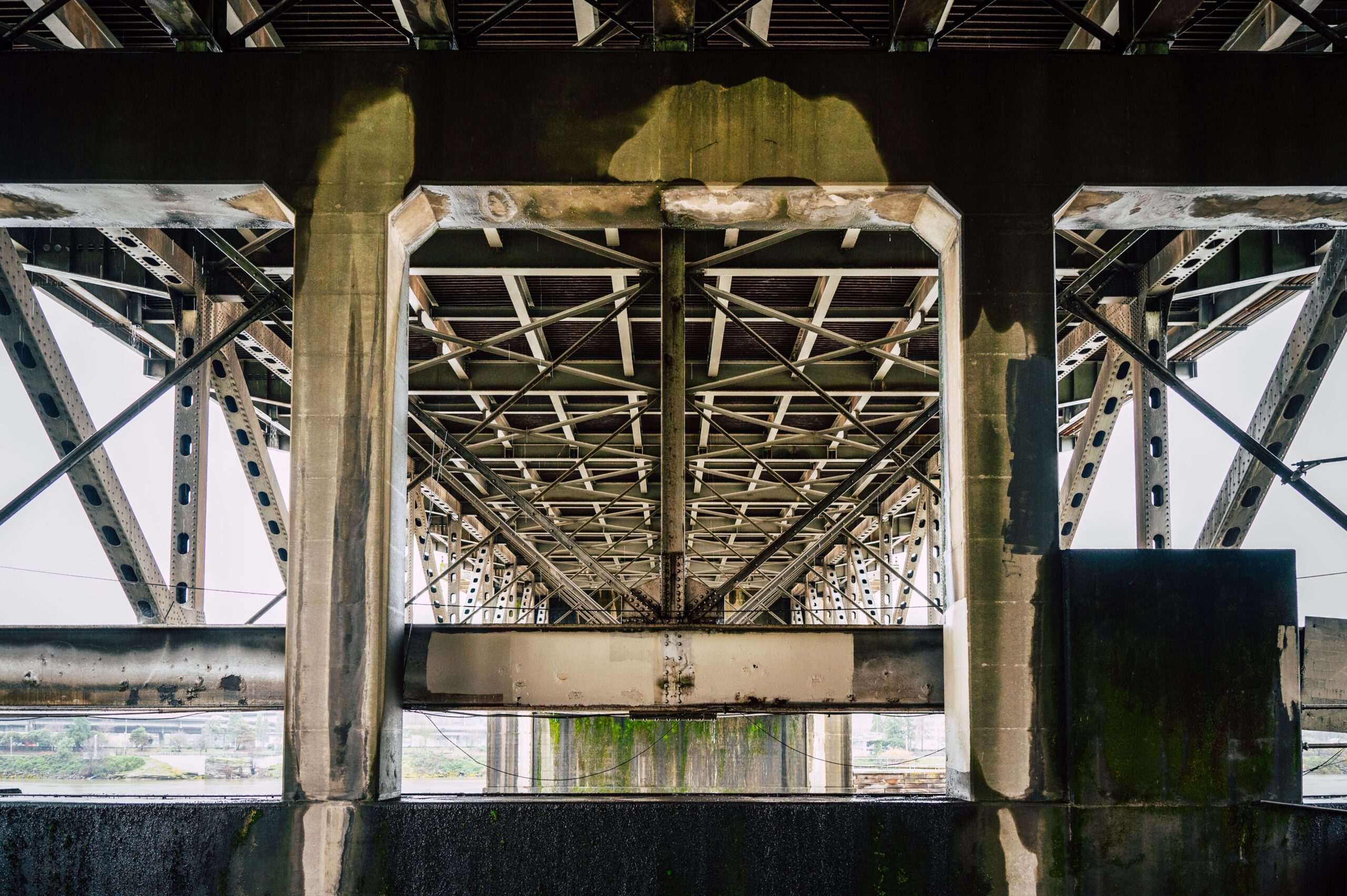
Moisture affecting the steelwork beneath the bridge deck had not been apparent during earlier inspections. Its discovery prevented the reliable application of the originally specified paint system, requiring the contractor to identify an alternative capable of accommodating the moisture conditions while meeting the historic structure’s conservation requirements.
UK Highways A55 Ltd rearranged other activities within the refurbishment programme while the replacement coating specification was established, allowing construction to continue where possible rather than suspending the entire second phase.
Protective coatings on steel infrastructure provide a barrier against moisture, oxygen, and other environmental contaminants that contribute to corrosion. Their effectiveness depends on the condition of the underlying substrate, appropriate surface preparation, and compliance with application and curing requirements.
Moisture present during application can interfere with the adhesion of certain coating systems or become trapped beneath the protective layer. Depending on the coating chemistry and environmental conditions, premature deterioration can include blistering, localised separation from the substrate, and corrosion developing beneath apparently intact paintwork.
The conditions under which coatings are applied can consequently influence both construction productivity and subsequent maintenance requirements. Surface temperature, relative humidity, condensation, and the presence of contaminants must be considered alongside the specification of the coating itself.
Working beneath an exposed bridge deck adds constraints that would be more readily controlled within a fabrication workshop. Temporary access arrangements and environmental protection must accommodate the structure’s geometry, changing weather conditions, and potential moisture ingress from adjoining structural elements.
A more moisture-tolerant coating system can provide greater flexibility during application, although its suitability still depends on corrosion resistance, adhesion, compatibility with existing materials, and anticipated maintenance intervals. Neither the precise replacement formulation nor its application requirements have been publicly disclosed.
Heritage requirements further constrain refurbishment of the Menai Suspension Bridge, which opened in 1826 and has undergone successive alterations and strengthening programmes during its operational life. New protective systems must be suitable for an existing historic structure, where the condition and composition of retained materials can differ from those encountered in contemporary steel fabrication.
The discovery of additional maintenance requirements during construction also illustrates the limitations of inspecting existing infrastructure before refurbishment begins. Restricted access, concealed interfaces, and retained finishes can prevent engineers from establishing the full extent of deterioration until construction activities expose the affected areas.
Where those investigations reveal conditions inconsistent with the original specification, revised engineering assessments and procurement requirements can interrupt activities that were previously scheduled to follow one another. Coating work is particularly dependent on completing surface preparation and inspection before application proceeds.
Mark Hooper, deputy minister for transport in the Welsh Government, has requested an urgent meeting with the leadership of Equitix, which governs UK Highways A55 Ltd, to establish how the revised programme will be delivered and how further delays will be prevented.
The existing 7.5-tonne vehicle weight restriction will remain until the second phase is complete. Traffic management measures are expected to be removed for the remainder of 2026, although further restrictions will be necessary as refurbishment progresses.
Maintaining traffic movements during bridge maintenance requires coordination between structural engineering and construction planning. Temporary access systems, equipment positioning, material storage, and individual repair activities must be managed within the operational constraints established for the structure.
The weight restriction also has consequences for the wider resilience of transport connections between Anglesey and mainland Wales. Larger vehicles remain dependent on the Britannia Bridge, increasing the potential disruption associated with maintenance works or incidents affecting that crossing.
Development work on a possible third Menai Strait crossing is continuing alongside separate measures intended to improve the resilience of the Britannia Bridge. Those proposals address longer-term transport capacity and reliability, while the suspension bridge refurbishment remains essential to maintaining an existing infrastructure asset.
The revised autumn 2027 completion target places renewed emphasis on coordinating protective coating operations with suitable environmental conditions and the remaining construction activities. UK Highways A55 Ltd must deliver those works while maintaining the safe operation of the bridge, with the Welsh Government seeking assurance that further avoidable programme delays will be prevented.