IN Brief:
- West Yorkshire Combined Authority will reopen four departure bays at Dewsbury Bus Station on 29 November.
- Passengers will initially use both the refurbished building and temporary external bus stops as works continue.
- Willmott Dixon is delivering the £23m project, with full construction completion expected in summer 2027.
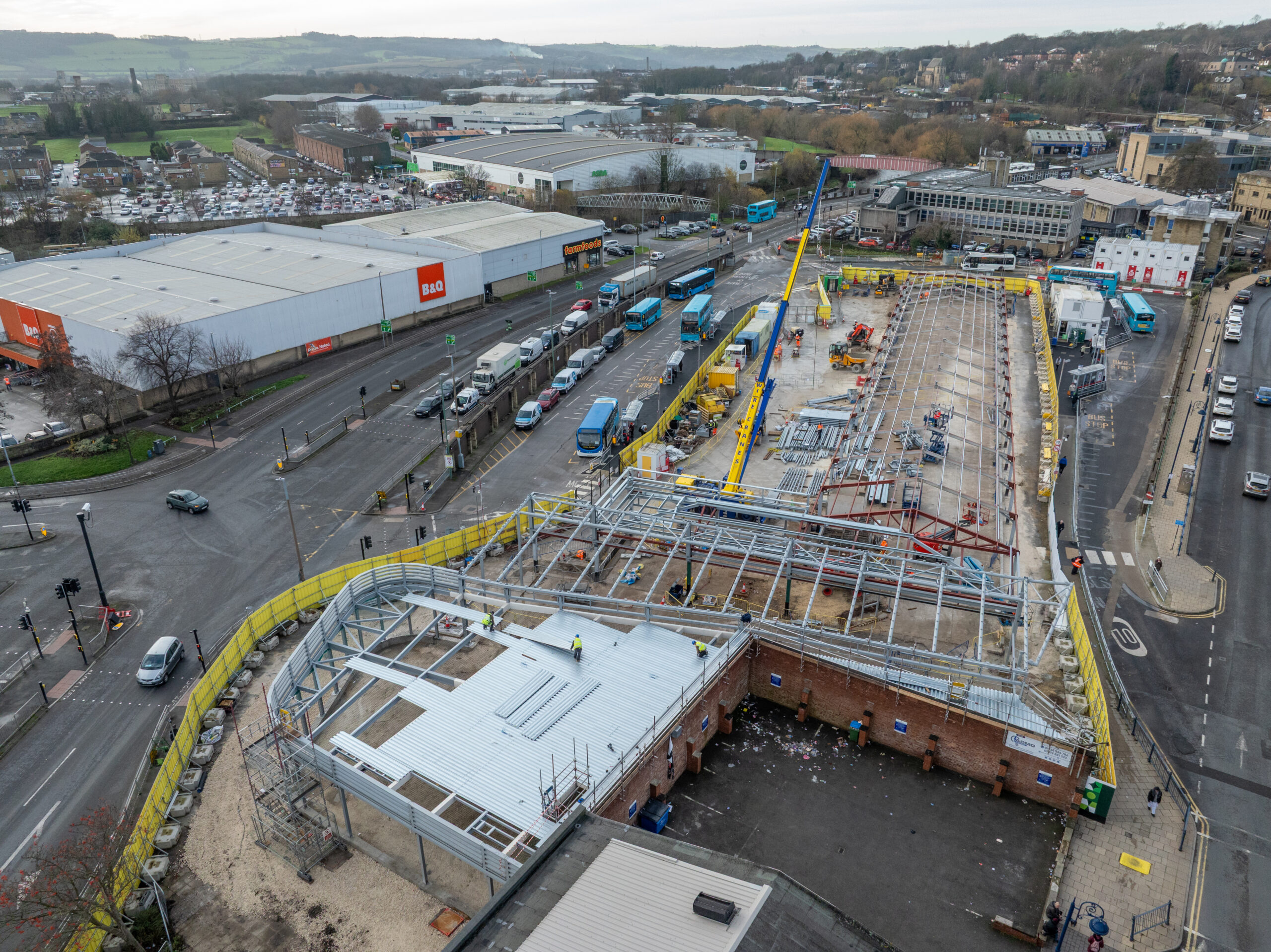
The West Yorkshire Combined Authority will reopen four departure bays at Dewsbury Bus Station on Sunday 29 November, returning the first passenger services to the building during a £23m refurbishment. Other services will continue to use temporary stops around the site while contractor Willmott Dixon completes the remaining works. The limited reopening is one stage of a programme scheduled to finish in summer 2027.
The new arrangement allows passengers to use part of the refurbished interchange without treating the whole building as complete. The Combined Authority expects a further phase to finish in early 2027, when all local bus services apart from coaches are due to operate from inside the station. The final construction completion date remains summer 2027. Those three dates — four-bay reopening, wider service return and finished redevelopment — refer to different delivery milestones.
Willmott Dixon is refurbishing a single-storey station building measuring approximately 1,895m². The contractor’s scope includes an improved travel centre, upgraded welfare and retail areas and changes to all 19 bus stands so that they meet current access and egress requirements. Four bays entering use in November should therefore not be confused with the full set of 19 upgraded stands, which will be made available through later phases.
The station has remained operational throughout the main works, although the building itself has been closed. Temporary stands and facilities outside have kept bus services running while internal construction takes place. Opening part of the building changes how that arrangement works: some passengers will enter the station, while others must continue to reach external stops. The authority is providing current route information through Metro rather than treating the construction milestone as a complete changeover for every service.
Vehicle and pedestrian access are particularly sensitive in a live interchange. Each operational stand requires a safe approach and exit for buses, while passengers need routes into waiting areas and towards the correct boarding position. With only four bays reopened, temporary circulation must coexist with work on the rest of the building and stands. The project information confirms a phased handover but does not describe a specific temporary barrier layout or contractor vehicle route, so neither can be presented as an established site arrangement.
Passenger facilities form a substantial part of the £23m contract. The completed interchange is intended to include more seating, modern toilets, a quiet room, refurbished retail units, real-time service displays and improvements to security. Cycle parking will also be provided. The November update identifies a range of facilities becoming available to passengers, but it does not mean every planned installation is finished throughout the station at the time the first four bays reopen.
Accessibility measures go beyond the bus stands. The project includes a Changing Places toilet with additional space, a hoist and an adjustable changing bench, along with a separate accessible toilet. Passenger information and the route from entrance to departure bay will also need to operate coherently while the station is only partly handed over. The upgraded stand geometry and internal facilities are being delivered within the existing interchange footprint rather than through the construction of an entirely new station on another site.
The building services specification includes a planted living roof, solar photovoltaic panels, air source heat pumps and electric vehicle charging. The roof system must provide for drainage, waterproofing and maintenance access, while solar generation and heat pumps require electrical and controls integration with the refurbished building. These are elements identified by the contractor for the completed facility; no installed electrical capacity or measured energy saving was given in the November reopening announcement.
Work has been arranged in phases to maintain public transport access during an extensive internal refurbishment. That approach reduces the need for a complete suspension of bus operations but places additional constraints on construction space and handover sequencing. The new four-bay arrangement is therefore a functional change to a working site, while the early 2027 phase will return a much greater proportion of services to the finished interior.
The project sits within West Yorkshire’s Weaver Network and Kirklees Council’s wider plans for Dewsbury town centre. It follows the reopening of Heckmondwike Bus Station, with separate works under way at Huddersfield. Weaver Network bus services are expected to begin operating in Kirklees from spring 2027, but that franchising timetable is distinct from the construction programme at Dewsbury and from the partial passenger reopening on 29 November.
Alongside the refurbishment, Willmott Dixon and Kirklees College have undertaken training and community activities. In the November project update, the contractor reported 472 hours of employment support, 134 hours of educational engagement and 44 hours of volunteering with local organisations. Those are reported activity totals, not a count of newly created permanent jobs. The company has also described a Building Lives Academy programme supporting local residents through site experience and classroom training.
The next scheduled change is the return of four departure bays on 29 November. A further service reorganisation is expected in early 2027, when local buses other than coaches are planned to operate inside the station, before final construction completion in summer. Until those milestones are reached, Dewsbury will continue to function as a partly refurbished interchange with some services operating from temporary stops.