IN Brief:
- Yorkshire Water has begun five storm overflow improvement schemes around York with a combined investment of £7.8m.
- Four projects involve surface water sewer separation, while a fifth provides 33,000 litres of underground storage at Fulford.
- Construction will continue into 2027, with different completion schedules for the individual projects and local traffic disruption expected.
Yorkshire Water has started five construction projects worth a combined £7.8m to reduce storm overflow discharges into watercourses around York. The programme involves more than 2.6km of new surface water sewers across four communities, alongside a separate underground storage tank installation in Fulford. Work is being undertaken by OCU Group, United Infrastructure, and Ward and Burke.
The new sewer sections are being installed at Askham Bryan, Tholthorpe, Shipton, and Sheriff Hutton. The schemes will divert rainwater into dedicated drainage systems, reducing the volume entering existing combined sewers that carry both surface water and wastewater. This is intended to lower the frequency with which storm overflows operate when heavy rainfall increases flows through the network.
Combined sewer systems convey wastewater from properties alongside rainwater runoff collected through the drainage network. During prolonged or intense rainfall, the additional flow can exceed the capacity available for conveyance and treatment. Storm overflows provide a discharge route under specified conditions, but their operation can release diluted untreated sewage into rivers and other receiving waters.
Separating surface water from parts of the combined network reduces the amount that must pass through the wastewater system during rainfall. The approach differs from increasing wastewater treatment capacity because it seeks to prevent some rainwater from entering the combined system in the first place. Its effectiveness depends on the drainage catchment, the existing connections, and the quantity of surface water redirected.
OCU Group and United Infrastructure are delivering the sewer separation works across the four villages. The new pipes will carry rainwater through separate routes, with the completed infrastructure intended to reduce pressure on the combined network during wet weather.
The projects address different receiving watercourses within the wider York area. At Tholthorpe, the improvements are intended to benefit Derrings Beck, which feeds the River Kyle. The Askham Bryan scheme concerns Askham Beck, which eventually reaches the River Ouse, while the Shipton works relate to Moor Gutter, another tributary of the Ouse.
At Sheriff Hutton, the improvements are designed to reduce discharges affecting Howl Beck, which feeds the River Foss. Although the schemes use a similar method of managing surface water, each location has its own drainage arrangements and receiving watercourse, requiring the works to be delivered as separate construction projects.
The overall sewer installation programme extends beyond 2.6km, although individual pipe lengths and diameters have not been specified in the published project information. The precise construction method at each location will depend on the existing infrastructure, the proposed drainage route, and local ground and access conditions.
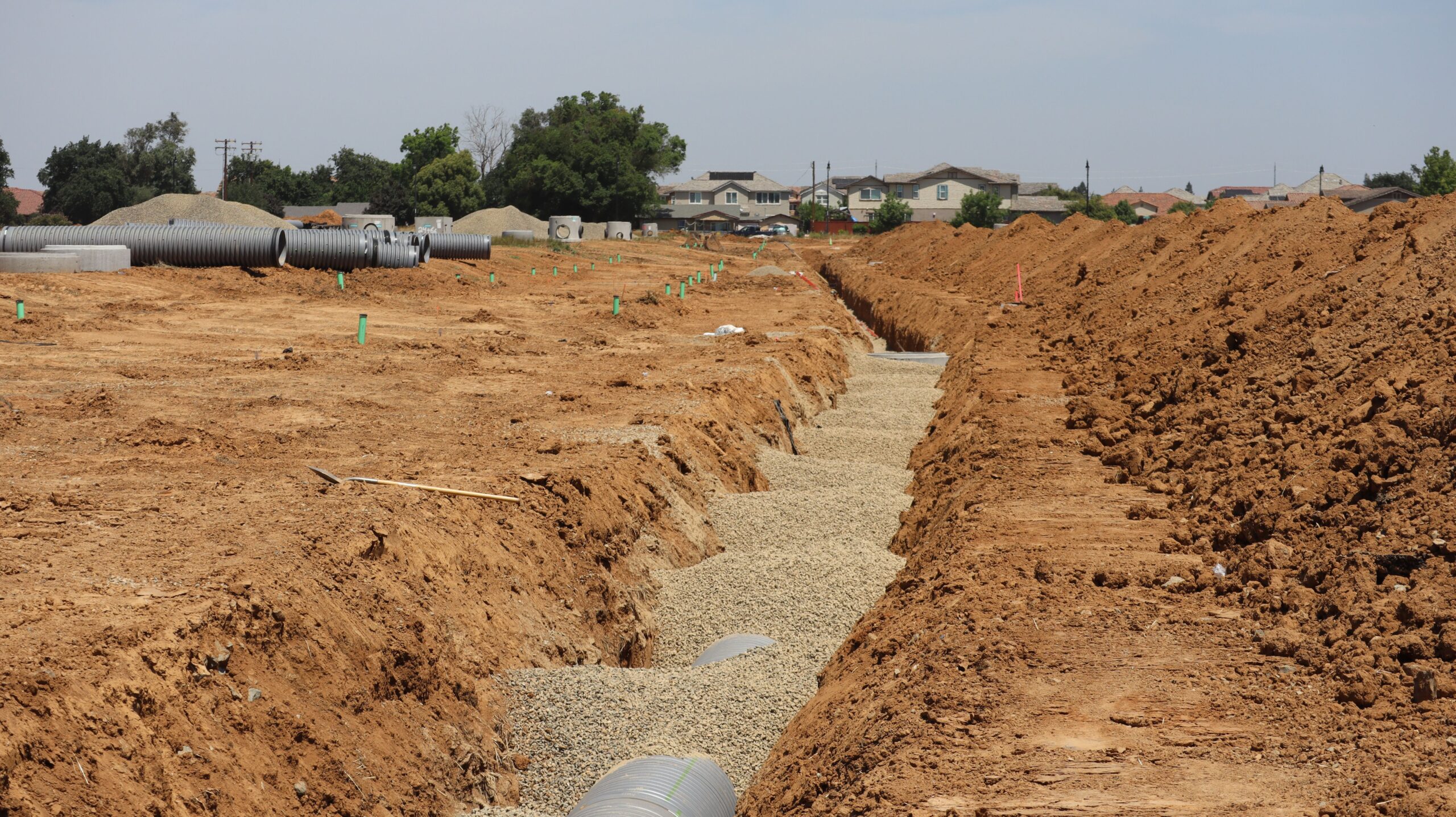
Installing new underground drainage infrastructure within established communities requires coordination with existing services and road access. Excavations must accommodate pipe gradients and connections while maintaining safe separation from other underground assets. The works also require reinstatement of affected surfaces once the relevant installation and testing activities have been completed.
Construction at Sheriff Hutton is scheduled to last approximately three months. The Tholthorpe and Askham Bryan schemes are expected to finish in spring 2027, followed by the Shipton project in summer 2027. These different completion dates reflect separate delivery programmes rather than a single coordinated handover for all four locations.
Residents have been advised of local disruption during construction. Yorkshire Water intends to suspend work over the Christmas period at Askham Bryan, Tholthorpe, Shipton, and Sheriff Hutton, with activity resuming according to the respective project schedules. The arrangements apply to the four sewer separation locations and should not be interpreted as confirmation of a corresponding suspension at the separate Fulford site.
The fifth scheme, at Fordlands Road in Fulford, uses additional wastewater storage rather than surface water sewer separation. An underground tank with a capacity of 33,000 litres will retain rainwater and wastewater within the combined network during periods of high flow, reducing the quantity that might otherwise contribute to a storm overflow discharge.
Ward and Burke is delivering the Fulford installation over approximately seven months. The scheme is intended to reduce discharges from the Fulford Mains Street combined storm overflow to fewer than ten annually, with the wider objective of improving water quality in the River Ouse.
Additional storage operates differently from the dedicated surface water sewers being installed at the other four sites. A storage tank provides temporary capacity within the existing drainage network, allowing excess flow to be retained until conditions permit its onward transfer. Its effectiveness depends on the amount of storage available, the inflow received during rainfall, and the ability of the downstream system to accommodate the retained wastewater.
The distinction between storage and separation is important because the available engineering options vary between catchments. Sewer separation may be appropriate where surface water can be intercepted and directed into a suitable alternative drainage route. Storage can provide additional capacity where retaining combined flows is a more practical solution than constructing an extensive new surface water network.
Neither method eliminates the need to maintain existing wastewater assets or manage the receiving environment. Performance depends on the interaction between the new infrastructure and the wider sewer system, including the condition of existing pipes, drainage connections, and the capacity available downstream. Operational monitoring will establish how the installations affect storm overflow activity after commissioning.
The five projects form part of Yorkshire Water’s wider investment programme to reduce storm overflow discharges. Separate schemes are continuing at Poppleton Road North, where a £2.5m storage tank is being installed, and at York Landing Lane, where an existing tank is being replaced with a larger installation under an £870,000 project.
Those two additional schemes are distinct from the five newly commenced projects making up the £7.8m programme. Other storm overflow improvement works are also underway across North Yorkshire, including projects at Staxton, Crambe, Hebden, and Malham.
Yorkshire Water has allocated approximately £1.5bn to storm overflow improvements within its broader £8.3bn investment programme for 2025–2030. The company reports that operation of its storm overflows declined by 24.5% during the previous year and attributes that reduction to its investment activity. The reported figure concerns the wider network rather than the individual projects now beginning around York.
Storm overflow improvements form part of the longer-term programme of wastewater infrastructure investment required to reduce discharges into rivers and coastal waters. Individual projects can include new storage, sewer separation, network modifications, and treatment infrastructure, depending on the constraints identified within each catchment.
The latest five schemes will continue through different construction periods into 2027. Their performance will be assessed through the operation of the completed sewer and storage systems, with the intended reduction in overflow events depending on rainfall conditions and the hydraulic behaviour of the wider network.