IN Brief:
- IBECO has secured Swedish patent SE 548 712 for its mobile pump well, first introduced earlier in 2026.
- The equipment uses an excavator-mounted outer pipe, perforated drainage chamber, and surrounding aggregate to establish a pumping point.
- European distribution remains under development, while the system's reported safety and productivity benefits have not been independently quantified.
Swedish water infrastructure supplier IBECO has secured domestic patent protection for its mobile pump well, an excavator-installed system designed to drain flooded construction excavations while reducing the need for personnel to enter unstable trenches during pump installation.
The patent, SE 548 712, covers equipment developed in collaboration with an experienced water infrastructure worker to address difficulties encountered when placing and maintaining pumps in waterlogged excavations. IBECO confirmed the grant on 12 November 2026 and is continuing its search for distributors across Europe.
The mobile pump well was introduced earlier in the year, with the company presenting the system at IFAT in Munich during May. The November development therefore concerns the granting of Swedish patent protection rather than the first commercial introduction of the equipment.
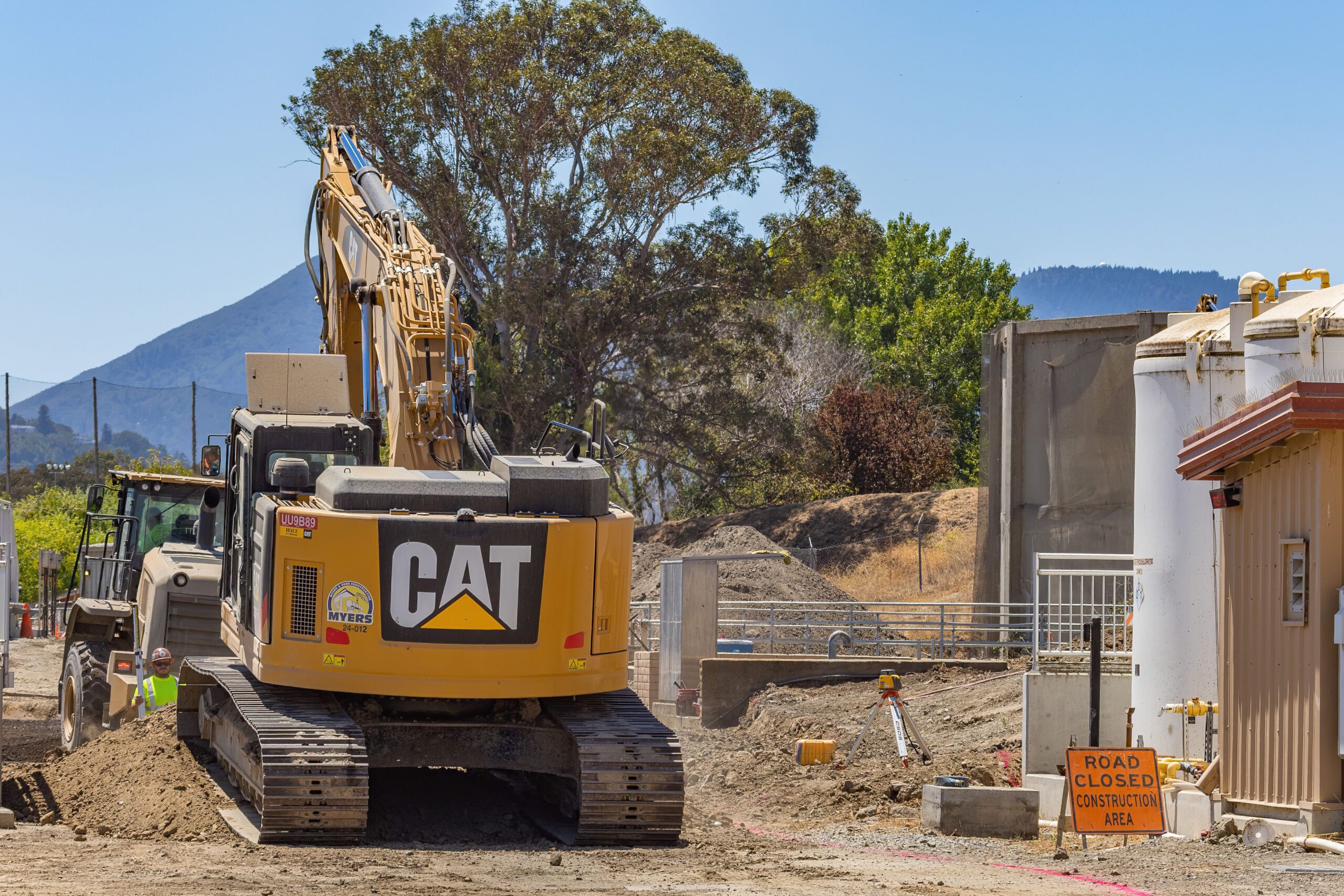
Its construction combines an outer installation pipe with an inner perforated drainage pipe. The outer component has a standard S60 machine attachment, enabling a compatible excavator to position the assembly at the required location without workers manually placing the principal components at the bottom of the excavation.
The annular space between the pipes is filled with crushed stone, creating a permeable layer around the inner drainage chamber. Once the assembly has been positioned at the intended depth, the excavator withdraws the outer pipe, leaving the perforated inner component and surrounding aggregate in place.
A submersible pump or suction hose can then be lowered into the remaining chamber to remove accumulated water. The surrounding aggregate provides a route for water to reach the perforations while restricting the movement of larger particles towards the pump inlet.
IBECO’s standard unit has a height of 1.8 metres, with extension components available where additional installation depth is required. The company recommends an SPT 750W pump and offers the equipment through both its sales operation and IBECO Rental.
The installation method changes the way a local pumping point can be constructed, particularly where groundwater inflow or accumulated surface water makes an excavation difficult to access. Instead of placing a pump directly into an open sump, the operator establishes a defined drainage chamber using machinery positioned outside the working area.
Removing the requirement for personnel to enter the excavation during installation can reduce exposure to some of the hazards associated with flooded trenches. Unstable sides, accumulated water, falling material, and restricted access can create dangerous conditions, particularly where excavation support or ground conditions are uncertain.
Water entering an excavation can also affect its stability. Groundwater pressure, soil permeability, and the movement of water through granular material influence the behaviour of the surrounding ground, while surface water may increase the loading imposed on temporary support systems.
The UK Health and Safety Executive identifies the inflow of ground and surface water as a significant excavation hazard. Its guidance requires suitable precautions against collapse and makes clear that pumping arrangements must be considered in relation to the stability of the excavation itself.
A pumping point does not provide structural support simply because it removes water. Temporary works, excavation geometry, ground conditions, and the position of plant remain important considerations when determining whether an excavation can be worked safely.
IBECO’s arrangement is intended to improve the process of establishing a protected pumping chamber. The crushed stone surrounding the perforated pipe can intercept larger particles before they reach the pump, potentially reducing blockages and the need to retrieve equipment for cleaning.
The effectiveness of that filtration depends on the material being transported by the water. Fine particles may behave differently from coarse sediment, while the size and grading of the aggregate surrounding the pipe will influence its drainage characteristics.
Groundwater inflow rates present another limitation. The volume of water entering an excavation depends on local hydrogeological conditions and the extent of the exposed ground. A pumping system must have sufficient capacity to manage that inflow without producing unacceptable effects on the excavation or surrounding structures.
IBECO has not published independent comparative data establishing the volume of water that can be removed under different ground conditions. Nor has it released quantified results comparing pump maintenance requirements or installation times against conventional sumps.
The company’s stated benefits include smaller excavations, fewer transport movements, reduced pump clogging, and less reliance on vacuum tankers. These remain manufacturer claims rather than independently verified savings applicable across different civil engineering projects.
Excavator installation also requires appropriate working arrangements. Plant positioned close to an excavation can impose loads on the surrounding ground, while underground utilities and overhead services must be identified before any component is lowered or driven into position.
The S60 attachment provides compatibility with excavators equipped for that coupling standard, but the suitability of the machine, working platform, and installation method must still be assessed for the conditions encountered on site.
Water removed from an excavation must also be discharged or otherwise managed appropriately. Pumping through a protected drainage chamber does not itself establish that the collected water is suitable for direct release into a drainage network or watercourse.
Where water contains sediment or other contaminants, additional settlement, treatment, or monitoring may be necessary. The destination and quality of discharged water can also determine whether environmental permissions are required.
IBECO identifies groundworks, water and wastewater construction, municipal infrastructure, and temporary dewatering as potential applications. The company is seeking distributors and dealers with established networks among civil engineering contractors, equipment hire businesses, and water infrastructure suppliers.
The European distribution initiative began before the patent was granted, with IBECO promoting the equipment internationally at IFAT. The new Swedish patent establishes a further intellectual property milestone, while an international application, WO 2026/063847, has also been filed.
That international application should not be treated as evidence that patent protection has been granted throughout Europe. The company has not confirmed national approvals outside Sweden or announced a complete European distributor network.
The mobile pump well provides a defined mechanical method for installing a filtered pumping chamber while reducing manual activity inside waterlogged excavations. Its performance across different ground conditions, together with distributor availability and independently measured operating results, will determine how widely the system can be adopted.