IN Brief:
- Esh Construction completed 70% of the Tyne Bridge protection deck during the 23 October–2 November closure, despite approximately 20 working hours lost to storms.
- Infrastructure Site Services coordinated more than 200 tonnes of scaffolding, alongside lighting column removal and preparatory structural work.
- The completed deck will support grit blasting, steelwork repairs and protective repainting of the main arch during 2027.
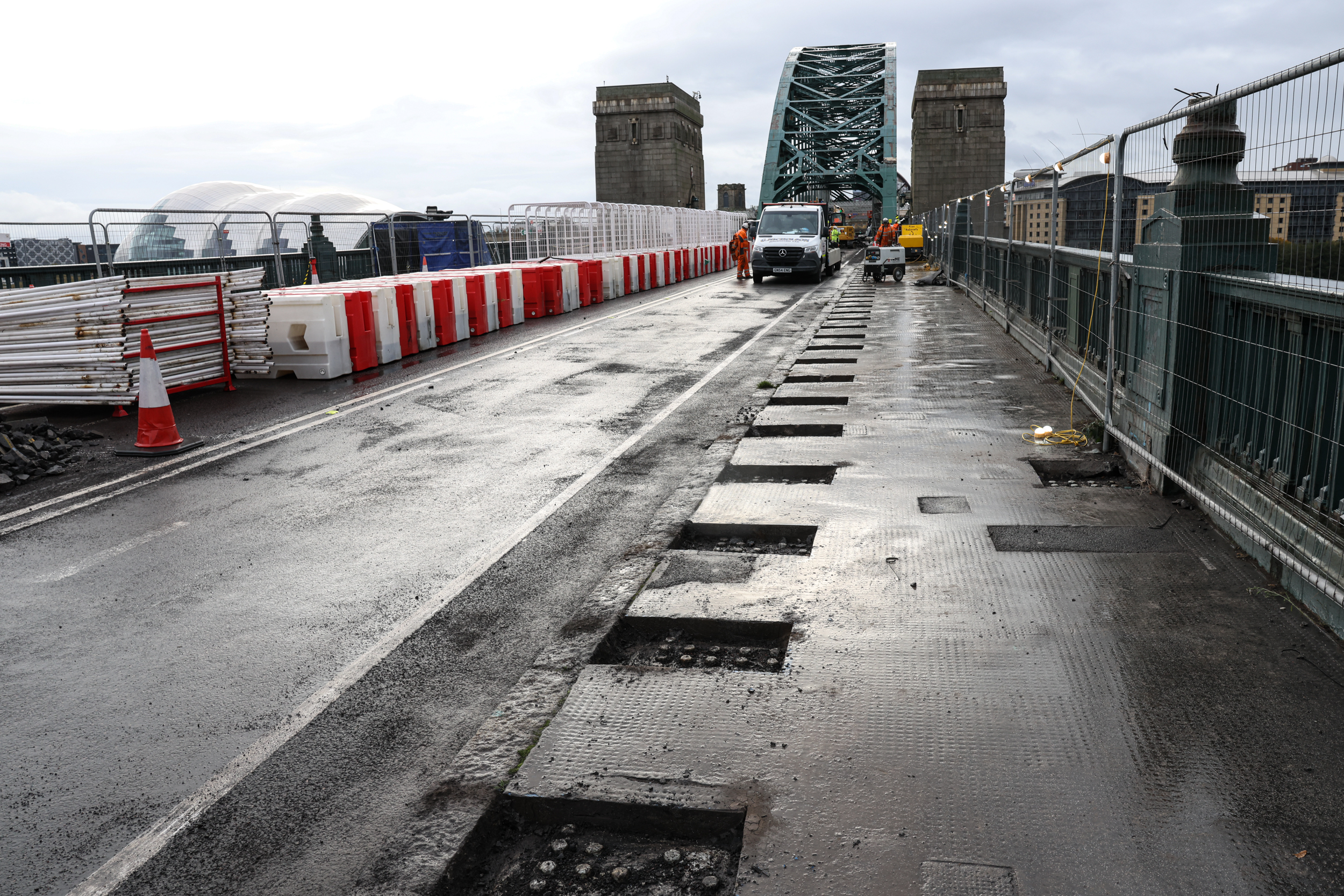
Esh Construction has completed 70% of the temporary protection deck required for restoration of the Tyne Bridge’s main steel arch, achieving its target during a ten-day closure despite substantial disruption from storms. The operation involved more than 200 tonnes of scaffolding and allowed teams to undertake extensive temporary works above the carriageway before the bridge reopened to the public.
The full closure ran from 23 October to 2 November and was the first time the bridge had been closed simultaneously to vehicles, pedestrians and cyclists since the restoration began. Unrestricted access enabled construction teams to undertake work across areas normally occupied by traffic and other bridge users, providing a defined period for installing the temporary structure before further operations continue under more limited closures.
Storm Austen and Storm Boelo affected the early stages of the programme, resulting in the loss of approximately 20 working hours. The project team subsequently recovered the time and completed the planned 70% installation milestone. Additional activities included removal of the remaining street lighting columns and preparatory work for vehicle restraint system plates and further structural repairs.
The protection deck is being constructed above the carriageway to provide separation between the bridge’s normal traffic routes and the activities required to restore its main arch. It will support access arrangements for work on the steel structure while helping to protect people travelling beneath the construction area. The temporary works are intended to allow much of the subsequent restoration to proceed while the crossing remains open.
Installing the deck requires a scaffold system compatible with the geometry and structural capacity of the existing bridge. Its components must be assembled in a planned sequence, with temporary stages assessed for the loads they will carry. As work progresses, each section must provide the stability and support needed before further elements are added.
The scaffold design must account for both the installation process and the work intended to take place once the system is complete. Access platforms, personnel, equipment and materials impose loads that need to be transferred through suitable supporting elements. The existing steelwork therefore forms an important part of the engineering assessment, particularly where deterioration has affected elements expected to accommodate the temporary structure.
Infrastructure Site Services (ISS) is delivering the specialist scaffolding works alongside Esh. Its managing director, Christian Farquhar, said the closure required the preparation and delivery of more than 200 tonnes of scaffolding, with materials introduced progressively throughout the programme rather than arriving in a single operation.
Progressive delivery reduces the need to store the entire quantity of material on the bridge at once, but requires close coordination between transport, available working space and the installation sequence. Materials must reach the relevant locations as work advances, while temporary access routes and lifting arrangements remain available to the teams assembling the structure.
The project required several months of planning between ISS, Esh Construction and representatives of Newcastle and Gateshead councils. Preparations addressed construction risks, public disruption, the sequence of work and the coordination of engineers, operatives and materials. The October half-term closure provided a defined period for activities that would have been more difficult to undertake alongside normal bridge traffic.
Once adverse weather interrupted the initial programme, the project team adjusted its operations to recover the planned output. Esh has not provided a detailed breakdown of the revised working sequence or productivity measures, but confirmed that the original 70% deck target was achieved within the closure period.
Gareth Dawson, Senior Project Manager at Esh Construction, said: “Despite losing around 20 working hours to adverse weather at the beginning of the closure, the team responded exceptionally well.”
Alongside the scaffold installation, Esh progressed the removal of street lighting columns and preparatory activities for later works. Completing these operations during the full closure reduced the amount of outstanding activity that would otherwise need to be undertaken while the bridge was subject to more restrictive working arrangements.
The temporary structure follows substantial permanent repairs undertaken over the previous stages of restoration. Esh has worked on the bridge’s parapets, curved screen plates, hangers, under arches and the underside of the main river span. These activities have involved restoring deteriorated steelwork and repainting areas that had suffered from prolonged environmental exposure.
Structural repairs within enclosed sections beneath the carriageway have been particularly important to preparations for the main arch. Dawson explained that the repairs restore lost capacity within the bridge, allowing additional loads from the access scaffolding to be applied safely. Without this strengthening, the temporary structure could not be installed across every area requiring access.
The distinction between the permanent repairs and temporary works is significant. The repaired bridge elements must be capable of receiving the forces introduced by the scaffold system, while the temporary structure must support its own components and the activities taking place upon it. The engineering design needs to account for how those loads are transferred through the existing structure during installation and subsequent use.
Earlier work has also included painting and repairs to the parapets and screen plates. These components form part of the bridge’s visible steelwork and require protection against corrosion, while some structural elements must also be repaired before they can safely accommodate later construction loads. The sequence of repairs and scaffold installation has therefore been coordinated around the condition of the existing bridge.
The October closure was planned around the installation of up to 70% of the protection deck, with the remaining work scheduled to continue during November. Completion of the target confirms the outcome of that programme, although the whole protective structure has not yet been installed.
Newcastle City Council previously identified a series of overnight closures as the intended route for completing the remaining sections. These arrangements allow scaffold installation to continue while limiting the duration of full daytime restrictions. The precise timing of subsequent works remains dependent on site conditions, weather and the applicable traffic management arrangements.
The protection deck also introduces a vehicle height restriction of 4.95m on the Tyne Bridge, as identified in the council’s earlier construction arrangements. This accommodates the temporary structure above the carriageway and affects vehicles exceeding the permitted height. Appropriate route restrictions and signs are required while the temporary works remain in place.
As the scaffold installation progresses, more of the main arch will become enclosed in temporary access equipment. The next permanent restoration phase will involve grit blasting to prepare the steel, repairs to damaged or deteriorated sections and application of a protective coating system. The main arch is the bridge’s most visually prominent structural element and extends across the river above the carriageway.
Grit blasting is used to remove deteriorated coatings and prepare the steel surface for inspection and repainting. Areas where corrosion or other defects have affected the structure can then be repaired as specified before the new coating is applied. Surface preparation is important because remaining contamination or poorly adhered material can compromise the performance of subsequent protective layers.
The replacement coating system comprises three layers, finished in the Tyne Bridge’s distinctive Hollybush Green. The treatment is intended to protect the steelwork against the environmental exposure associated with its position above the River Tyne. The completed coating must meet the relevant surface preparation and application requirements if it is to provide the specified protection.
The bridge’s Grade II* listed status requires the restoration to preserve its historic form and appearance alongside the engineering work needed to maintain structural condition. The programme covers more than the main arch, including repairs and protective treatment to several other sections of the crossing that have already been substantially restored.
Esh is delivering the work on behalf of Newcastle City Council and Gateshead Council. Funding has been provided by the UK Government, the North East Strategic Mayoral Authority and the two councils. The overall programme remains scheduled for completion ahead of the bridge’s centenary in October 2028.
Following the successful ten-day closure, the remaining protection deck installation will continue before the principal arch works begin in 2027. The achieved 70% milestone establishes progress on the temporary access system needed for grit blasting, structural repairs and repainting, while allowing the project team to move towards the next phase of restoration above the operational crossing.