IN Brief:
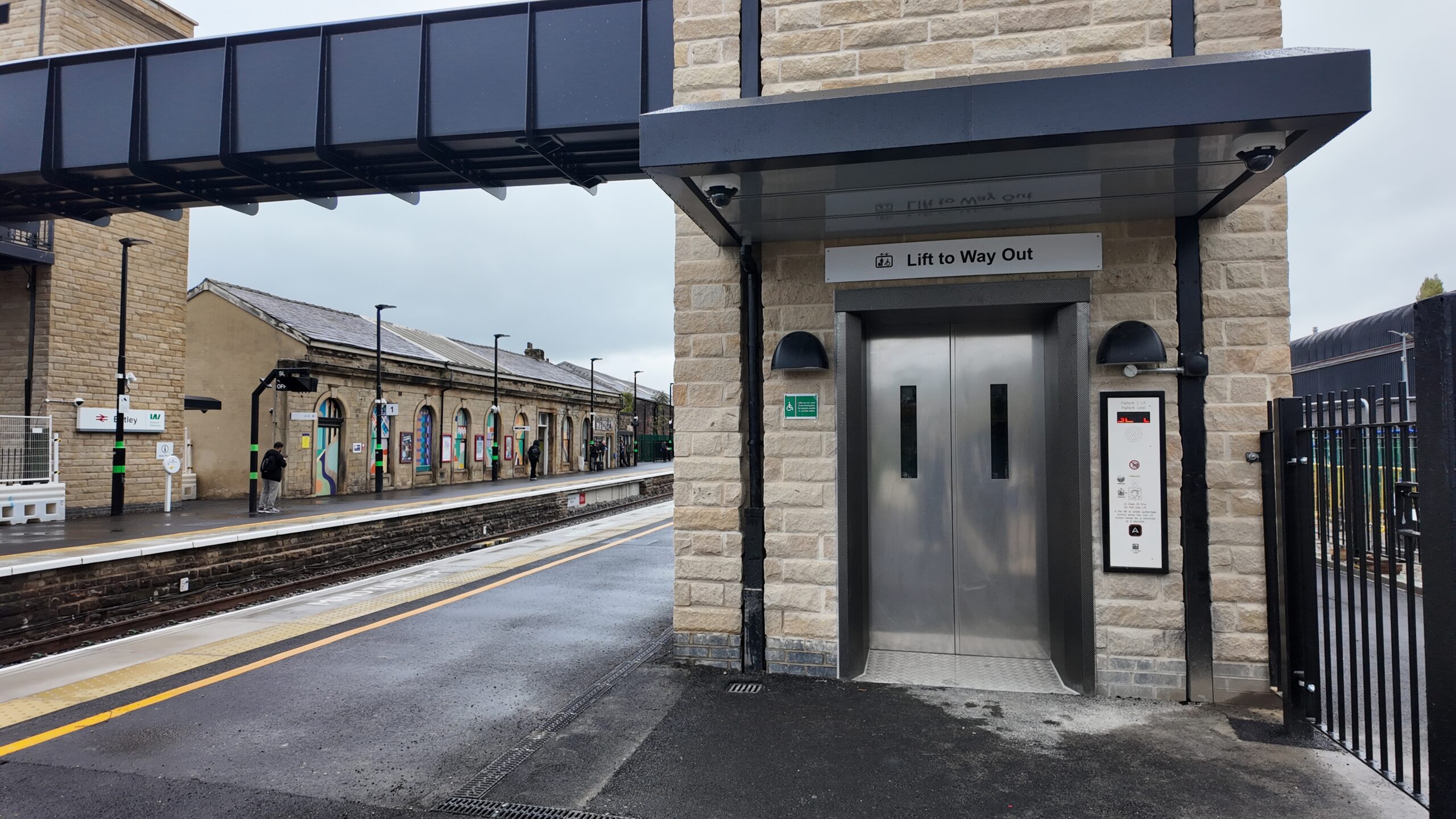
- A new lift to platform 1 now provides step-free access across all three platforms at Hertford North station.
- BAM was involved in the project, with the lift shaft structure and cladding already installed by February 2026.
- The completed access project precedes an increase to four off-peak trains an hour between Moorgate and Hertford North from 14 December.
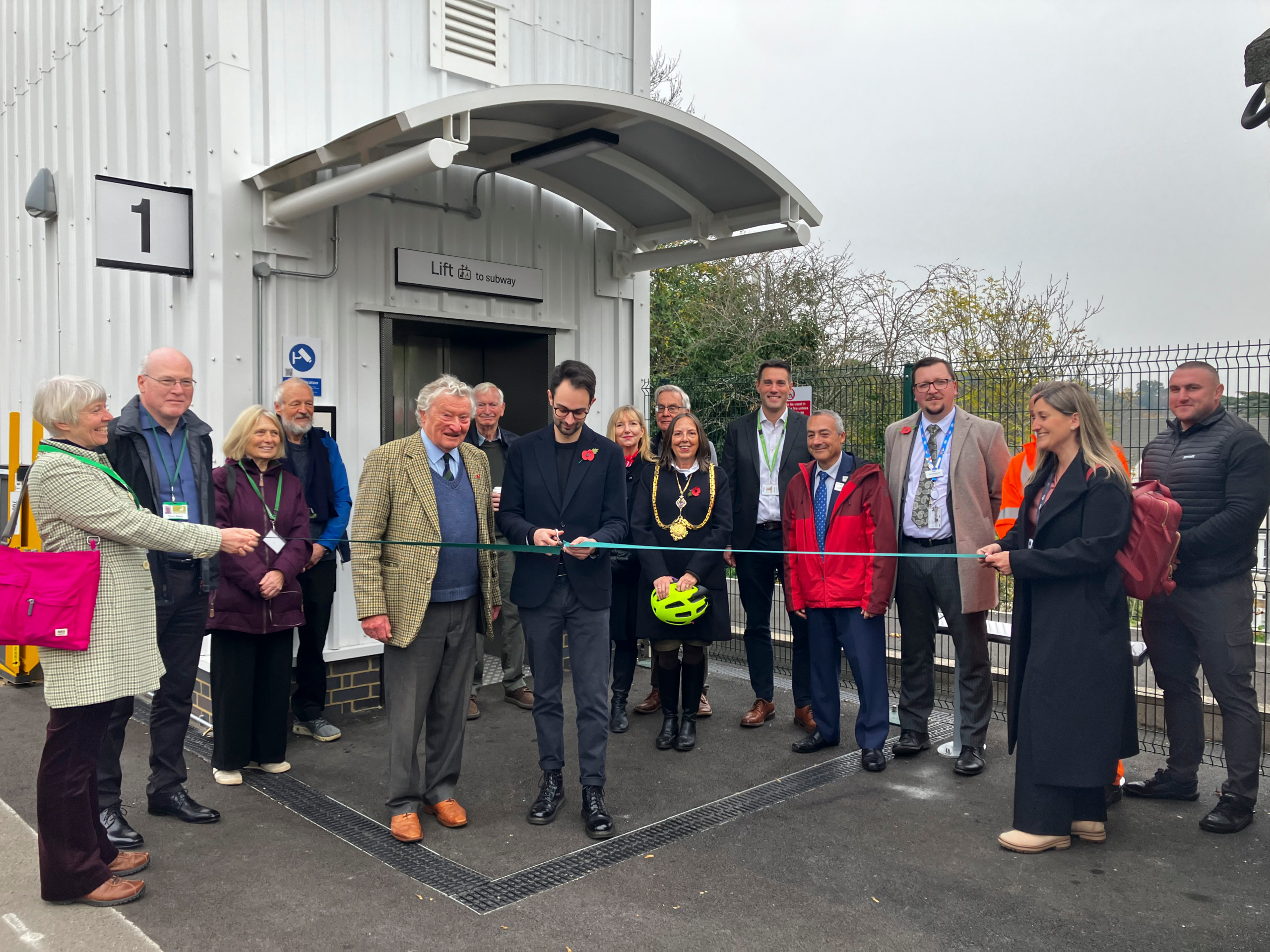
Network Rail has opened a new passenger lift serving platform 1 at Hertford North, completing step-free access to all three platforms. The lift was formally opened on 6 November alongside representatives of construction contractor BAM, station operator Great Northern, and the local community. Platforms 2 and 3 already had step-free access, leaving the platform 1 connection as the final element required to make every platform reachable without stairs.
The scheme addresses a particular circulation barrier at an existing Hertfordshire station rather than rebuilding the entire interchange. Great Northern says more than one million passengers use Hertford North in a year. The new lift gives wheelchair users, passengers with limited mobility, and those travelling with pushchairs or luggage an accessible route to platform 1. Completing the remaining link is significant to the station layout because a step-free journey can depend on reaching the particular platform from which a train is scheduled to depart.
Construction had reached a visible milestone by February 2026, when the shaft superstructure and its cladding were in place. Those works established the enclosure for the new equipment, but lifts cannot enter passenger service until their machinery, controls, landing interfaces, and safety provisions have been fitted and commissioned. The November opening marks completion of that later installation phase and the transfer of the facility into day-to-day use at an operational station.
Adding a lift to an existing station requires the new structure to fit around established platforms, access routes, and railway assets. Foundations, shaft construction, landing levels, and passenger circulation must be coordinated so that the completed installation connects the appropriate station spaces without obstructing other movements. Construction also has to accommodate passengers and rail operations while work proceeds. At Hertford North, the project progressed from the finished shaft and cladding in February to opening the complete accessible route in November.
Hertford and Stortford MP Josh Dean visited the work in February after the principal lift shaft structure had been installed. He returned for the November opening alongside Peter Ruffles, a former councillor and longstanding accessibility campaigner. Representatives of BAM, Great Northern, and Network Rail marked the completed scheme with local community members. The opening followed the autumn 2026 completion timetable published earlier in the year, bringing the last platform into the station’s existing step-free network.
The work has been funded through the Department for Transport’s Access for All programme, which supports railway station improvements intended to remove barriers to independent travel. Network Rail reports that more than 200 stations across Britain have received accessibility upgrades since the programme began in 2006. The scope varies between sites because a station may need a bridge and multiple lifts, alterations to ramps, or a single new vertical connection. Hertford North required the lift to platform 1 because the other two platforms were already accessible.
Nicola Butterworth, Network Rail’s senior sponsor, welcomed the lift opening and thanked passengers and residents for their patience during construction. Great Northern accessibility engagement manager Antony Merlyn said the project could enable people previously unable to use the station to travel more independently. With the route now available, the completed structure provides a practical connection that previously depended on negotiating stairs or making alternative travel arrangements.
Passenger lift installations also require continued maintenance after the construction team has handed them over. Periodic inspection, servicing, fault reporting, and clear information about equipment availability are necessary if the step-free route is to remain dependable. At Hertford North, the improvement changes which platforms can be reached without stairs; the extent to which passengers can rely on it over time will depend on the equipment’s continuing operation. The opening provides a completed access link, rather than a change to the railway’s tracks or platform capacity.
The station improvement precedes a separate timetable change on the same route. From Monday 14 December, Great Northern plans to increase the off-peak service between Moorgate and Hertford North to four trains an hour, Monday to Saturday. The service increase is not part of the lift construction contract, but it will take effect at a station where every platform can now be reached by a step-free route. That combines a changed passenger circulation arrangement with a more frequent planned train service.
The distribution of accessible routes matters particularly at a multi-platform station, where a journey can be possible in one direction but difficult in another if platforms have different access arrangements. Platforms 2 and 3 already had step-free access before this project; platform 1 remained the gap. Installing a lift specifically for that platform removes the need to use stairs for movements to and from it, so accessible travel is no longer restricted by that difference in station layout.
The platform 1 lift is now open following the November completion event. Network Rail, BAM, and Great Northern have marked the handover of the remaining step-free connection, ending the construction sequence that had reached shaft and cladding completion in February. The next stated timetable milestone is 14 December, when off-peak services are due to increase to four trains an hour. Ongoing operation of the lift will determine how consistently the new access route serves passengers in the months ahead.