IN Brief:
- Willmott Dixon has confirmed its £40m construction appointment for Sheffield's planned Uriah Rennie Leisure Centre.
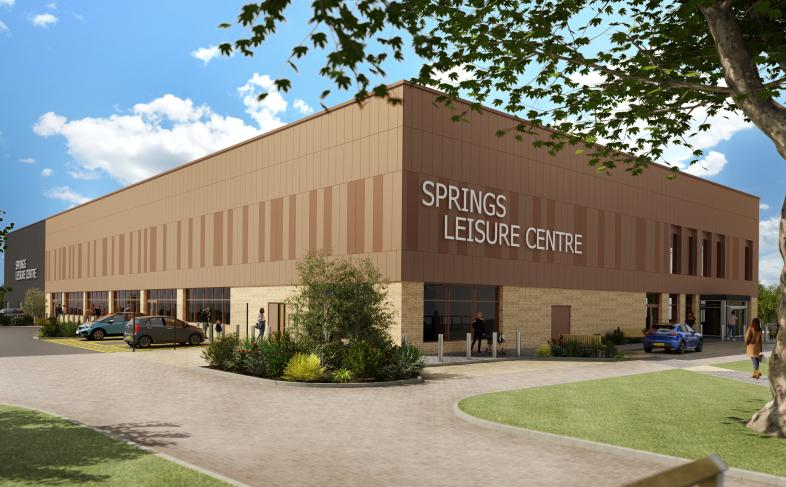
- The new building will be erected beside Springs Leisure Centre before the existing facility is demolished in a later phase.
- Construction is planned from November 2026; September 2028 is the contractor's programme target, separate from a later contractual end date.
Willmott Dixon has confirmed its appointment by Sheffield City Council to build the £40m Uriah Rennie Leisure Centre, replacing the existing Springs Leisure Centre. The construction contract forms part of a wider £51m investment programme rather than accounting for its entire budget. Work is planned in two phases: the new facility will be built on land alongside the existing centre, and the old building will be demolished after the replacement has been constructed.
Designed by Watson Batty and procured through the SCAPE Construction Framework, the scheme includes a six-lane, 25-metre main swimming pool, a teaching pool, a five-court sports hall and a four-rink indoor bowls hall. Fitness studios, gym accommodation, a spa suite, soft play space, health rooms, community facilities and an accessible café complete the announced brief.
Building the replacement before demolishing Springs is intended to keep the existing leisure complex in place during the principal construction phase. The new centre will occupy a roughly two-acre site beside the present facility. This approach avoids making demolition of the operational complex a prerequisite to erecting the replacement, although Sheffield City Council and Willmott Dixon have not published the detailed arrangements for continuity of every existing activity or its transfer to the new building.
During the first phase, Willmott Dixon will build the replacement leisure centre and undertake associated landscaping and access works. After the new building is complete, the second phase will remove Springs and finish the remaining external works. This order keeps demolition off the critical path to the initial build, while requiring temporary circulation and construction access around an occupied leisure facility.
Swimming accommodation comprises a six-lane, 25-metre pool and a teaching pool, alongside wet changing areas. Pool halls require water containment, circulation and treatment plant, humidity control and finishes suited to a wet internal environment; the procurement brief identifies pool plant within the proposed works. No final plant supplier, water treatment configuration or commissioning test results have been announced, so planned equipment should not be presented as installed or operational.
The five-court sports hall must provide a clear playing area while accommodating suitable lighting, ventilation and movement routes. Indoor bowls creates a different space requirement, including surfaces and circulation suited to its sport. Bringing both into one building alongside wet leisure facilities entails coordination of structural layout, acoustic separation and plant distribution. The announcement establishes the planned activity spaces but does not disclose structural spans or acoustic performance figures.
Health rooms, fitness accommodation, soft play, café space and community facilities form part of the proposed building. Their differing requirements will shape circulation, changing areas, access control and building services between wet and dry zones. The announced room schedule has not yet been accompanied by detailed plans for temporary pedestrian routes or the transfer of existing activities from Springs.
The £40m figure announced by Willmott Dixon refers to the construction contract, whereas Sheffield City Council’s broader investment is described as £51m. A procurement-derived record reports an award value of approximately £40.18m, consistent with the rounded contractor headline. The published information does not allocate the remaining overall programme cost across consultancy, enabling works, equipment and contingencies, so the figures should retain their separate scopes.
SCAPE procurement records indicate an award decision dated 30 September, preceding Willmott Dixon’s 14 October public announcement. The later release confirmed the contractor’s role, project brief and programme; it did not mark the first procurement decision or establish that site mobilisation had occurred. The November 2026 start remains a planned event.
Willmott Dixon anticipates starting site work in November 2026 and has given September 2028 as the project programme target. A separately reported contract end date of March 2029 appears in procurement information. The two dates should not be treated as identical milestones: the contractor’s delivery programme and the contractual reporting period are different records. Neither gives a detailed handover date for each leisure use or an independently confirmed demolition completion date.
Because the existing leisure centre will remain beside the works, the delivery team must manage construction traffic, occupied public areas and the boundary between the two facilities. Once the replacement is complete, demolition will release the remaining land for external works. The published two-phase programme does not yet specify temporary access routes or the dates on which individual leisure activities will transfer.
The contractor has stated an intention to provide local employment, apprenticeship opportunities and work placements through the build, engaging schools, colleges, universities and community organisations in Sheffield. Those commitments are part of the announced delivery approach; numerical employment outcomes and completed placements have not yet been reported. The procurement route through SCAPE provides a framework for project delivery rather than evidence that the building has already entered construction.
Named for Uriah Rennie, the Jamaica-born referee who grew up in Sheffield and became the first Black official to referee in the Premier League, the new centre will sit beside the current Springs facility. A separate proposal for Hillsborough Leisure Centre has its own decisions and programme. Neither the civic naming nor those other works alter the scope of the £40m Uriah Rennie construction appointment.
Site mobilisation is planned for November 2026, ahead of the pool, sports hall and community building programme. Willmott Dixon’s September 2028 completion target remains prospective, while the separate 5 March 2029 date in procurement records marks the contractual period and should not be substituted for the construction programme. Demolition of Springs is reserved for the phase after the new centre has been built.