IN Brief:
- SSEN Transmission has scheduled ground investigation at Access Point 5 near Ruisaurie, Beauly, for 14 October 2026.
- RJ McLeod is expected to construct a roadside bell-mouth entrance from 19 October, over approximately 15 working days.
- The access point will serve the proposed 80km underground mainland cable route between Dundonnell and a converter station near Beauly.
SSEN Transmission is preparing a new construction entrance on the Beauly to Ruisaurie Road in the Highlands to support the mainland cable corridor of its Western Isles high-voltage direct-current link. Ground investigation at Access Point 5 is planned for Wednesday 14 October, followed by approximately 15 working days of entrance construction provisionally starting on Monday 19 October. Highlands contractor RJ McLeod is due to form the bell-mouth connection from the public road into the planned working corridor.
The investigation is a defined first stage rather than confirmation that the final entrance works can proceed without change. SSEN expects one day of investigation between 7.30am and 6pm, using a mini excavator and supporting vehicles to check the conditions at the proposed access point. The findings will be reviewed before the construction programme is confirmed. Although 19 October is the anticipated start, additional preparation could alter that date, and the company has committed to communicating any change.
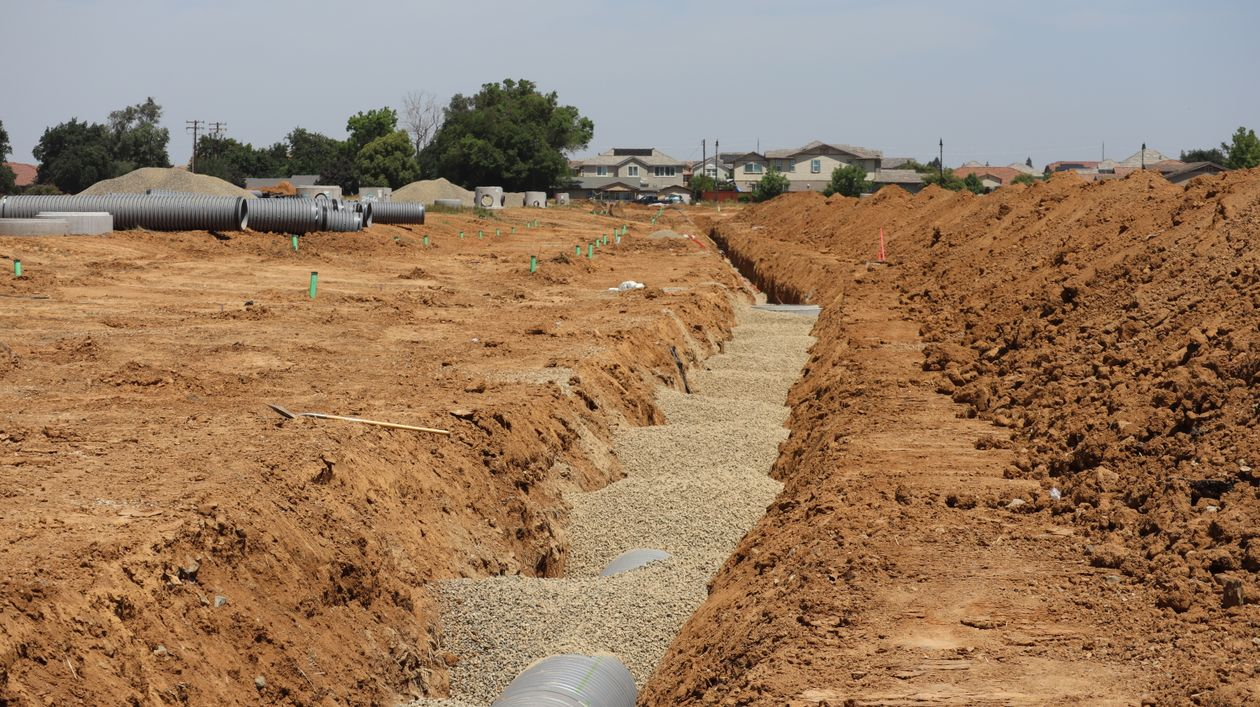
Construction is currently programmed for weekdays between 7.30am and 6pm, with the stated 15-day duration expressed in working days, not consecutive calendar days. RJ McLeod will create the widened approach needed for vehicles moving between the public road and the underground cable alignment. This is a relatively localised package within an extensive linear infrastructure project, but the entrance will be used to support subsequent work after the initial construction period has ended.
A bell-mouth junction widens the point at which a temporary access track meets a road, allowing construction vehicles to turn without treating a narrow field entrance as a permanent delivery route. Earthworks, pavement formation and the junction geometry must respond to local ground conditions and the loads imposed by the vehicles expected to use it. SSEN has not published the design drawings or pavement specification for Ruisaurie; the investigation should therefore be understood as an input to the final works rather than proof of a particular ground treatment or drainage system.
The announced works include vehicles delivering equipment and material, movement of plant near the roadside, and temporary safety measures. SSEN has referred to traffic management personnel, banksmen and warning signs where necessary, with access to be maintained wherever safe. Some noise and disruption may arise during working hours, although the company has not provided predicted construction traffic volumes or a full schedule of individual deliveries. The access works have to be distinguished from the later cable trenching programme, which is a different and substantially larger operation.
The mainland link is planned to run approximately 80km underground between the Dundonnell landfall and a converter station near Beauly. It connects with an 81km subsea cable between Dundonnell and Arnish Point on Lewis, and roughly 4km of underground cable on Lewis leading towards the converter and substation infrastructure near Stornoway. Access Point 5 serves only one position on that mainland section, rather than a new connection or an additional submarine cable system.
High-voltage direct-current transmission is intended to carry electricity over the route between converter stations, which provide the interfaces needed to connect the DC system to the alternating-current network. Building this link requires much more than placing cable into the ground. Before the main installation crews can operate, contractors need safe approaches, compounds, working areas and interfaces with roads and existing services. A cable corridor extending through different terrain cannot be served efficiently or safely through a single site gate.
SSEN’s early works on the Highland route began in June and have included track improvements, temporary compounds, vegetation work and other access points. RJ McLeod is involved in this preliminary programme, while work at places such as Faebait and Garve has been reported separately. The new Ruisaurie location is therefore a distinct stage of enabling construction, although it forms part of the same overall mainland cable scheme already under way. No claim of main cable installation or electrical commissioning follows from completion of an access entrance.
The Western Isles project is intended to create additional transmission capacity for renewable generation in and around the islands, where SSEN says the existing network has reached its connection capacity. Its project page continues to distinguish the overall development and consenting stages from individual early works being undertaken along the route. At Access Point 5, the next milestones are the 14 October investigation and the conditional 19 October construction start; the entrance package is expected to last around 15 working days once commenced.