IN Brief:
- Network Rail will replace power cabling and 16 control units at the Grade II* listed Goole Swing Bridge.
- Trains between Doncaster and Hull will be replaced by buses during the works on 17 and 18 October.
- The electrical renewal is distinct from the major hydraulic and mechanical refurbishment undertaken from 2023.
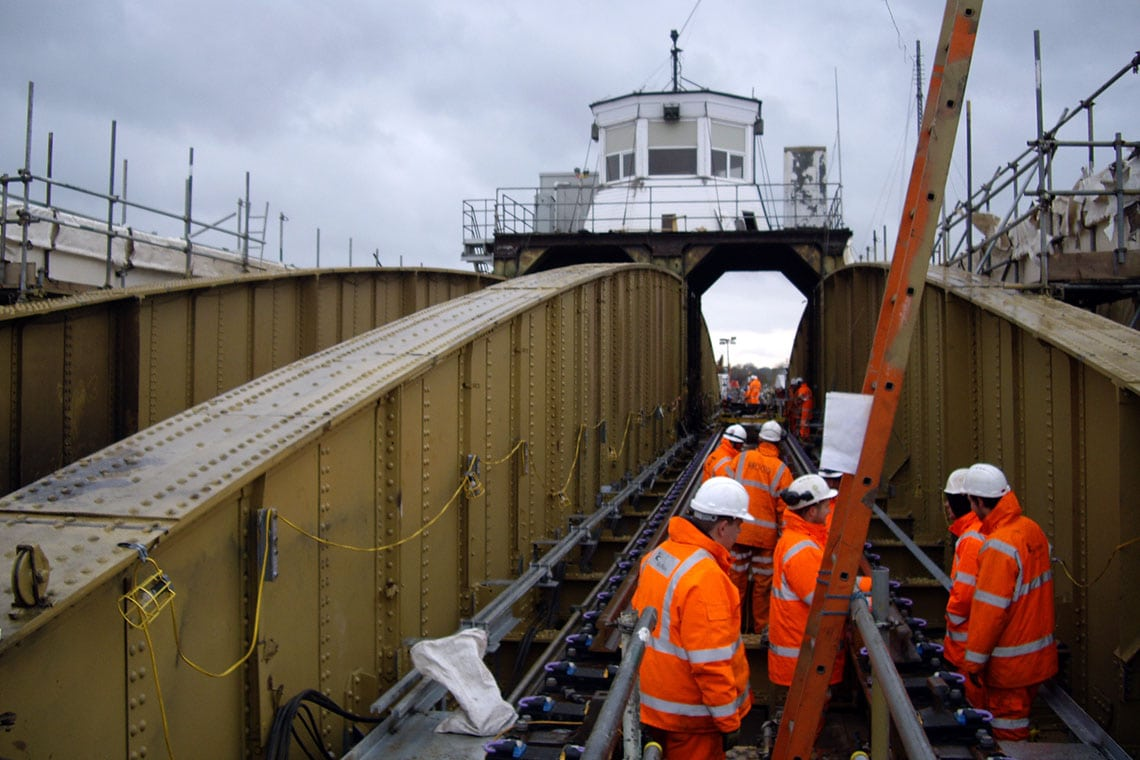
Network Rail will replace power cables and 16 control units at Goole Swing Bridge in a £200,000 renewal intended to improve the reliability of the Victorian railway crossing over the River Ouse. The equipment helps confirm that the movable span is correctly positioned before trains pass, linking electrical controls with the operation of the bridge itself. Engineers are scheduled to carry out the work on 17 and 18 October 2026, when buses will replace trains between Doncaster and Hull.
Goole’s Grade II* listed bridge accommodates railway traffic and vessels by changing the position of its central span, which rotates away from the track alignment to open the waterway. Once navigation is complete, the span must return to the correct alignment and be secured for railway use before a train can cross. Equipment that detects the position of the structure is consequently part of the control sequence, providing information needed to establish that the route is ready for rail movements.
Opened in 1869, the crossing incorporates five fixed spans and a central rotating section supported by a pier in the river. Turning the movable span creates navigable openings on either side of that pier, while returning it to the railway alignment restores the continuous track. Much of the Victorian bridge fabric and machinery has survived, although successive maintenance programmes have updated the equipment used to operate it. Those retained components and the structure’s listed status influence the way replacement systems can be introduced.
The forthcoming electrical work is narrower in scope than the earlier mechanical restoration, concentrating on specific cables and the 16 units identified by Network Rail. Their stated function is to support confirmation of the bridge’s correct position for trains, but the organisation has not published a detailed breakdown of the new equipment. Individual units cannot yet be assigned to particular signalling, interlocking or detection functions, even though all these arrangements must interact safely in a movable railway crossing.
Renewing power connections alongside the controls addresses another potential cause of disruption, since a movement sequence depends on equipment receiving and communicating the required electrical signals. Deteriorated connections can interrupt those functions or prevent operators from confirming that the span has returned to the necessary position. The £200,000 programme aims to reduce such faults, although Network Rail has given neither a previous failure rate nor a quantified reliability improvement target for the work.
The bridge underwent a more extensive refurbishment from 2023, when the condition of its hydraulic turning and jacking equipment required specialist attention. That programme also covered elements of the controls, electrical supply and navigation lighting, and involved a significantly larger engineering scope than the October renewal. The earlier mechanical system had suffered wear that made positioning the span increasingly difficult, prompting repairs and alterations intended to make its movements more controlled.
During that refurbishment, engineers installed a hydraulic power unit on the shore while retaining much of the existing machinery following inspection. The original levers in the historic signal cabin were kept and connected to modern electronic equipment, which coordinated their functions through a programmable logic controller. This arrangement preserved the bridge’s familiar operating controls while changing how their commands were transmitted to and managed by the updated system.
Improved control of acceleration and deceleration was also incorporated into the earlier turning arrangements, reducing abrupt loading on worn machinery as the heavy span moved. More gradual changes in speed help operators position the bridge without repeated corrections in opposite directions. Those mechanical measures belonged to the 2023 hydraulic programme, whereas the October renewal covers the bridge’s electrical cabling and a defined set of control units.
Physical access to the central pier and its machinery adds complexity to major interventions on the bridge, with the waterway limiting conventional lifting and delivery routes. Previous work required specialist access and the transport of substantial equipment by water. Network Rail has not indicated that the small electrical renewal will use the same arrangements, however, and those earlier logistics are relevant as background to the structure rather than a confirmed plan for the October possession.
During the railway closure on 17 and 18 October, engineers will be able to work on the specified electrical equipment without normal train movements crossing the structure. Replacement components will need to be connected and checked as part of the wider operating system before trains can return, since reliable indication of the span’s position is a prerequisite for railway use. Network Rail has not disclosed the detailed commissioning sequence or named the contractor, but replacement buses are confirmed between Doncaster and Hull over the work weekend.
Navigation requirements remain closely tied to railway operations because the swing span can provide an open river passage or a continuous rail route only when in the corresponding position. Maintaining the historic bridge therefore involves both the condition of its moving machinery and the reliability of the signals and controls used to establish safe operation. The October investment follows the larger hydraulic refurbishment with a targeted replacement of cables and position related equipment, and services are expected to resume after the weekend works and associated checks.