IN Brief:
- Kier has won four Thames Water contracts across Harpenden, Princes Risborough and Wisley sewage treatment works.
- The £53.7m Harpenden contract will increase wastewater treatment capacity by more than 50%.
- Separate Wisley awards cover a £1.7m power upgrade and approximately £2.6m of future treatment design.
Kier has secured four Thames Water contracts with a combined value of nearly £65 million, covering wastewater treatment upgrades at Harpenden, Princes Risborough and Wisley. The largest award, worth £53.7 million, will increase treatment capacity at Harpenden by more than 50%, while the other packages cover stormwater pumping, electrical infrastructure and design for future improvements. Work at each site will be organised around treatment processes that must continue operating during construction.
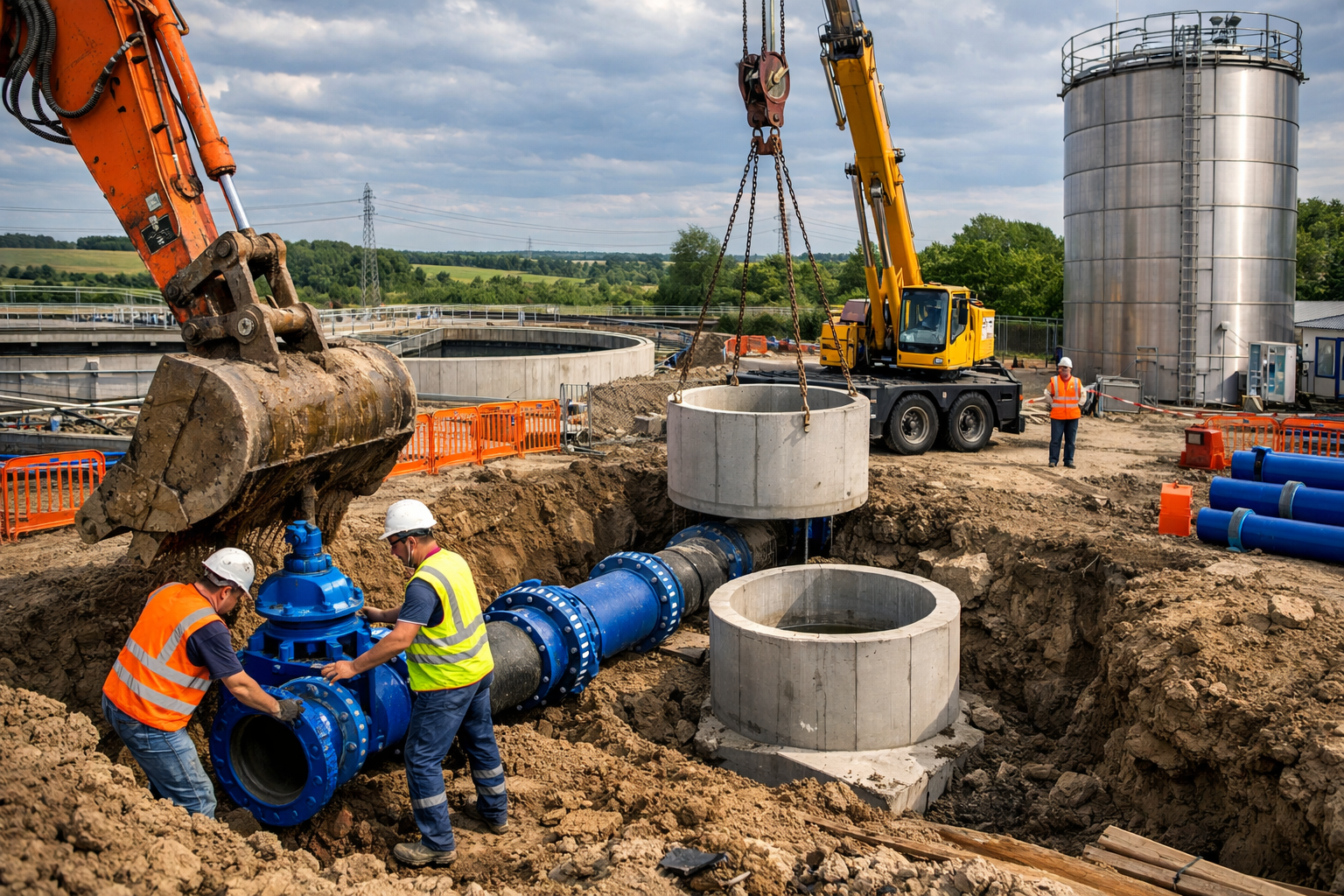
Across the 2025–2030 AMP8 investment period, the three works will need to meet changing treatment demands while their existing processes remain in service. Although Harpenden, Princes Risborough and Wisley require different combinations of civil, mechanical and electrical work, none can suspend its essential wastewater operation throughout the construction programme. Temporary process arrangements, staged connections and commissioning must therefore be planned alongside the permanent improvements.
Those operating constraints are evident at Harpenden in Hertfordshire, where Kier will deliver the £53.7 million main construction package through Thames Water’s Go to Green Programme. Its capacity is to increase by more than 50% to support growth through to 2036, with improved treatment also intended to protect the River Lea. The companies have not disclosed the permanent works’ additional daily flow capacity, although tighter effluent standards form part of the scheme’s requirements.
To allow existing treatment equipment to be replaced while wastewater continues to arrive, Purestream Process Solutions, part of OCU Group, has supplied a temporary plant in work involving Kier and Thames Water. Eight lamella settlement tanks provide primary solids separation, while four moving bed biological reactors operate as four treatment streams. Downstream clarification and equipment for distributing flows complete the temporary arrangement, which must function alongside the parts of the original works remaining in operation.
Within that temporary plant, inclined surfaces in the lamella tanks encourage suspended solids to settle, before the biological reactors use microorganisms supported on moving media to treat the wastewater. Pumps and flow meters distribute incoming volumes between the streams. The supplier specified a guaranteed flow of 60 litres per second and reported approximately 78 litres per second during commissioning; these are performance figures for the temporary installation, while the capacity of the permanent upgrade remains undisclosed.
Designed to operate initially for 12 months, with provision for up to four years if required, the temporary system gives Kier a longer construction window without relying on the completed permanent assets. Its connections must keep wastewater moving through treatment as old equipment is removed and new processes are commissioned. Changes in incoming flow can affect both solids settlement and the biological stage, so hydraulic arrangements across the temporary and retained systems have to remain compatible.
Where the Harpenden programme focuses on increased treatment capacity, the approximately £7 million award at Princes Risborough in Buckinghamshire will modernise stormwater pumping, flow management, electrical equipment and controls. Heavy rainfall can change the volumes reaching the works, making the operation of pumps and associated controls essential to managing fluctuating flows. Electrical reliability affects the equipment’s response, but Kier has not specified the replacement pump capacities or the final control configuration.
At Wisley in Surrey, Kier’s initial £1.7 million power package supports the operating works while a separate design contract prepares the next treatment upgrade. Kier’s initial package, valued at approximately £1.7 million, covers electrical infrastructure intended to support both present operations and future investment. As treatment pumps, monitoring equipment and process controls depend on reliable electrical supplies, changes to the distribution system will require testing before operating equipment is transferred to the upgraded arrangements.
Alongside the power work, Kier and design partner Binnies have secured approximately £2.6 million to develop Wisley’s next phase of treatment improvements under the Water Industry National Environment Programme. The design is intended to address stricter standards for water returned to the River Wey. It will establish the proposed treatment requirements before a later construction scope and capital cost can be defined; the current £2.6 million appointment covers design services rather than the future physical upgrade.
The Wisley design will identify the structures, pipework and process equipment required for the later treatment works, informing the loads that future systems may place on the upgraded electrical infrastructure. Some treatment options may place additional demands on electrical capacity or distribution, while their installation will need to be coordinated with planned outages and operating processes. The initial power upgrade provides a separate infrastructure package as the treatment design progresses, without establishing the final equipment specification.
Across the three sites, the intended treatment improvements contribute to Thames Water’s programme to reduce phosphorus entering rivers from treated discharges, although the required removal performance differs between works. The removal process and required performance depend on each site’s permit conditions, incoming wastewater and treatment configuration. Although the four Kier awards support the company’s AMP8 environmental commitments, no separate phosphorus removal quantity has been announced for Harpenden, Princes Risborough or Wisley.
With the treatment works remaining operational, Kier must coordinate construction access, mechanical installation and testing with the systems that already handle incoming flows. The contracts extend its work for Thames Water, a relationship established during the earlier AMP6 period, across three sites with distinct delivery requirements. No completion dates have been confirmed for the newly awarded packages, and handover will depend on transferring operations safely to the upgraded systems.