IN Brief:
- Tunnel boring machine Caroline completed the 2.2km Thames crossing between Tilbury and Gravesend 49 days ahead of programme.
- The final breakthrough used a flooded reception shaft to balance pressure in the surrounding chalk and reduce groundwater risk.
- The tunnel will replace a 1960s crossing carrying 400kV circuits as part of the wider Grain to Tilbury reinforcement programme.
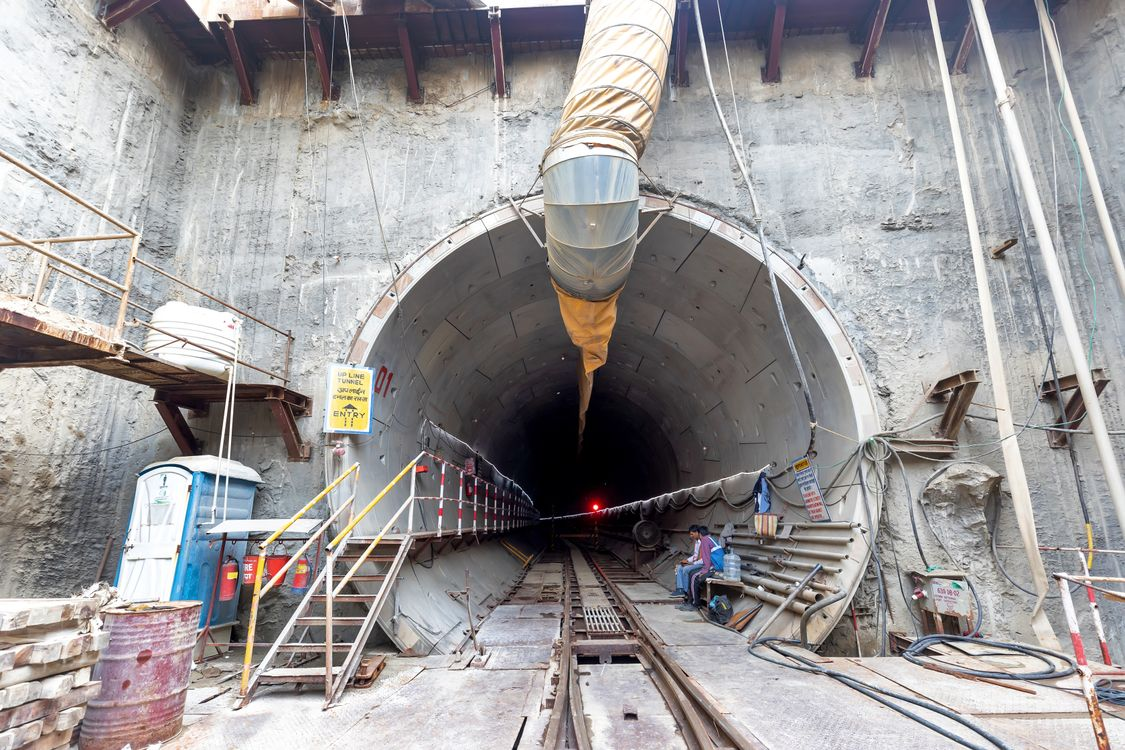
National Grid has completed the main tunnel drive for its Grain to Tilbury electricity project after tunnel boring machine Caroline broke through at Gravesend 49 days ahead of the planned programme.
The machine excavated 2.2km beneath the River Thames from Tilbury in Essex to Gravesend in Kent, creating a new route for high voltage transmission cables. Breakthrough took place on 27 September, bringing the continuous boring phase to an end after the drive had passed its halfway point in August.
The final approach used a deliberately flooded reception shaft. Filling the shaft balanced pressure between the excavation and the surrounding chalk, reducing the risk of groundwater entering as Caroline cut through the last section of ground. Once the machine was safely inside the shaft, the water could be removed so recovery and subsequent work could begin.
Pressure control is central to that operation because an empty shaft would create a larger difference between groundwater pressure in the chalk and the air pressure inside the excavation. That imbalance can encourage water and loose material to move towards the opening at the point when the tunnel face is being removed. Flooding the shaft reduces the differential during the most exposed part of the breakthrough.
The project had already passed 1.1km by August, when National Grid reported more than 40,000 tonnes of excavated material and over 5,100 precast concrete lining segments installed. The lining is assembled immediately behind the boring machine, allowing excavation and permanent tunnel construction to progress together rather than leaving a long unsupported void.
Deep shafts were required at both ends before tunnelling could start. They provide the vertical access needed to assemble and launch the machine, remove excavated material and later recover equipment. Their depth also allows the tunnel alignment to pass beneath the river while maintaining sufficient cover through the chalk.
The new tunnel will replace an electricity crossing that has been in service since the late 1960s. The existing Thames Cable Tunnel carries 400kV circuits between Tilbury and Kingsnorth and is approaching the end of its operational life, so the replacement route has to be completed and connected before the older infrastructure can be retired.
National Grid plans to install cross-linked polyethylene transmission cables through the new bore. Head houses and cable sealing end compounds at both ends will provide access and form the interface between the underground circuits and the wider transmission network.
The Grain to Tilbury programme also includes work on overhead lines between Tilbury, Kingsnorth and the Isle of Grain. Reconductoring and related upgrades allow more electricity to move through parts of the existing route without constructing an entirely separate overhead line along the full corridor.
Finishing the bore early removes one of the main geotechnical risks from the programme, but it does not complete the project. The tunnel has to be drained, inspected and fitted out before cable installation, while the head houses, surface connections and overhead line works must be ready to accept the new circuits.
Cable installation introduces a different set of constraints from tunnelling. Transmission cables are heavy, have minimum bending radii and must be pulled or placed through the tunnel without exceeding mechanical limits. Joints, supports, earthing and thermal conditions also have to be controlled so the finished circuit can carry its designed electrical load safely.
Heat generated in the cable conductors has to be transferred through the cable construction and surrounding environment. That means tunnel ventilation, cable spacing and the thermal properties of the installation influence the amount of current the circuit can carry continuously, even after the civil structure itself is complete.
The project is being delivered by the Ferrovial BEMO joint venture as part of National Grid’s wider reinforcement work in Kent and Essex. New generation and other connections are increasing the amount of electricity that must move through the transmission system, so the replacement tunnel is being delivered alongside capacity upgrades rather than as a like for like renewal in isolation.
National Grid had recorded the halfway point in August. Caroline has since completed the remaining distance and entered the reception shaft ahead of the November milestone previously shown in the project programme.
National Grid still places completion of the wider Grain to Tilbury works in 2028. The early breakthrough gives the fit out and electrical stages more certainty, but commissioning will depend on the completed cable system, surface compounds and overhead line work operating together before the new Thames crossing can take over from the ageing route.