IN Brief:
- The Trade Remedies Authority intends to recommend anti-dumping measures of up to 82.89% on boom lifts imported from China.
- Its investigation found Chinese import prices undercut the UK industry by more than 25% during the assessment period.
- Businesses can submit comments until 20 October before the TRA considers evidence and makes its final recommendation.
Trade Remedies Authority intends to recommend anti-dumping duties of up to 82.89% on boom lifts imported from China after concluding that dumped imports have caused, or are causing, injury to UK producers.
The proposed rate appears in the authority’s Statement of Essential Facts and intended final determination. It is not yet a definitive duty applying to every Chinese boom lift entering Britain: interested parties have until 20 October to submit comments before the TRA considers further evidence and makes its final recommendation to the Secretary of State.
Provisional anti-dumping measures are already in force. The government introduced them on 20 August following an earlier TRA recommendation, with duties varying by producer and reaching 71.74% at the upper end. The latest determination therefore advances an investigation already affecting the import cost of some access equipment rather than introducing trade controls for the first time.
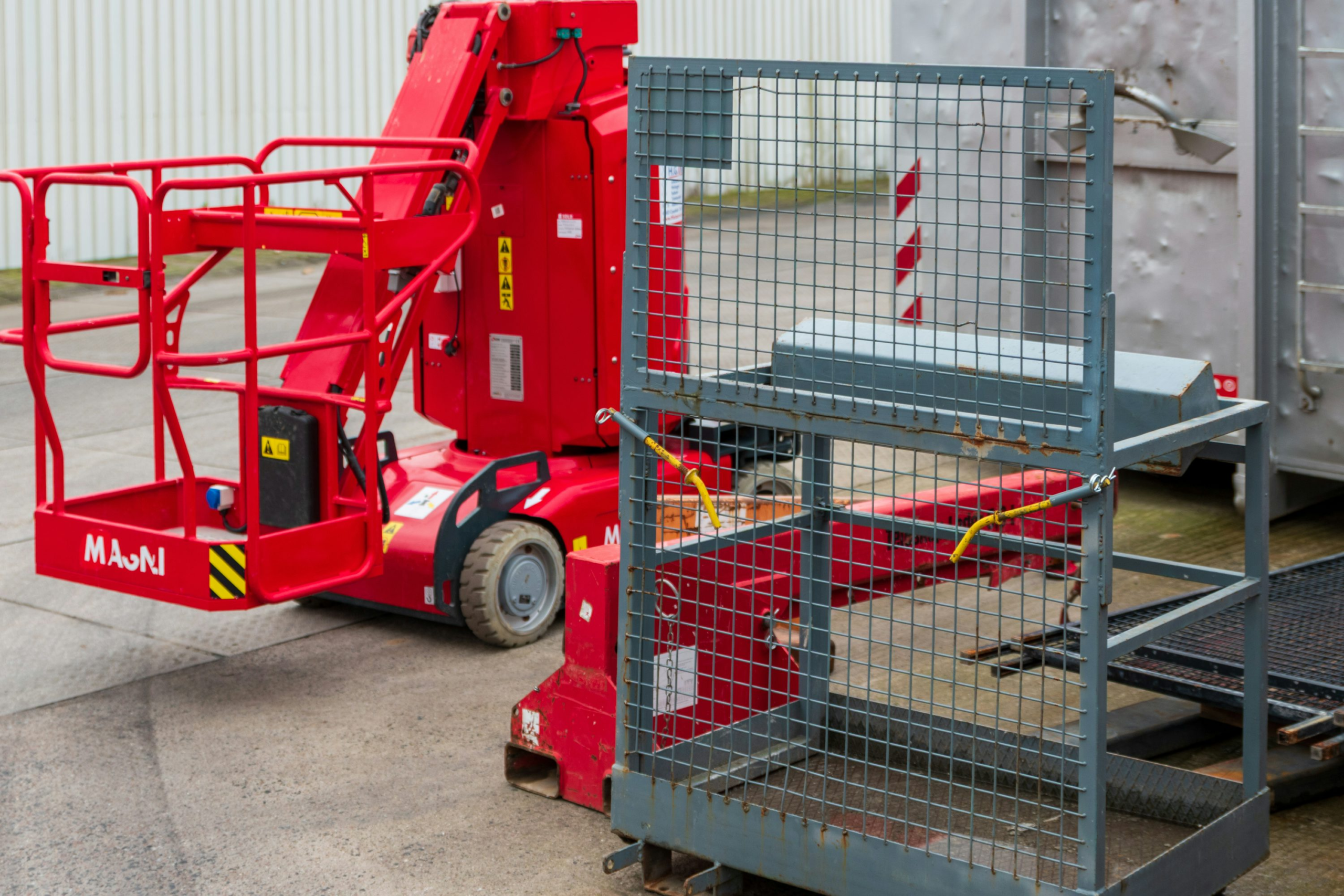
Boom lifts, commonly referred to as cherry pickers, use an articulated or telescopic boom to raise a work platform to height while providing horizontal outreach away from the machine chassis. Construction applications include façade work, steel erection, roofing, mechanical and electrical installation and maintenance where operatives need access to changing workfaces.
The trade investigation began on 19 December 2025. The TRA assessed import volumes, production costs, prices and injury factors and says Chinese boom-lift prices undercut UK industry by more than 25%. Its period of investigation covers 1 October 2024 to 30 September 2025, while the injury assessment examines the longer period from October 2021 to September 2025.
Anti-dumping action examines whether imported goods are sold below their normal value and whether that pricing causes injury to domestic producers. It differs from a general import tariff because the investigation has to establish dumping and injury before a trade remedy can be recommended.
The TRA also applies an Economic Interest Test before recommending measures. That assessment considers the effects of intervention across the UK economy, including potential benefits to domestic manufacturers and possible costs to importers, distributors and users of the equipment. The authority has concluded at this stage that applying a measure is in the UK economic interest.
Any definitive duty would enter the construction market through the equipment supply chain rather than as a charge applied directly to individual building sites. Importers carry the customs treatment when machines enter the UK, but changes in landed cost can influence purchase prices, fleet-renewal decisions and rental economics where suppliers cannot absorb the additional expense.
The effect will vary between manufacturers. The provisional regime already uses producer-specific rates, meaning machines from different Chinese suppliers can attract substantially different liabilities. Importers also have to satisfy documentary requirements associated with producer-specific treatment or risk falling into a higher residual category.
Equipment comparisons therefore extend beyond the advertised machine price. Importer, manufacturer, customs treatment and aftersales support sit alongside working height, outreach, basket capacity, powertrain and machine configuration when a buyer assesses total cost.
Changing equipment source can also affect maintenance arrangements. Rental fleets often standardise parts, diagnostic systems, technician training and service procedures around selected manufacturers. A trade measure large enough to alter purchasing patterns can therefore create secondary costs through replacement parts, workshop processes and the residual value of existing machines.
IN Site reported in August that provisional duties ranging from 16.25% to 71.74% had taken effect, with the precise rate depending on the producer and its treatment within the investigation. Those measures were temporary while the TRA completed its assessment.
The intended final determination raises the possible maximum to 82.89%, but the figure should not be treated as a blanket final rate for every affected machine. The authority has published its proposed outcome and maximum measure while consultation remains open.
Powered access is used across construction, industrial maintenance and installation work, with rental businesses supplying much of the equipment used temporarily on sites. Contractors can therefore experience pricing changes indirectly through hire rates even when they do not purchase machines themselves.
Fleet renewal can spread the effect over time. Hire businesses replace machines according to age, utilisation, maintenance cost and residual value, so a change in import economics does not necessarily translate into an immediate percentage increase across every rental contract.
The scale of any market response will also depend on the availability of machines from alternative countries and manufacturers, delivery lead times and whether importers change sourcing strategies. A high proposed duty can alter purchasing incentives without automatically displacing every affected product from the market.
The TRA will accept representations until 20 October. Evidence submitted during that period can be considered before the final recommendation is issued, after which the Secretary of State will determine whether definitive measures should be applied. Until that process concludes, the provisional regime remains operative and 82.89% remains a proposed maximum rather than a final blanket duty.