IN Brief:
- The first roofs have been installed at Stroud District Council’s 23-home Glebelands development in Cam.
- The scheme comprises eight one-bedroom flats, ten two-bedroom houses and five three-bedroom houses.
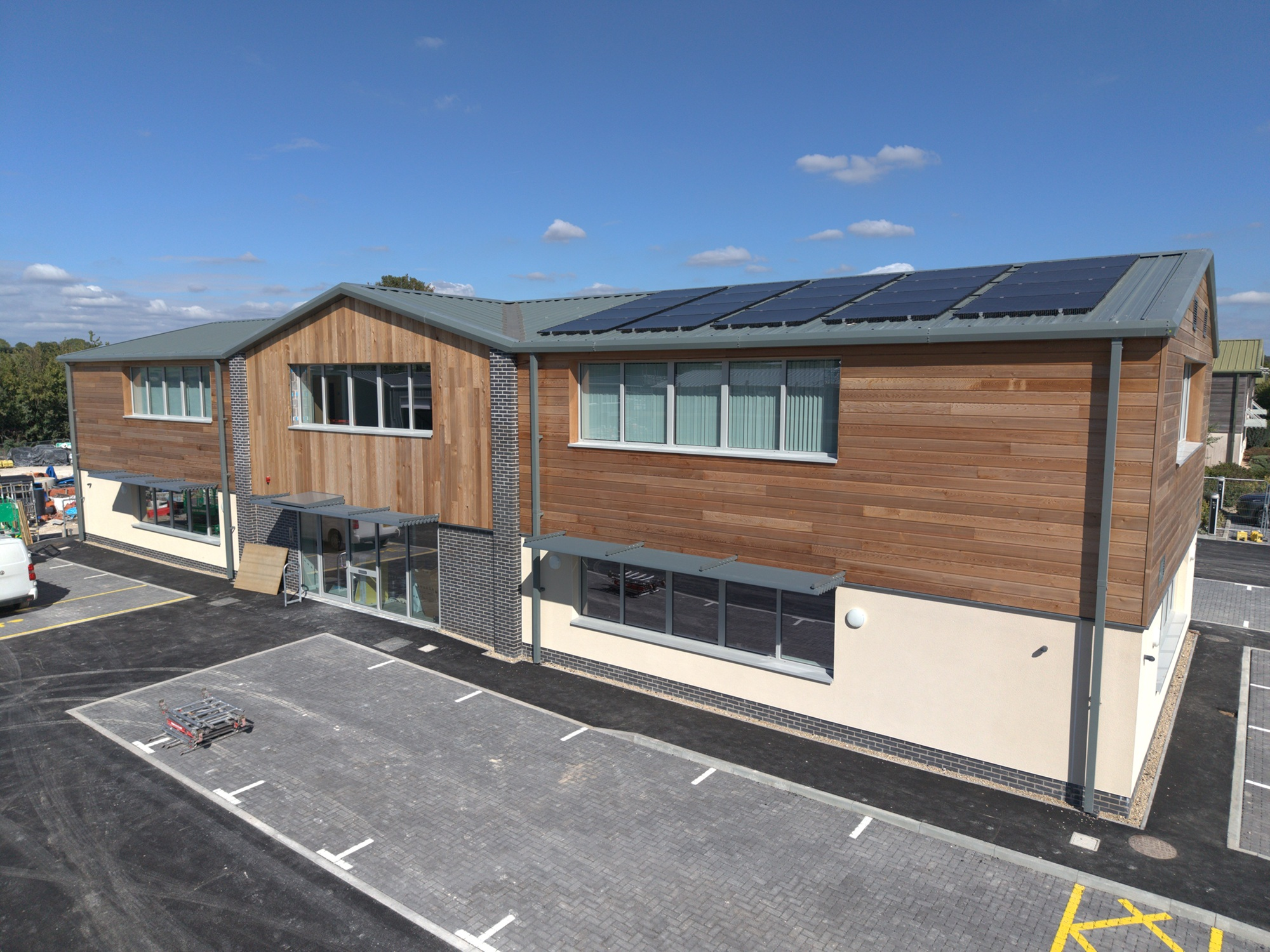
- Energy measures include high insulation levels, air source heat pumps, solar PV and MVHR systems in selected homes.
Stroud District Council has reached roof stage at its 23-home Glebelands development in Cam, where contractor Speller Metcalfe is delivering a mix of affordable rent and shared ownership housing on a previously developed council site.
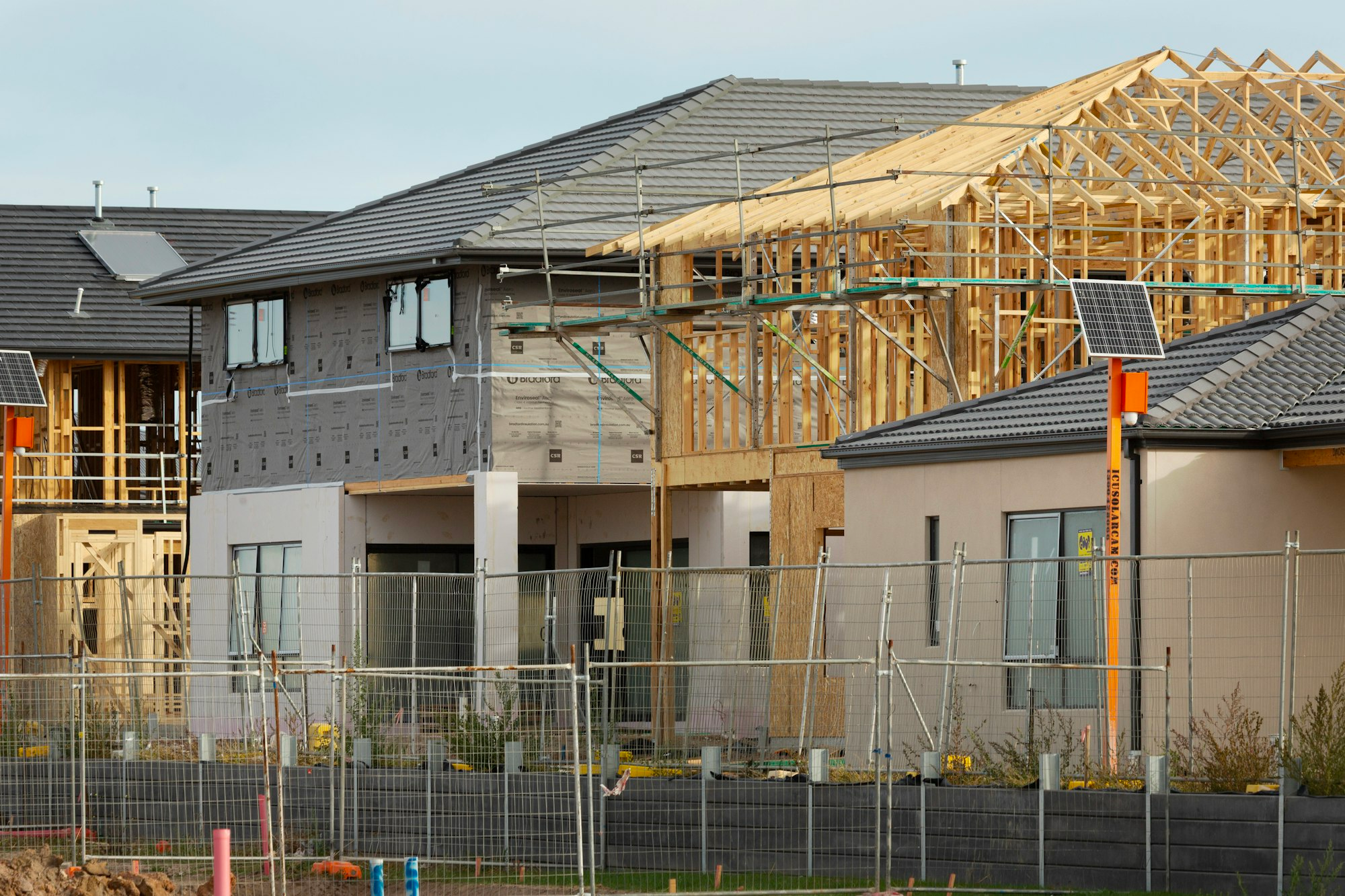
The first roofs are now in place on the apartment buildings and a third is being completed, moving the scheme beyond its principal structural phase as the external envelope begins to close. Completion is expected next summer.
Glebelands comprises eight one-bedroom flats, ten two-bedroom houses and five three-bedroom houses. Four flats have been designed specifically for older residents, with accessibility and adaptability incorporated so the homes can respond more easily if occupants’ needs change.
The scheme replaces a former independent living development that had reached the end of its useful life. Reusing an existing residential brownfield site avoids opening undeveloped land while allowing the council to replace obsolete accommodation with homes built to current energy and accessibility standards.
That improvement in performance is being delivered through both fabric and building services. Stroud says the homes will use high levels of insulation to reduce heat loss, lowering the amount of energy required to maintain comfortable internal temperatures.
Air source heat pumps will provide heating without individual gas boilers. The systems extract ambient heat from outside air and raise it to a useful temperature through a refrigeration cycle, making the performance of the building envelope important because heat pumps work most efficiently when demand remains relatively low and stable.
Solar photovoltaic panels will provide electricity on site, while mechanical ventilation with heat recovery is being installed in selected units. MVHR removes stale air from kitchens, bathrooms and other internal spaces while transferring heat from the outgoing air stream to incoming fresh air.
That reduces ventilation heat loss without relying on uncontrolled leakage through the building envelope. The combination of insulation, heat pumps, PV and controlled ventilation therefore operates as a coordinated system rather than a set of independent technologies.
Better fabric reduces the heating load, the heat pump meets that smaller demand without direct fossil-fuel combustion in the home, and solar generation can offset part of the electrical consumption associated with the property.
Installing those systems during a relatively small housing programme still requires coordination between structure, roofing, airtightness, mechanical services and electrical infrastructure. Heat pump performance can be undermined if fabric detailing creates excessive heat loss, while MVHR relies on ductwork and penetrations being incorporated without compromising airtightness.
Reaching roof stage allows internal construction and building services work to progress within increasingly weatherproof structures. As roofs and external walls are completed, the programme can move towards first fix, insulation, internal finishes and commissioning while external work continues around the site.
Speller Metcalfe is delivering the development as part of the council’s broader affordable housing programme. Other recent projects include eight affordable rent homes at Gloucester Street and Bradley Street in Wotton-under-Edge and 13 social rent homes at Cambridge Avenue in Dursley.
Construction is also progressing at Queens Drive in Cashes Green, where seven affordable homes are being built. Taken together, the schemes show the council pursuing a dispersed programme across several smaller sites rather than relying on one large development to increase stock.
The housing mix at Glebelands follows the same principle. Apartment accommodation designed for older residents sits alongside houses with two or three bedrooms, allowing the brownfield site to serve more than one household type while retaining affordable tenure across the development.
Stroud’s latest council update again highlighted the project as part of its affordable housing programme, following the detailed construction milestone announced at the end of September. The authority says thousands of people remain on its housing register, leaving each smaller scheme to add incrementally to available stock.
The immediate construction focus now shifts from the visible roof milestone towards completing the envelope, installing services and finishing the homes. Much of the eventual energy performance will depend on less visible work: insulation continuity, airtight junctions, correctly commissioned heat pumps and ventilation systems, and integration between the PV arrays and the electrical installations inside each property.