IN Brief:
- Restoration work at three Grade II listed Market Street properties has uncovered wattle and daub dating to around 1693.
- BSN Group Construction is testing individual historic timbers to determine which can be retained, treated or replaced.
- Structural repairs include new oak, replacement joists, extensive temporary propping and reconstruction of a bowing gable wall.
Tamworth Borough Council has revealed the extent of specialist structural work underway at three Grade II listed Market Street buildings, where contractors have uncovered original wattle and daub construction dating to around 1693 beneath later wall coverings.
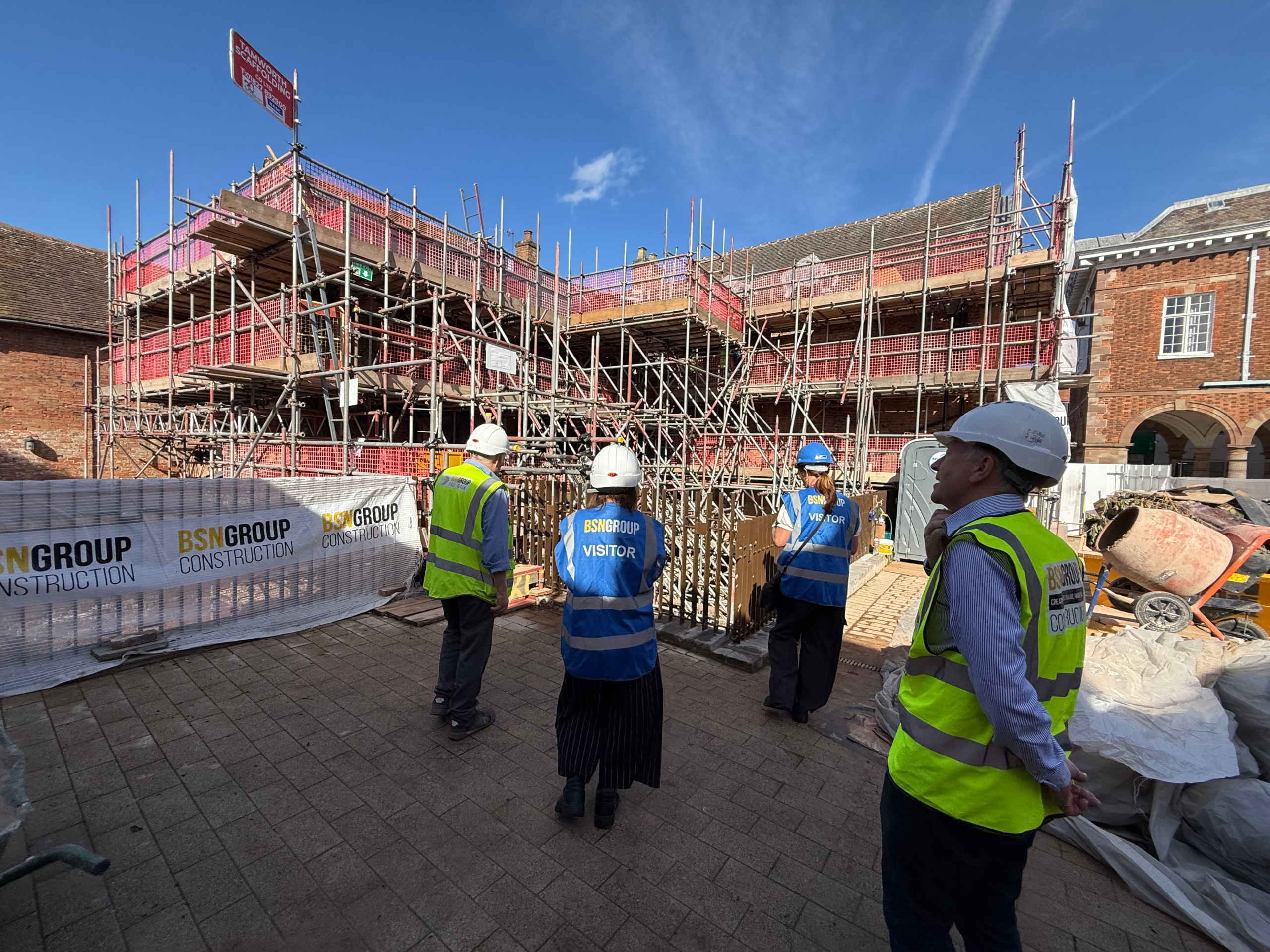
BSN Group Construction is restoring 26a, 27 and 27a Market Street beside Tamworth Castle as the final construction project within the council’s Future High Streets Fund programme. The work combines structural repair with conservation decisions made element by element as previously hidden parts of the buildings are exposed.
The discovery of seventeenth century wattle and daub has added another layer of evidence about the buildings’ original construction. The wall system uses a woven timber lattice, traditionally packed and coated with a mixture containing materials such as clay and straw, and surviving sections have remained in place for more than three centuries.
Instead of replacing complete sections by default, individual timbers are being assessed before intervention. Specialist testing equipment measures wood density and identifies areas where structural capacity has been lost, allowing sound material to remain while weakened sections are treated or replaced where necessary.
That approach is important because the buildings have suffered extensive timber deterioration. Tamworth Borough Council says members have been affected by both woodworm and deathwatch beetle, leaving parts of the frame unable to continue carrying their original loads without repair.
Where historic timber cannot be retained safely, the construction team is introducing compatible replacement material. A major structural beam has already been replaced in oak, while new floor joists and sections of timber framing are being installed alongside surviving original fabric.
The temporary works are substantial. Internal and external propping supports the buildings while defective elements are removed or strengthened, preventing movement through the remaining frame as loads are redistributed during conservation.
Unlike new timber construction, the sequence has to respond to what is found after walls, floors and finishes are opened. The project team cannot rely solely on the assumptions available during design because concealed decay becomes fully visible only when later finishes are removed.
One of the largest interventions concerns a gable wall that has bowed outwards. The wall will be carefully dismantled and reconstructed, creating a point where structural stability, heritage value and buildability have to be managed together.
Supporting the surrounding fabric during removal is critical because individual walls form part of a connected historic frame. Temporary support therefore has to carry loads while the defective section is removed and rebuilt into a stable alignment.
Further work includes reroofing, façade repairs and internal improvements needed to bring the properties back into use. A new compliant stair tower will replace an existing structure that no longer meets current requirements, while fire and building safety upgrades have to be incorporated without unnecessarily removing historic fabric.
The roof introduces an ecological constraint alongside the conservation work. Brown long-eared bats are known to roost within the buildings, so bat boxes have been installed and an existing roost within one of the beams is being retained.
An ecologist attends the site regularly and is present when construction reaches areas where the animals could be disturbed. The programme therefore has to respond to both listed-building requirements and ecological controls as work moves through the structure.
Planning permission for the restoration was granted in January after earlier investigative work established the condition and complexity of the buildings. Approved works include structural repairs, renewed roofs, restored façades and internal refurbishment intended to make the properties weatherproof, safe and suitable for future occupation.
BSN Group was appointed because of its heritage conservation experience, having worked previously on projects involving organisations including the National Trust and Historic England. Much of the significant building fabric remained concealed at the point of appointment, making investigation part of construction rather than a completed exercise before site work began.
The Market Street scheme is the final project within Tamworth’s £21m Future High Streets Fund programme. As restoration continues, the newly exposed structure is informing each stage of the repair sequence, with modern intervention limited to what is needed to return the buildings to safe use while retaining as much surviving fabric as possible.